Best-selling buses in Brazil: the 6 makes
 Jade Zart 4 min read
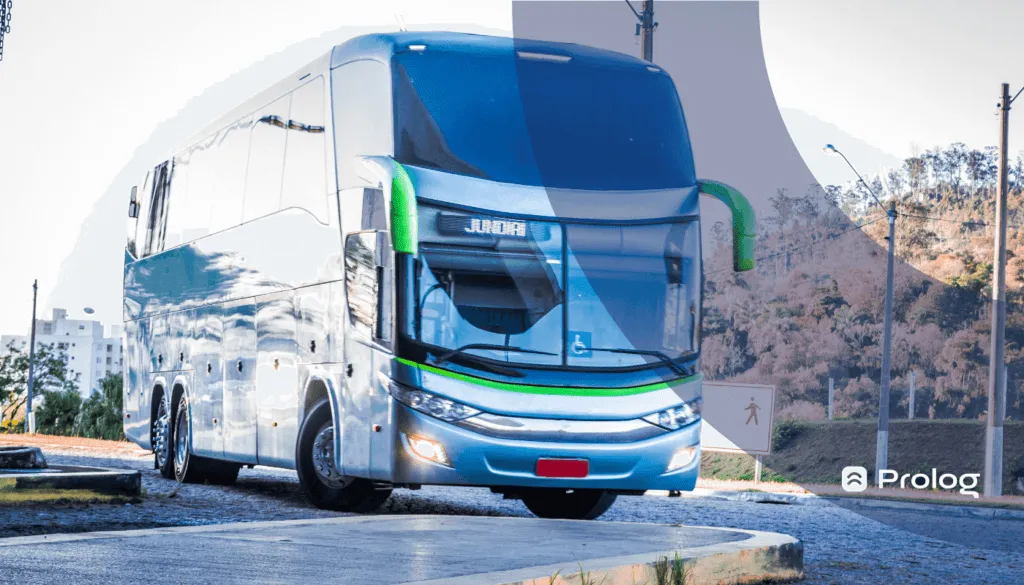
With passenger transport returning to normal, renewing your bus fleet may be on the agenda. Take a look at the best-selling buses in Brazil in recent years and make an informed decision!
Although the best seller is not necessarily the highest-quality option, we have gathered the main characteristics and comparison points for these vehicles that stood out so much. For a purchase or renewal decision, treat the ranking as a starting point and also compare application, service network, consumption, comfort, availability and purchase and maintenance costs. In the most recent snapshot confirmed in the dossier, 15,682 buses were registered in Brazil between January and July 2026, down 7.04% in the year to date; Mercedes-Benz remained the leader in Brazil's bus market, followed by Volkswagen, according to figures attributed to Fenabrave.
Volkswagen
After several consecutive years in the lead, Mercedes lost first place to Volkswagen — according to January and February 2021 figures. There were 795 vehicles registered during this period!
However, over the year it began losing ground again and, based on sales figures between January and October, moved to third place on the list. The figures cited therefore serve as a historical snapshot of that period, rather than a permanent ranking for any future purchase.
The company, whose bus division is Volksbus, has a new model for that year: the 15.190 ODR – ORE3, with capacity to carry up to 59 people, intended for school transport. When comparing models, assess whether the body, passenger capacity and configuration suit the type of route your fleet operates.
But the biggest new additions are the 15.190 ODS and 22.280 ODS models, combining technology, comfort and increased passenger capacity. They continue the approach of the 17.230 ODS and 17.260 ODS models, which already had front engines and air suspension. In practice, before buying, compare passenger capacity with the route profile, frequency of stops, road conditions and the cost of keeping the vehicle available.
Mercedes
After 7 years leading sales (2019) with the OF 1721 model, Mercedes started the year in second place, with 671 buses registered in those first two months of 2021. It was then back in first place, having sold more than 4300 buses by October.
The standout model up to that point was the OF 1721, with a 4-cylinder OM-924 LA electronic engine and 208 cv of power at 2,200 rpm. Its main distinguishing feature is lower fuel consumption thanks to high torque at low engine speeds.
Like the Volksbus model, it has air suspension. It also has ABS brakes, a connection for extracting telemetry data and an automatic engine shutdown system (EIS).
The latter works to enable fuel savings and reduce pollutants and noise by switching off the vehicle after at least 4 minutes of inactivity. For fleet managers, this kind of feature needs to be compared alongside maintenance, driver training, parts availability and support from the authorized network.
Agrale
By September, Agrale was firmly in third place, with 2,112 buses sold. However, in the following months, it was overtaken by Volare, Iveco, Volvo and Scania.
Known for investing in technology in the production of its models, the company has two ranges: Microbus and Midibus. These are minibuses and compact chassis, respectively — in other words, the company focuses mainly on urban and intercity operations.
The manufacturer's strengths include low operating and purchase costs, as well as safety, comfort and efficiency! For urban fleets, these points tend to carry weight when comparing models, especially when the company needs to maintain availability throughout the day.
Iveco
In fourth place, Iveco held its position throughout the year. In October, it reached 1048 sales.
Its production ranges include models for charter, school and urban transport in general, focusing on vans and minibuses. This positioning makes the comparison different from that for larger buses: instead of looking only at sales volume, consider passenger capacity, boarding arrangements, average trip distance, ease of maneuvering, consumption and downtime costs.
Volvo
Volvo came fifth in the overall ranking. Although its sales were considerably below those of the other models, it was still ahead of Agrale — whose sales plummeted after a good start to the year.
In October, Volvo had sold a total of 320 vehicles. In fact, two new models were launched that year: the B420R+ and B450R+. They are simply more modern and technological versions of models the make already had.
Some improvements were the active safety system, a new transmission and a new urea system (ARLA, as the exhaust-treatment solution is known in Brazil). For companies that depend on vehicles being on the road to meet schedules, uptime, productivity and maintenance also enter the comparison.
Scania
Scania, which started the year in last place, reached sixth with 175 vehicles registered — by October.
Among the year's best-selling models was the K 400 6×2. An option for medium- and long-distance road operations, with a 13-liter engine and high torque of 2,100Nm.
The K 440 8×2 also stood out. It was a success because it allows more people to be carried on interstate routes, aiming to reduce the transport company's overall costs. On long routes, total cost of the operation tends to carry as much weight as vehicle capacity, comfort and availability.
Enjoyed learning about the best-selling buses in Brazil? Then you will also enjoy our weekly newsletter — subscribe using the form just below; simply scroll a little further down the page.
Frequently asked questions
Which make led bus sales in the period analyzed?
What stands out about the Mercedes OF 1721?
Which new models did Volkswagen introduce?
Which makes focus on minibuses and urban operations?
What changed in Volvo's new buses?
What about options for medium- and long-distance trips?
// newsletter
Fleet management content, straight to your inbox
Articles on tires, maintenance and fleet operations. No spam.