
Prolog Day 2026 in Chapecó: the fleet event recap
 Jonatan Fernandes 6 min read

Chapecó is more than the agro-industrial heart of Santa Catarina. It is also one of the most relevant road freight transport hubs in southern Brazil. That is why Prolog chose the city for another edition of Prolog Day, its traveling fleet management event that brings technical content, real case studies and strategic connections to carriers, wherever they are.
On April 23, 2026, Pollen Parque Científico e Tecnológico welcomed hundreds of participants. Fleet managers, operations directors and carrier leaders from southern Brazil gathered to discuss applying artificial intelligence in a carrier's daily routine. The event also revealed something broader: the gap between technology and real operations is shrinking. And the industry is more ready for this leap than many imagine.
A traveling event that goes to carriers
Prolog Day does not take place in just one location. Instead, its aim is to reach those who operate fleets every day, in regions where road freight transport actually happens, outside major cities.
This approach to expanding geographic reach reflects a clear Prolog strategy. Rather than positioning itself solely as management software, the company wants to be an industry partner. Present, accessible and committed to developing road transport throughout Brazil. Chapecó is another city on this map. It certainly will not be the last.
The result of this proximity showed in the profile of the people in the room. Companies with real operations, managers with concrete challenges and genuine attention to the content from the opening.
From the diesel crisis to the cold chain: the topics that engaged the room
The first session opened with Kassio Seefeld, CEO of TruckPag, with a panel on innovation, culture and hands-on management. The talk set the tone for the day. Rather than distant concepts, Seefeld connected strategic vision with the reality of those who need to end the month in the black while managing fleets, drivers, tires and fuel at the same time.
Next, SITRAN brought Marcos Barbieri from Blue Transportes and union representatives to the table. Together, they discussed the industry's regulatory and economic outlook: tax reform, diesel prices and what lies ahead. For an audience that feels every fuel price change directly in its cash flow, this conversation was not theoretical—it was urgent.
To close the session, Neokohm led a panel on the challenges of transporting at the right temperature. Participants included Mychel Lanzarin (Quality Manager at Marvel Transportes), Uliliam Treméa (Administrative Director at Transportes Treméa) and Luís H. Lorenzi (Commercial Director at Neokohm). The topic—the cold chain—is one of the fastest-growing segments in road freight transport. Even so, industry events rarely cover it in depth. The room noticed the difference.
The coffee break that became a talking point
Between the first and second sessions, Prolog Day scheduled a strategic networking coffee break. The interval was designed to create meaningful connections. Managers from carriers of different sizes, with shared challenges, in the same space, without excessive formality or noise.
The result was purposeful conversations and exchanges that continued until the closing. More than once, participants commented that this moment was worth as much as the talks' content. It is the kind of feedback that does not appear on a slide, but defines whether an event was good or merely informative.
When tire control and fuel meet in the same data
The second session began with Marcelo Tozzo from Tozzo Transportes, presenting a case study directly from the operation. The company reduced significant operating costs as soon as it structured tire control with Prolog. The result showed up in cost per kilometer, maintenance predictability and overall fleet performance.
The case study touched on the event's central point: well-managed tires reduce fuel consumption. In practice, a fleet that keeps track of each tire's pressure, positioning and useful life through data, rather than intuition, operates with more control and fewer surprises. Therefore, the improvements are measurable and consistent.
Tire control is not a fixed cost. It is a variable you manage when you have the right data.
For those who want to structure this process, Prolog offers a complete tire management e-book (in Portuguese) and a free tire control spreadsheet (in Portuguese). Two practical resources for those who still handle this control on paper or in Excel.
Next, Yan (Field Sales Manager, Prolog), Manzano (Commercial Director, TruckPag) and Allan (CEO, Neokohm) mapped the current road freight transport landscape. The conversation covered tax reform, rising diesel prices, refrigeration and the cold chain, with a frankness rarely seen at industry events. It was not stage talk. It was a conversation among people who operate fleets.
For those who want to take this step with confidence, Prolog's Fleet Management Guide (in Portuguese) is a complete reference, free and designed for the reality of Brazilian carriers.
AI in carriers' operations: the time is now
The content program closed with Anderson Santos from Prolog App. His presentation, How to apply AI in your carrier's daily routine, gave the event its theme and was probably the talk that resonated most immediately.
The central message was to demystify. Artificial intelligence in operational fleet control does not begin with a six-month project. It begins with structured data. And the most accessible entry point for most carriers is the electronic vehicle checklist.
A well-implemented digital checklist generates real-time data as inspections are recorded. It also feeds predictive maintenance analyses, identifies wear patterns before failure and gives managers the visibility previously available only in large operations. From there, AI works with what the data reveals, rather than what the manager imagines is happening.
For those who want to take this step, Prolog's Fleet Management Guide (in Portuguese) is a free reference designed for the reality of Brazilian carriers.
What Prolog Day Chapecó revealed about Brazilian carriers
Events like this serve as a barometer. And the Chapecó event clearly showed three things.
First: fleet managers outside major cities have a higher level of maturity than the technology market usually assumes. The room did not need basic concepts. It wanted depth, numbers and answers to specific operational problems.
Second: the connection between tires, fuel and data is still underestimated. Yet when someone presents a case study with the numbers laid out, recognition is immediate. It is a challenge every manager knows, but few have solved through systematic processes.
Third: the appetite for accessible technology is growing. Technology as a tool the team uses on Monday, rather than as a future promise. In the checklist, the dashboard, the cost per kilometer report. That is exactly where Prolog operates.
Prolog Day: the map keeps growing
Chapecó was another city. The Prolog Day project aims to take this format—technical content, real case studies, meaningful networking and free admission—to the locations where road freight transport actually happens.
Consequently, each edition gets closer to more carriers. And each edition reinforces the same point: fleet technology is not just for large companies. It is for anyone who wants to operate better, regardless of fleet size or the city they are in.
For those who were not in Chapecó and want to understand their own operation's level of exposure, the free fleet assessment (in Portuguese) is the starting point. A personalized analysis of diesel, tires, maintenance and compliance, at no cost.
Frequently asked questions
What is Prolog Day?
When and where did Prolog Day take place in Chapecó?
What topics did Prolog Day 2026 in Chapecó cover?
What did Tozzo Transportes' case study show about tires?
Where should carriers start using artificial intelligence?
// newsletter
Fleet management content, straight to your inbox
Articles on tires, maintenance and fleet operations. No spam.
Read also
 Prolog

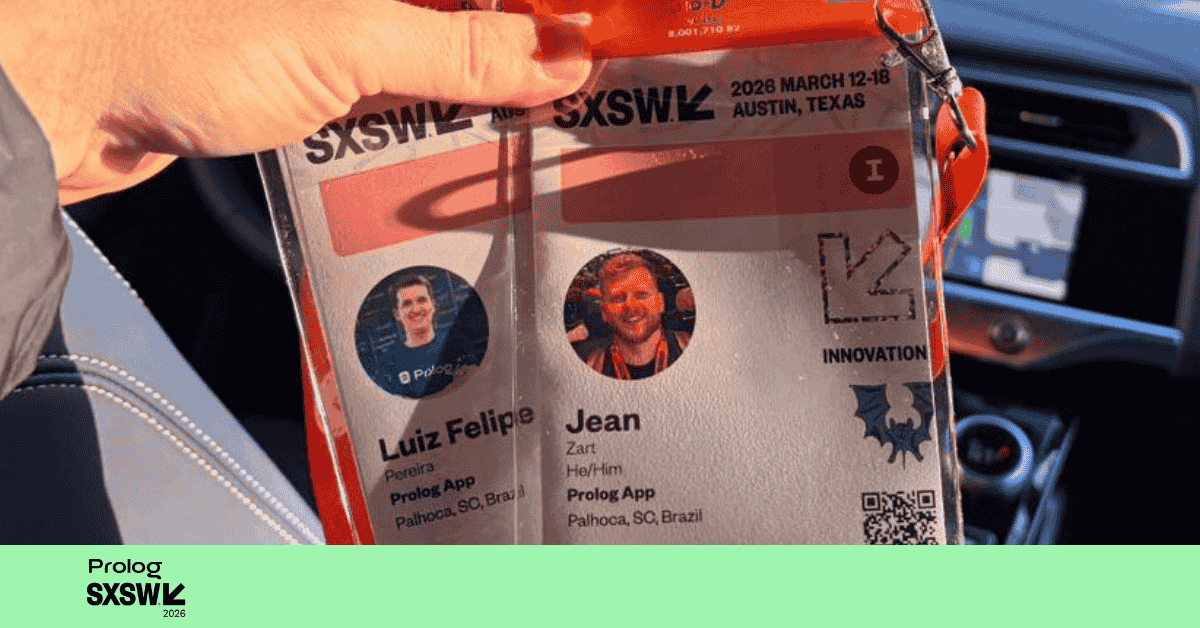
Prolog at SXSW 2026: founders visited Austin
Jean Zart and Luiz Felipe attended SXSW 2026 in Austin to find AI and technology signals applicable to fleet management in Brazil.
Prolog at SXSW 2026
Where the technology that will change your fleet management comes from.
 Jade Zart
 Prolog
