Refrigerated truck checklist: items and inspection
 Luiz Felipe 7 min read
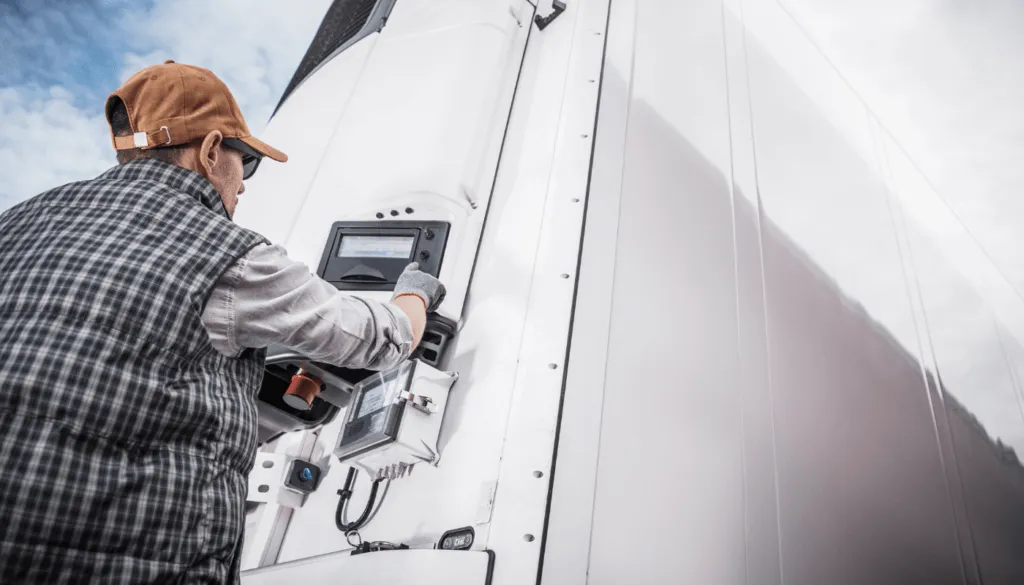
Having a refrigerated truck checklist becomes an indispensable task for those who work in refrigerated cargo transport and need to operate this vehicle type safely and to a standard.
That is because refrigerated transport is essential to preserve perishable products, such as meat, vegetables and dairy, and keep their quality as they are moved between factories, distribution centers and points of sale. The inspection should focus on the points that help preserve the temperature, hygiene and integrity of the refrigerated compartment before the trip.
Below, you will find:
- What refrigerated transport is;
- How refrigerated road transport works;
- The essential precautions for refrigerated trucks;
- The importance of regular maintenance of the refrigeration system;
- The inspection process for refrigerated trucks;
- Which items to include in the refrigerated truck checklist;
- What to do in case of refrigeration system failures.
What is refrigerated transport?
This type of transport includes everything that needs refrigeration to be kept in proper condition for preservation and quality. The central idea is to reduce the cargo's exposure to variations that could compromise its integrity, especially in the case of temperature-sensitive products.
It is usually associated with the transport of perishable food. For this type of cargo, the operation must pay attention to cleanliness, sealing, temperature, cold air circulation and the hygienic and sanitary conditions of the compartment, according to the activity carried out and the rules that apply to food transport.
How does refrigerated road transport work?
It works with refrigerated trucks, which are equipped with refrigeration systems to keep the internal temperature within a range suitable for the cargo being transported. Instead of assuming that the equipment makes up for any external condition, the operation must check whether the box, the seals, the cold air circulation and the temperature checks are in working order.
To ensure a safe operation and reduce unexpected stops, refrigerated transport inspection is an important part of the routines of refrigerated fleets. Before putting the vehicle on the road, it is important to check that the equipment needed for the operation is in good condition, and the logic of the checklist helps turn this routine into a documented record.
What are the essential precautions for refrigerated trucks?
In addition to all the checks for a regular truck, such as inspecting the brake, fuel and engine systems, specific aspects of refrigerated trucks need to be kept track of.
To keep a truck of this type in good working order, you need to keep regular track of the internal temperature so that the products transported remain within food safety standards. Refrigerated food depends on proper temperatures to reduce the growth of dangerous bacteria.
This also includes regular checks of the insulation of the refrigerated compartment and of the sealing system to prevent heat exchange and a rise in internal temperature. Cold air circulation must also be preserved, because it helps keep refrigerated food more evenly cooled inside the compartment.
The importance of regular maintenance of the refrigeration system
Regular maintenance of the refrigeration system is essential for refrigerated trucks to work properly. It does not eliminate all the risks of the journey, but it lowers the chance of avoidable failures and makes it easier to identify problems before they affect the cargo.
In addition to increasing the vehicle's useful life and reducing the cost of emergency repairs, this preventive maintenance, supported by the refrigerated truck checklist, helps the products transported stay at the correct temperature during the operation. To achieve this, the company should combine inspections, temperature-checking instruments and clear procedures for the team.
A failure in the refrigeration system can compromise product quality, especially with perishable cargo, and result in significant losses. That is why temperature deviations need to be dealt with quickly, according to the procedure defined for the operation.
Another important point is that effective maintenance of the refrigeration system helps maintain compliance with food safety standards and refrigerated transport regulations, avoiding public health risks and possible legal penalties. For the transport of animal products intended for human consumption, Brazilian legislation provides for the inspection of the means of transport and of the hygienic and sanitary conditions related to facilities, equipment and operation.
What is the inspection process for refrigerated trucks?
The process of inspecting a refrigerated truck and controlling the temperature in trucks has three steps. The sequence helps the team avoid skipping critical points and compare the vehicle's condition before the trip or during a stop to check it.
1 – Checking the refrigerated structure
To start, you need to check the integrity of the structure of the truck's refrigerated compartment, including doors, seals, rubber gaskets, inner walls and points of possible infiltration. Damage, gaps and accumulated dirt can impair the preservation of the cargo and make proper cleaning harder.
2 – Evaluating the refrigeration system
After checking the structure, the inspection of the refrigeration system should evaluate compressor operation, hose integrity, the efficiency of the ventilation system and the reading of the thermometer or of the instrument used to keep track of the temperature.
3 – Mechanical and electrical upkeep of the vehicle
Next, it is important to check tire wear, the brake system and lighting, making sure the vehicle is safe to run on the road without causing problems. It is also worth checking the electrical items that power or support the refrigeration equipment, because a failure in these supporting electrical items can affect how the whole unit works.
Which items should the refrigerated truck checklist include?
In general, the inspection of a refrigerated truck should be methodical and comprehensive. However, there are items that only refrigerated transport has to deal with, and they do not replace the regular mechanical checks: they add to them.
That is why, in the pre-trip checklist for refrigerated trucks, it is essential to include items such as checking:
- The temperature shown on the thermostat or on the instrument used by the operation;
- The refrigeration system of the insulated box;
- Leaks or damage in the refrigerated compartment;
- Insulation of the door seals;
- Cleaning and disinfection of the cold chamber;
- The automatic defrost system;
- Perforations or defects in the internal and external finish of the bodywork;
- Correct operation of the scale, the available thermometer and the logistics cart, when these items are part of the operation.
In addition to these items specific to refrigerated transport, other aspects of how the truck works also need to be considered: engine, brakes, tires, suspension and headlights. The checklist should make clear who inspected, when the check was done and which problems require maintenance or must keep the vehicle out of operation.
What should you do in case of refrigeration system failures?
In case of refrigeration system failures, it is essential to act quickly to avoid losing perishable cargo. To begin with, you need to assess the situation on site and make an initial diagnosis of the problem.
For simple failures, the driver can take the actions set out in the company's procedure, such as adjusting the thermostat to the defined range or making sure the doors are properly closed and sealed to maintain the internal temperature.
If the problem is serious, such as a compressor failure, the vehicle needs to be taken immediately to a specialized service.
In both cases, you need to check whether the refrigerated truck checklist is being carried out as planned. If the same failures appear repeatedly, the inspection list, the maintenance routine and driver training should be reviewed.
To make sure drivers know how to act at moments like this, you should have pre-established safety procedures, usually through a Risk Management and Containment Plan, and quick, effective communication with your team.
Ready to raise the maintenance standard of your refrigerated truck fleet? Schedule a demo of our electronic checklist system now and find out how we can help optimize your inspection and maintenance processes.
Frequently asked questions
Which items should a refrigerated truck checklist include?
What is the inspection process for a refrigerated truck like?
What are the essential precautions for refrigerated trucks?
Why is maintenance of the refrigeration system important?
What should you do if the refrigeration system fails during transport?
// newsletter
Fleet management content, straight to your inbox
Articles on tires, maintenance and fleet operations. No spam.