
How to calculate a vehicle’s TCO, with an example
 Jade Zart 6 min read

Understanding total cost of ownership (TCO) is essential for fleet managers who need to look beyond the purchase price and better control expenses throughout a vehicle’s life cycle.
More than a simple standalone calculation, this concept is a tool for bringing together the costs associated with owning, operating and maintaining a vehicle during its time in the fleet.
From asset acquisition to maintenance, fuel, insurance and resale, TCO provides a comprehensive view and helps make better-informed decisions about purchasing, replacing and using vehicles.
Read on:
- What is total cost of ownership?
- How does it work and what is it used for in a fleet?
- Why is it important in fleet management?
- How do you calculate a vehicle’s TCO?
- How do you analyze total cost of ownership?
- How can you reduce fleet TCO?
What is total cost of ownership?
Total cost of ownership (TCO) is a financial metric used to assess how much it costs to own and operate a vehicle over time.
This calculation is not limited to the initial purchase price. It considers expenses related to using the asset, such as maintenance, fuel, insurance, taxes, fees and other costs needed to keep the vehicle operating.
The amount the company expects to recover when selling or removing the vehicle from the fleet is also included in the analysis. It is therefore important not to add depreciation while also subtracting resale value as if they were two separate losses: the manager must choose a consistent approach to avoid counting the same effect twice.
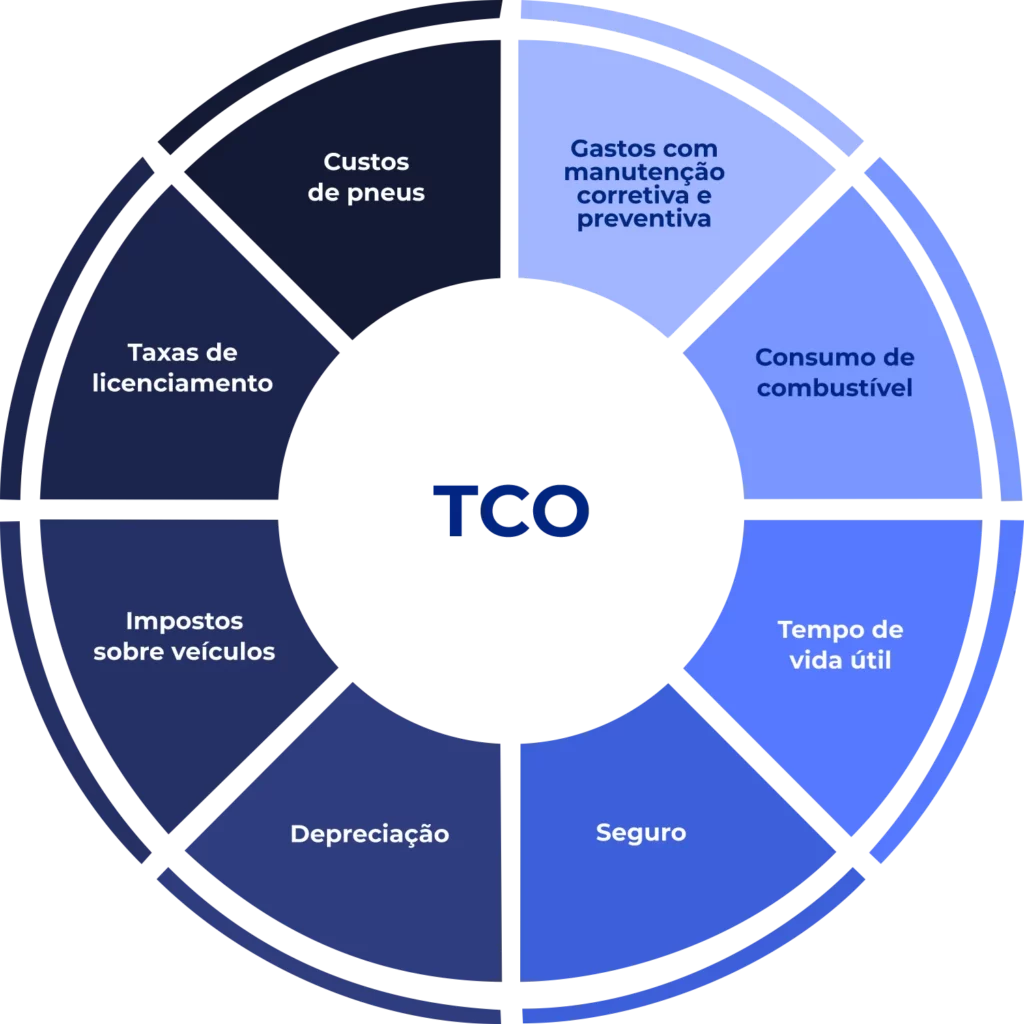
In this way, TCO gives fleet managers a more accurate view of the real costs involved in vehicle operations, allowing more strategic decisions about asset purchase, maintenance and replacement. This view also helps assess whether a given vehicle delivers enough value to justify adopting it in the operation.
How does it work and what is it used for in a fleet?
Total cost of ownership (TCO) in fleet management works as a financial assessment tool for cost management, bringing the expenses associated with acquiring, operating, maintaining and removing fleet assets over time into a single analysis.
It can contribute to strategic fleet analysis, making it easier to decide on purchasing new vehicles, replacing old assets or maintaining existing vehicles.
It also helps optimize costs by identifying areas where expenses may be higher than expected, as well as helping plan fleet finances with more realistic budgets and fairer comparisons between vehicles with different purchase prices.
Why is TCO important in fleet management?
Total cost of ownership is important in a fleet because it helps clarify the costs involved in the operation and thus enables more efficient control.
Likewise, it is essential to decisions about investment in vehicle maintenance or purchasing new vehicles, also promoting cost reduction.
This is because it allows comparisons between different vehicle models and types, helping choose the most economical and suitable options for the fleet, rather than just those with the lowest initial price.
TCO also helps clarify direct and indirect expenses, including purchase, maintenance, insurance, fuel, taxes, fees and the amount that can still be recovered by selling the vehicle at the end of the cycle defined by the company.
How do you calculate a vehicle’s TCO?
Calculating a vehicle’s TCO involves considering all costs associated with its ownership and operation over the period being analyzed.
This includes the acquisition price, financing costs, insurance, taxes, maintenance and repairs, fuel, tolls when they are part of the operation, and the estimated residual value for selling or removing the vehicle from the fleet.
The calculation may depend on several factors, such as the life cycle defined for the vehicle, financing terms, usage patterns, maintenance costs and other specifics of your fleet.
In general, to calculate TCO:
- Add all initial acquisition costs, including purchase price, taxes and fees.
- Add recurring operating costs, such as maintenance, insurance and fuel.
- Include other costs relevant to your operation, such as tolls, repairs and financing, where applicable.
- Subtract the vehicle’s estimated residual value at the end of its life cycle.
- Use the result as the total cost for the period analyzed; if you want annual cost, divide that total by the number of years of use.
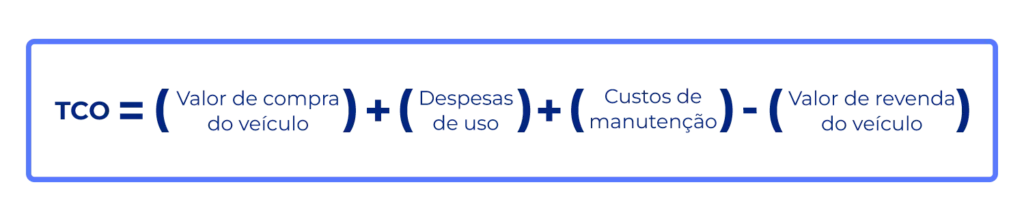
The total cost of ownership formula is:
Example of calculating a vehicle’s total cost of ownership
If we apply the TCO formula to an example using the information below, we get the following calculation:
- Vehicle purchase amount: R$ 300,000
- Usage expenses: (Fuel: R$ 180,000 + Tolls: R$ 10,000 + Insurance: R$ 8,000)
- Maintenance costs: R$ 20,000
- Vehicle resale value: R$ 150,000
TCO = (R$ 300,000) + (R$ 180,000 + R$ 10,000 + R$ 8,000) + (R$ 20,000) – (R$ 150,000)
TCO = R$ 368,000
In this example, the R$ 368,000 represents the total cost for the period considered. If management wants to compare this vehicle with others on an annual basis, the next step is to divide this amount by the expected years of use.
How do you analyze total cost of ownership?
Understanding an acceptable average TCO is vital in fleet management. This can be achieved by analyzing the operation’s own cost history, which provides an overview of what to expect for similar vehicles, routes and usage profiles.
Remember to always assess each area individually as well, to identify cost reduction opportunities that do not affect operations.
Another effective strategy is benchmarking, comparing costs with other companies in the same industry.
This method provides information about industry spending patterns and helps establish a competitive, realistic total cost of ownership standard for your operation.
By analyzing the total cost of ownership identified for your fleet, you can also, for example, assess the long-term financial impact of keeping a vehicle compared with replacing it with a more efficient or economical model.
You can also estimate the return on investment (ROI) of new vehicles based on their operating and maintenance costs over time, always considering the usage period and exit value adopted in the calculation.
How can you reduce total cost of ownership in transport operations?
To reduce total cost of ownership (TCO) in transport operations, you can consider strategies such as choosing vehicles that offer greater fuel efficiency and lower maintenance costs.
This may mean choosing newer models or vehicles with more advanced technologies, provided the expected gain offsets the investment within the usage cycle planned by the fleet.
Another strategy is to implement a stricter preventive maintenance routine to avoid expensive repairs and extend vehicles’ useful life. Basic care, such as maintaining correct tire pressure calibration and using the manufacturer’s recommended oil, can also contribute to safety, durability and fuel savings.
Driver training focused on efficient, safe driving, and route optimization aimed at minimizing distance traveled and time spent, can be actions that result in fuel and maintenance savings.
The most important thing is to keep tracking TCO. Constantly tracking operating costs and making adjustments as needed is essential to stay informed about overall costs and reduction alternatives.
Want to discover more strategies to optimize your fleet management and increase savings? Click here to download our free e-book (in Portuguese).
Frequently asked questions
How do you calculate a vehicle’s TCO step by step?
Is there a practical example of a TCO calculation?
What is an acceptable TCO for my fleet?
How can you reduce fleet TCO?
What is TCO used for in fleet management?
// newsletter
Fleet management content, straight to your inbox
Articles on tires, maintenance and fleet operations. No spam.


