Automation in fleet maintenance management
 Jean Zart 5 min read
Automation in maintenance management is a very solid trend.
It is already present in modern operations and, with increasingly accessible implementation alternatives, tends to appear in more companies with fleets.
This process automation can involve automating an operational activity, standardizing records or simplifying the transfer and integration of data and information between different departments, for example.
What is automation in maintenance management?
Automation in maintenance management is a trend based on the principles of Maintenance 4.0, which consists of incorporating technologies and automated processes into a company’s maintenance activities.
The main goal of this automation is to speed up the routine of maintenance operations, applying both to industry and the transport sector.
It is an approach that allows operational efficiency to improve and can contribute to increasing equipment reliability, reducing operating costs and decreasing downtime, provided it is implemented with appropriate processes, training and oversight.
How does automation work in fleet maintenance management?
In fleets, automation in maintenance processes can range from onboard technologies used in the industry, such as sensors and real-time monitoring, to advanced data analysis, maintenance management systems and digital inspection workflows. The key point is to transform maintenance records and decisions into a more organized, traceable process that is less dependent on manual controls.
Here are some examples:
Temperature sensors, vibration sensors, etc.
Temperature, vibration and similar sensors are devices installed in vehicles to monitor various conditions in real time.
For example, temperature sensors can keep track of the temperature of the engine, battery and critical components, indicating when they move outside standard ranges. Meanwhile, vibration sensors can detect irregularities in vehicle operation and support the identification of problems while driving.
In general, sensors provide continuous data, allowing the maintenance team to identify problems at an early stage and take preventive measures before serious failures occur.
This can increase vehicle reliability and help reduce costs by avoiding costly repairs and unplanned downtime, especially when the readings are connected to clear analysis and intervention routines.
Electronic tire measuring device

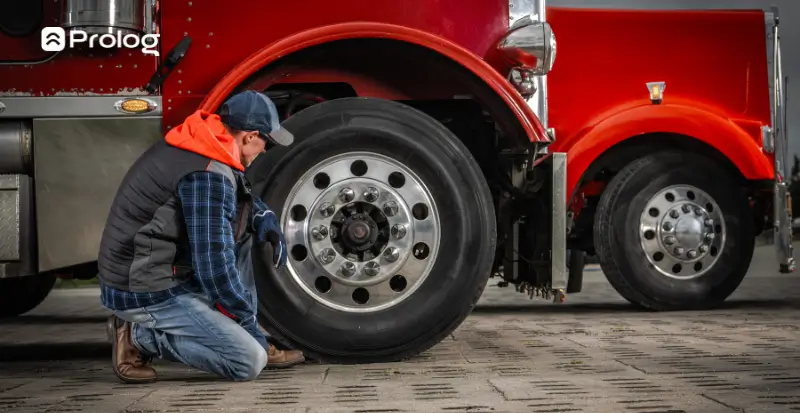
Maintaining correct tire pressure is essential for safety, fuel efficiency and tire useful life.
With the electronic measuring device, the work of using the device manually still exists, but reading all the data and entering information into the system no longer depend on manual typing.
Within the system, reading and interpreting data is also automation in maintenance management. You will have indications of which tires have overdue inspections, which need their pressure checked and adjusted, and so on.
This type of automation does not eliminate the routine of tire inspection, but reduces rework, improves record standardization and makes it easier for the team to act when abnormal tire pressure needs correcting.
Electronic vehicle inspection checklist
The electronic checklist for vehicle inspection is a digital platform that replaces the traditional paper checklists used to inspect vehicles.
With automation, drivers or maintenance technicians can use mobile devices, such as smartphones or tablets, to perform detailed vehicle inspections. With each completed checklist, the record becomes available in the system, with data such as the date, time, person responsible and location of the inspection performed by a person.
Checklist templates are customizable and may include safety checks, inspections of critical components, assessments of mechanical and electrical items, and much more.
One of its main functions is to reduce the chance of an important item being missed during the inspection and automatically record the results entered by the team.
In addition, any detected issue can be reported more quickly through the automatic opening of a Work Order so corrective actions can be arranged. The entire inspection process tends to become more accurate and efficient when templates are well configured and the team is trained to use them correctly.
Maintenance management system
Maintenance management systems are technological solutions that facilitate the planning, scheduling and oversight of all fleet maintenance activities.
These systems centralize information, maintenance histories and fleet-related documents. This allows the maintenance team to schedule services, assign tasks, keep track of progress and record all the details of interventions.
They also generate automated reports, facilitating performance analysis, trend identification and informed decision-making.
In practice, this type of system also helps keep track of maintenance indicators, such as operational availability, MTBF, MTTR, preventive/corrective ratio and CPK, when these data are part of the management routine.
Integration between systems
Integration between different systems is a fundamental component of automation in fleet maintenance management.
This integration allows systems to share data with one another, eliminating the need for repeated manual information entry and reducing errors.
This activity aims to increase overall maintenance management efficiency and reduces the amount of manual work, allowing the team to focus on more strategic tasks.
When well planned, integration also prevents the same information from circulating in spreadsheets, messages and disconnected systems, making it easier to check history and maintain continuity in maintenance routines.
How can you implement automation in fleet maintenance management?
Before adopting automation in maintenance management, it is essential to assess your fleet’s specific needs. This assessment helps choose more appropriate technologies, but does not guarantee on its own that the results will be significant.
In addition, you need to begin implementing a technology culture in maintenance not only in the fleet but throughout the company. This way, the organization prepares employees to test, adjust and incorporate new automation solutions more consistently into operations.
At the planning stage, clearly define the steps needed to integrate automation into your operation.
This involves choosing the tool to use, planning the installation process and the necessary team training. Having a clear implementation schedule is essential for automation to start working correctly.
Remember to establish indicators and metrics to keep track of automation performance in maintenance management.
This way, you can assess whether the changes are generating improvements in your fleet and whether any process needs adjusting. Implementing automation is a continuous process that requires constant monitoring to sustain gains over the long term.
How about preparing even further to take your fleet’s maintenance management to the next level?
Discover Prolog’s course and acquire the skills needed to optimize this department in your company. Get it now (in Portuguese)!
Frequently asked questions
How does automation reach fleet maintenance in practice?
Where should you start implementing automation in fleet maintenance?
What is the difference between the electronic measuring device and tire inspections done by hand?
How can you reduce the risk of forgetting items during an inspection?
What does a maintenance management system centralize?
// newsletter
Fleet management content, straight to your inbox
Articles on tires, maintenance and fleet operations. No spam.