
Guide to electronic checklists for fleets
 Luiz Felipe 6 min read

Could you explain what an electronic checklist is and why this tool is so important for fleet management?
If you already know this type of checklist and are simply curious about how it would work in your fleet, this post is an opportunity to learn more.
Below, you will find everything you need to understand checklist technology and implement it once and for all in your operation to enjoy all its benefits. Take a look:
What is an electronic checklist?
An electronic checklist is a mechanism for controlling activities digitally. It replaced handwritten paper forms that had previously been used for fleet control.
Over the years, task lists became more modern, with paper and pen replaced by Excel spreadsheets. Eventually, the electronic checklist system arrived.
Understanding what an electronic checklist is also means understanding that its goal is to provide a way to structure fleet management by standardizing operational processes.
What is an electronic checklist for?
First, it is important to discuss the logic behind a checklist, also known as a “verification list.”
A checklist is a control method listing tasks, items or practices that need to be remembered or followed. In everyday transport operations, its role is to:
- Record tasks in work orders to be delivered;
- Carry out vehicle or equipment inspections;
- Analyze the location of defects and their causes;
- Collect data for planning solutions.
Overall, it makes it easier for managers and their teams to manage everyday tasks, including making more accurate decisions with less wasted time.
Now that you know what an electronic checklist is and how it contributes to fleet management, also learn:
FREE DEMONSTRATION
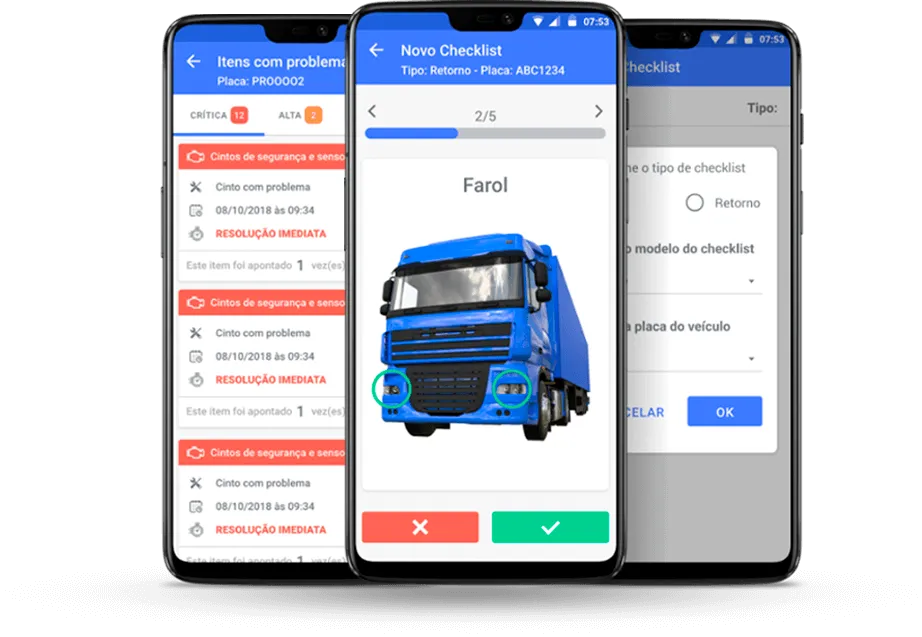
With Prolog’s Electronic Checklist, you have fleet control in the palm of your hand.
When did the electronic checklist emerge?
One of the first electronic checklist platforms to offer a solution focused on transport and fleet management was the Prolog system. Prolog was founded in 2016 and offers a Brazilian SaaS platform for fleet management, tires, preventive maintenance and electronic checklists.
We work with solutions that are benchmarks in tire management and fleet management — in Brazil and other countries such as Paraguay, the Dominican Republic and South Africa.
In total, more than 1,500 operations are served. To avoid figures without up-to-date context, the most important point is understanding what a digital checklist changes in everyday work: it replaces physical forms with organized records made on a phone, with photos, the responsible person’s signature and work orders opened when a nonconformity is reported.
Simply knowing what an electronic checklist is does not help you identify your fleet’s actual need for it. That is why we also explain its importance and benefits:
Why does an electronic checklist matter?
The importance of a fleet checklist lies precisely in collecting and organizing data. In this respect, it can be useful for evaluating how the service was carried out.
It is through the checklist that errors and failures are identified, both in the operation and in vehicles. This allows future activities to be improved and deliver more satisfactory results.
What are its benefits?
Standardized communication
The electronic checklist tool reduces time spent communicating with employees because it centralizes information digitally and makes access easier for those responsible for operations and maintenance.
Safety and evidence
The electronic checklist improves evidence of inspection by recording when and by whom it was carried out. In Prolog, the person completing the checklist can sign electronically as the responsible party, and photos taken during the inspection help describe reported nonconformities.
Encouraging technological advances
Using a digital checklist can be the gateway to continuous improvements in the fleet and maintenance management. This is a fundamental factor in bringing increasingly positive results and encouraging managers and employees to adopt logistics technologies more readily.
How does an electronic checklist work?
Prolog’s checklist is very versatile, allowing forms to be created for each vehicle model in the fleet. Best of all, checklists can be completed easily on any phone with the Prolog app so the driver can identify possible asset irregularities.
If an issue is found, it will be classified as low, high or critical priority and sent to those responsible for maintenance. When a nonconformity is reported, work orders can be generated automatically to continue addressing it.
Our main differentiator is specializing in fleets and transport operations. We therefore offer features and organization of collected data designed exclusively to benefit this sector, with dashboards and reports updated with every completed checklist.
Watch the video we prepared on using the electronic checklist in your fleet:
(video in Portuguese)
What checklist types exist?
Step verification
This is the most common checklist type. Its goal is to specify precisely a set of steps to follow when carrying out a task.
Troubleshooting
The checklist consists of instructions that must be followed in risky situations. It is extremely effective in unexpected operational situations.
Coordination
When project management involves a team of many people, this checklist model acts as a central focus for executing activities.
Disciplines
The disciplines checklist ensures that all weekly tasks are carried out, such as collecting and sending orders, completing reports, etc.
To-do
This concerns activities not yet carried out. A “to-do” list can be developed in other company areas with specific teams and employees.
Fleet inspection
This is the main type used in everyday transport operations and is what we provide in the Prolog system. It contains all items that should be assessed when checking vehicle operation.
A different checklist model is completed at each set interval. The daily one, for example, contains crucial items for a safe trip, such as headlights and fuel level. The weekly one includes tire calibration inspection. And so on.
How do you create an electronic checklist?
To start, define what will be inspected: forklifts? Trucks? Utility vehicles? Clarity and precision in preparing the list are extremely important for the business.
Suppose you are creating a to-do checklist and the central goal is inspecting trucks. How is the vehicle’s steering? Its wheels? Its headlights? No detail can be left out.
The next step is to define how often each checklist should be completed. Since the company aims to achieve goals rather than interrupt delivery flow, the recommendation is for the driver to inspect the vehicle before and after each route.
Every employee has a role, right? Applying the checklist is no different. Defining who is responsible for completing the list helps organize data and ensure its authenticity.
Finally, check whether the checklist aligns with company processes. Testing the list is the most efficient form of validation and the ideal way to make improvements.
Want to learn even more about electronic checklists and how to use them in your fleet? See the Electronic Checklist Guide — this resource is free to download (in Portuguese)!
Frequently asked questions
What is the difference between paper checklists, spreadsheets and electronic checklists?
How do you create an electronic checklist for a fleet from scratch?
What should you consider when choosing a fleet checklist system?
My inspection records are unreliable. What does an electronic checklist change?
What checklist types exist and which suits fleets?
// newsletter
Fleet management content, straight to your inbox
Articles on tires, maintenance and fleet operations. No spam.


