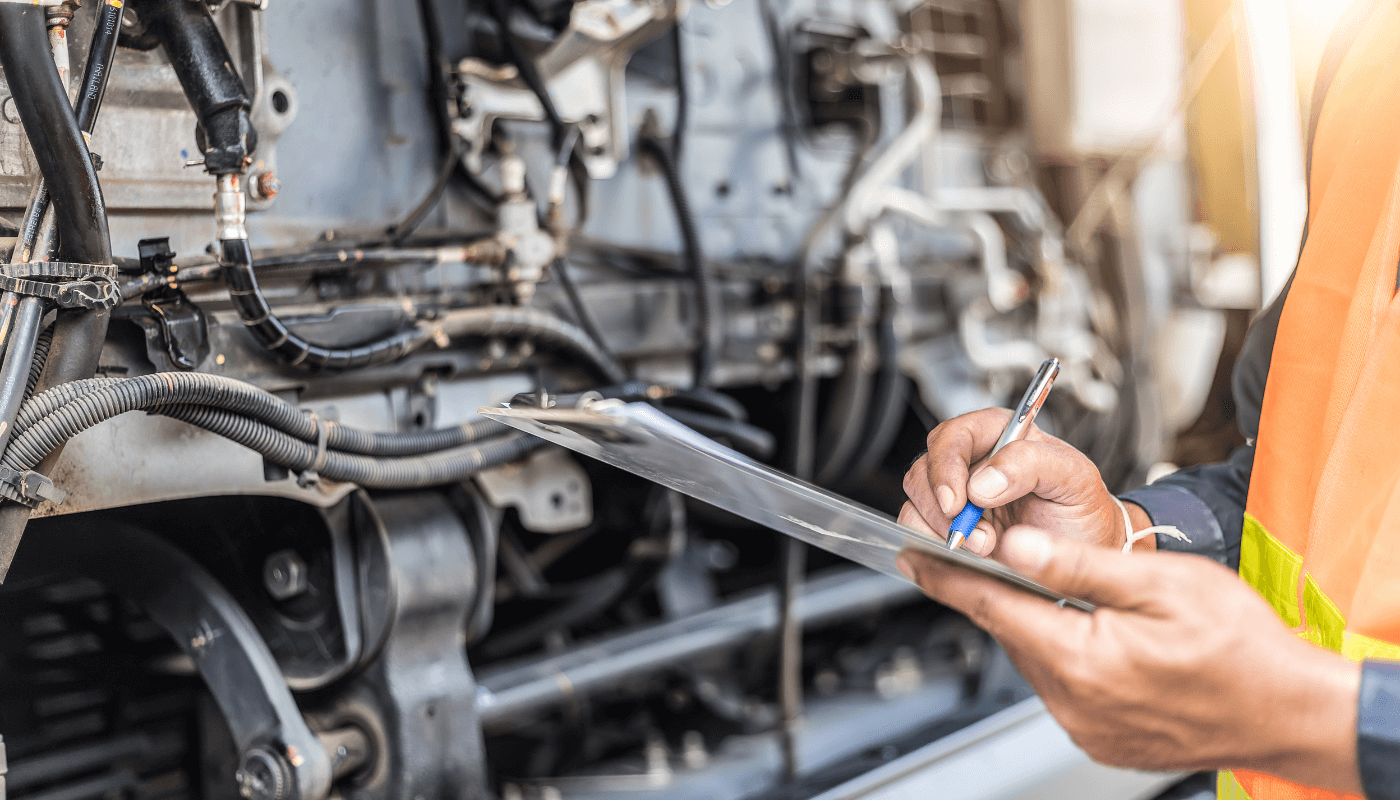
Digital checklist benefits for your vehicle fleet
 Luiz Felipe 5 min read

The digital checklist is a reality in many transport companies, known for speeding up vehicle inspections.
In addition to increasing operational efficiency, it contributes to better diagnosis of vehicle issues, greater visibility of vehicle availability, and standardization of the inspection process, while reducing common errors in manual completion.
This gives the fleet a more organized routine for keeping track of safety, maintenance, and compliance, provided checklists are well configured and carried out by the people responsible.
Want to learn more? Read on:
- Digital checklist benefits
- The digital checklist's impact on your vehicle inspection routine
- Steps to take advantage of all the benefits of a digital checklist
Digital checklist benefits
Variety of ready-made, editable templates
Using digital checklists gives the fleet access to different ready-made templates that can be customized according to each vehicle's and operation's specific needs.
This saves time creating new forms and also helps maintain comprehensive inspections tailored to cover critical vehicle aspects.
There is more: the ability to edit and modify existing templates quickly increases flexibility and responsiveness to changes in regulations or internal practices.
Diagnostic accuracy
With a digital checklist, issues identified during inspection are recorded directly in the system. This makes generating automatic work orders simpler when the company's process provides for this workflow.
While the driver carries out the diagnosis and records observations, the maintenance team receives detailed information on what needs to be done, helping prepare for necessary repairs, reducing waiting times, and improving fleet efficiency.
Automatic work order creation
Automatic work order creation is one of the digital checklist benefits that attracts the most attention, because it minimizes delays between identifying an issue and starting the maintenance process.
With this feature, as soon as an inconsistency is recorded in the checklist, a work order (WO) is generated and automatically sent to the technical team, facilitating a continuous workflow and reducing the risk of errors or omissions.
“Checklist traffic light”
The “Checklist Traffic Light” feature in the Prolog App system provides a clear view of each fleet vehicle's condition based on inspection records.
By accessing this tab, managers can quickly see which vehicles are in good condition and which require attention, based on the latest inspections.
To explain further: you see a list of all license plates registered in the system and the vehicle's status based on the latest inspection, whether OK and available for use, or undergoing maintenance with its criticality level.
Standardized completion
Unlike traditional paper methods, where consistency can vary, the digital format guides inspectors to follow the same criteria, with predefined fields and buttons.
This improves the reliability of collected data and also simplifies training new employees and implementing inspection policies, without replacing the need for proper execution by the person performing the inspection.
Automated reports
Digital checklists are excellent for generating automated reports, collecting data from each inspection and compiling it into formats that are easy to analyze.
These reports can include work order breakdowns, counts of nonconforming items, and average repair times per item.
This type of information contributes greatly to a fleet's strategic planning, allowing more detailed operational analysis and helping with informed decision-making.
The digital checklist's impact on your vehicle inspection routine
With a checklist app in place, drivers and technicians can complete inspections in a few clicks, allowing more vehicles to be checked in less time.
In other words, vehicles spend less time stopped for inspections and more time on the road, carrying out their operations.
Another effect is that the platform's templates (or those created by the user) must be completed in full without leaving blank answers, helping prevent items from being neglected or forgotten.
In addition, the ability to include photos and detailed notes directly on the device increases the accuracy of information recorded during inspections.
The digital checklist also plays a role in identifying issue patterns or recurrence, enabling interventions before defects worsen and optimizing the fleet's preventive maintenance routine.
Steps to take advantage of digital checklist benefits in your fleet
Select the most suitable system for your operation
Choosing the right digital checklist system should be based on your fleet's specific needs and size. Assess the available options in the market, considering factors such as usability, integration with other systems, technical support, and data security.
The ideal platform should be intuitive, easily adaptable to your operations, and capable of supporting the volume of data generated by your fleet.
Customize the available questionnaires (or create your own)
Once you have chosen the system, customize the questionnaires to reflect your fleet vehicles' requirements. Most digital checklist systems offer templates that can be adapted or allow you to create new questionnaires from scratch.
Make sure all vehicle safety and maintenance aspects are covered to ensure complete inspections.
Establish an execution schedule
Defining a regular schedule for completing checklists is fundamental to maintaining inspection consistency and reliability. Decide inspection frequency based on vehicle usage intensity and regulatory standards for your vehicle type and operation type.
This schedule must be clearly communicated to everyone involved, ensuring inspections are carried out without fail.
Assign the people responsible for inspections
Identify and train the team members who will be responsible for inspections. It is important that these employees clearly understand the procedures and know how to use the digital checklist system properly.
Define your tracking and data analysis routine
It is essential to define a routine for gathering data and assessing reports automatically generated by the checklist system itself. This analysis can reveal trends, areas requiring attention, and opportunities for improvement in fleet operations.
Use these insights to adjust maintenance practices, team training, or even make strategic decisions about fleet renewal and other major purchases or operational changes.
Schedule a demonstration of the Prolog App Electronic Checklist and discover firsthand the benefits of a digital checklist for your fleet. Take advantage of our free demo. Click here to schedule.
Frequently asked questions
What should you look for when choosing a digital checklist system?
What is the everyday difference between paper and digital checklists?
How can you reduce the time between detecting an issue and starting a repair?
What is the Checklist Traffic Light?
How often should the fleet complete checklists?
// newsletter
Fleet management content, straight to your inbox
Articles on tires, maintenance and fleet operations. No spam.