Road precautions: rules and tips for fleets
 Jade Zart 5 min read

Road safety is a topic that constantly appears in the media and fleet management discussions. When you know what precautions are needed on the road, your fleet drivers are better prepared to make responsible decisions behind the wheel.
Otherwise, your operation may face issues such as a high rate of fines, high maintenance costs, premature tire loss and above-average fuel consumption.
To understand the right actions for drivers on a route, learn about:
What precautions are needed on the road?
The necessary precautions are generally related to the rules set out in Brazilian traffic legislation. They concern actions that promote and ensure traffic safety to avoid accidents and their consequences.
In addition to complying with legislation, it is worth avoiding overly rigid guidance for situations that change along the route. Road safety depends on drivers’ constant attention and clear fleet management procedures.
Here are some of the main road safety rules:
Do not use the shoulder
The shoulder must not be used as a driving lane, a passing space or a shortcut in traffic jams. In Brazil, driving on the shoulder is a very serious infraction carrying a fine as a penalty under the Brazilian Traffic Code (article 193 of the CTB).
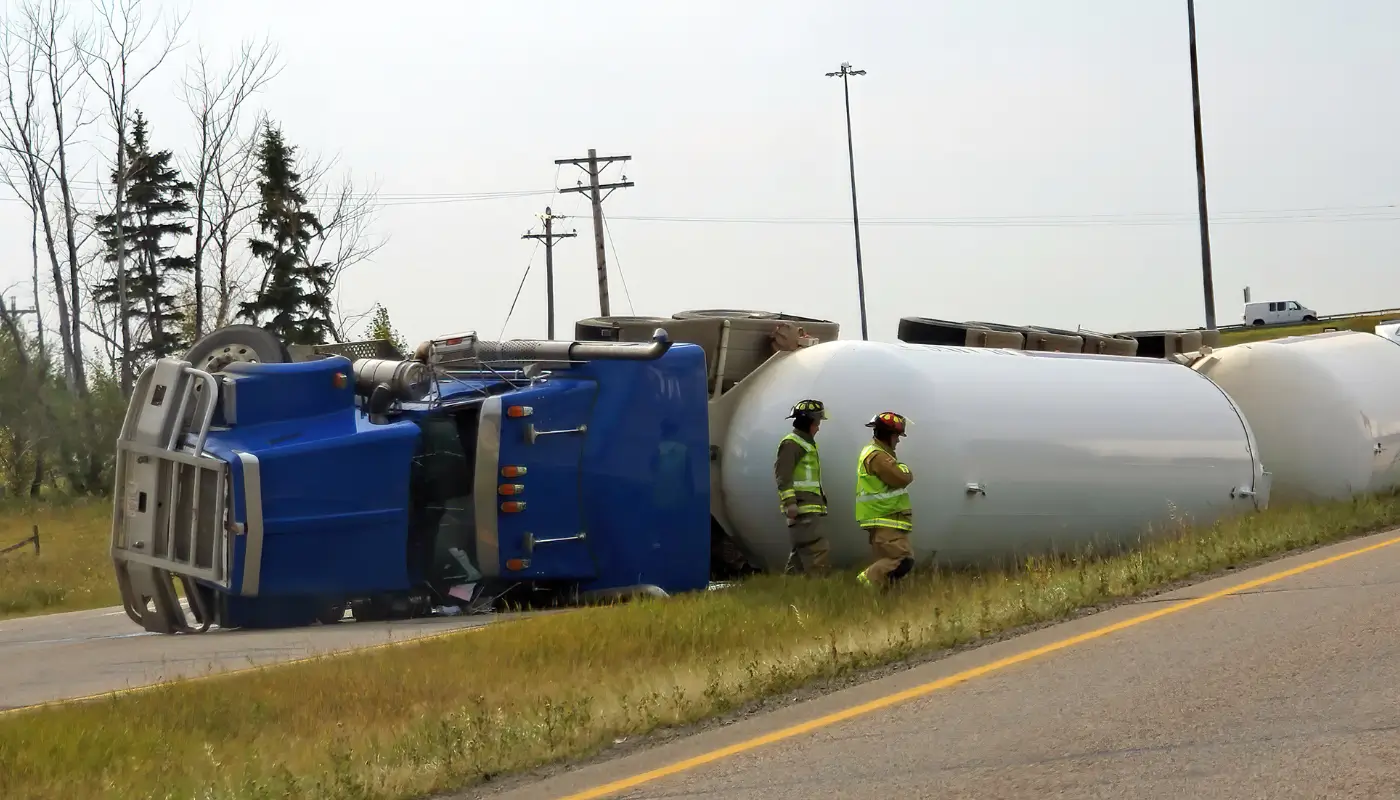
This rule does not eliminate the need to act in emergencies. If a breakdown, flat tire or another issue prevents the safe continuation of the trip, the situation must be treated as an emergency, with the appropriate warning signals in place, without turning the shoulder into a regular traffic area.
In an emergency, use the warning triangle and hazard lights
Emergencies such as a flat tire require the vehicle to remain stopped until resolved, whether by replacing the item or towing the vehicle, for example.
In these cases, the warning triangle is fundamental to alert other drivers and travelers that a vehicle with impaired movement is ahead. The recommended position for the warning device is 30 meters from where the vehicle stopped.
Wear a seat belt
The seat belt is an indispensable item for responsible, safe driving. It must be inspected every day before setting off on a route to check that it works correctly, and must be worn at all times while the vehicle is moving.
In Brazil, seat belts are mandatory for drivers and passengers on all roads nationwide. This is why checks must not be limited to the driver: everyone boarding must also use the equipment throughout the journey.
Respect the speed limit
This is a basic rule, but also one of the most frequently broken in traffic, and is among the most common fines received in both transport operations and by ordinary drivers.
There are different speed limits on urban roads, highways and so on. This is why it is important to pay attention to traffic signs and markings when driving a vehicle.
Maintain a safe distance between vehicles
A safe distance is not an exact measurement and must not be treated as a fixed range that works for every situation. The Brazilian Traffic Code requires drivers to maintain a safe lateral and frontal distance between their vehicle and other vehicles.
In practice, the most important point is for this distance to be sufficient to avoid accidents and collisions when faced with sudden braking. Fleet guidance must therefore reinforce the obligation to maintain safe space in relation to other vehicles, rather than work with a single distance for every route.
Use headlights and vehicle lights as appropriate
Signaling through headlights and lights is fundamental to safe traffic.
These items must not only be used in accordance with driving actions, but also be included in fleet vehicles’ daily inspection checklists.
On undivided highways outside urban areas, the Brazilian Traffic Code requires vehicles to keep their headlights on, even during the day. Brake lights, reverse lights, turn signals and hazard lights also need to work properly so other drivers understand each maneuver.
Respect maximum vehicle height signs
There are restrictions on the movement of heavy and large vehicles, especially in urban areas. It is the manager’s role to pay attention to this detail to prevent vehicle impacts and damage to city signs or structures.
However, the driver also needs this awareness in case of an emergency that requires a route change.
Other road safety tips
On the other hand, to know what precautions are needed on the road, you can also investigate the actual situation of your fleet’s vehicles and drivers. This lets you identify the main issues that occur and the most suitable measures for specific situations.
Some actions that make this possible:
- Check safety equipment and items
The vehicle safety inspection checklist serves to understand which vehicle safety items are damaged and must be corrected before setting off on a route.
These include components such as battery service life, brake and reverse lights, brake pads, tire calibration, seat belt, etc.
- Ensure the vehicle has an emergency kit
All vehicles need to be equipped with their emergency kit, including a warning triangle, spare tire, jack, lug wrench, battery jumper cables and other items that can help in this type of situation.
- Pay attention to other drivers’ signals
Knowing what precautions are needed on the road regarding other drivers is just as important as paying attention to your own vehicle and following all safety rules.
Cases of drivers being distracted or failing to give an important traffic signal are not rare. Although this is a risk, accidents and more serious consequences can be avoided if other drivers are attentive and know how to handle the situation.
Similarly, care is needed to avoid sudden stops when encountering animals on the road.
For this reason, training fleet drivers is a highly relevant action.
Defensive driving is one of the main types of training, but in addition, simulating road issues with drivers is fundamental so they are prepared when an emergency happens.
Did you like these tips on driving safely on the road? Find even more in our Traffic Safety booklet: download it free (in Portuguese).
Frequently asked questions
Why should you not use the shoulder?
How far away should the warning triangle be placed?
What is a safe distance between vehicles?
What should be checked on the vehicle before setting off on a route?
How can drivers be prepared for unexpected events on the road?
// newsletter
Fleet management content, straight to your inbox
Articles on tires, maintenance and fleet operations. No spam.