Freight transport checklist: 6 groups of items
 Jean Zart 4 min read

The checklist for freight transport trucks is an indispensable tool in any fleet's routine.
Keeping a truck in good condition before hitting the road is not only a matter of safety, but also of economy. After all, no one wants to deal with unexpected failures and extra costs.
A well-structured checklist prevents unpleasant surprises in the middle of the road. It also helps reduce spending on corrective maintenance, which tends to be much more expensive than prevention.
Read more below:
- What to include in the checklist for freight transport trucks
- Best practices for inspecting freight transport trucks
What should the checklist for freight transport trucks include?
The truck inspection checklist should cover all the critical points that affect the vehicle's safety and performance. These items are essential both to prevent accidents and to make sure the truck is operating efficiently.
Here are the main aspects that should be checked in a freight transport checklist:
General vehicle condition
- External structures (bodywork, bumpers and mirrors)
- Mounting and condition of the body or cargo box
- Doors and safety locks
Electrical system and lighting
- Operation of headlights, taillights and brake lights
- Instrument panel and indicators
- Battery and electrical wiring
Tires and wheels
- Tire pressure and wear condition
- Condition of the wheel and the lug bolts
- Presence and condition of the spare tire
Brake system
- Service brake and parking brake
- Brake fluid level
- Brake response test before the trip
Engine and mechanical components
- Engine oil and coolant levels
- Condition of belts and hoses
- Oil or other fluid leaks
Mandatory equipment and documents
- Fire extinguisher and signaling items required for the vehicle
- Warning triangle and basic tools
- Vehicle and driver documentation
Carrying out this truck inspection checklist before every trip helps avoid unexpected problems and helps keep the fleet always compliant. Before putting the vehicle on the road, the driver must check that the mandatory equipment is present and in good working order.
What are the best practices for inspecting freight transport trucks?
For the truck checklist to really make a difference in the operation, it needs to be adopted in a structured way. Some practices can optimize this process and ensure it is carried out in a standardized way and without failures:
Set inspection routines
Truck inspection should not be done only at critical moments. Creating a routine of checks ensures that small problems are identified before they cause bigger impacts.
Ideally, set different types of inspection according to frequency:
- Daily: before every trip, checking essential items such as brakes, tires and lights.
- Weekly: a more detailed check, including fluid levels and parts wear.
- Monthly and/or semiannual: a complete inspection for planning preventive maintenance and correcting mechanical wear.
Having this organization prevents unpleasant surprises, improves vehicle performance and increases the safety of drivers.
Use digital tools to optimize the process
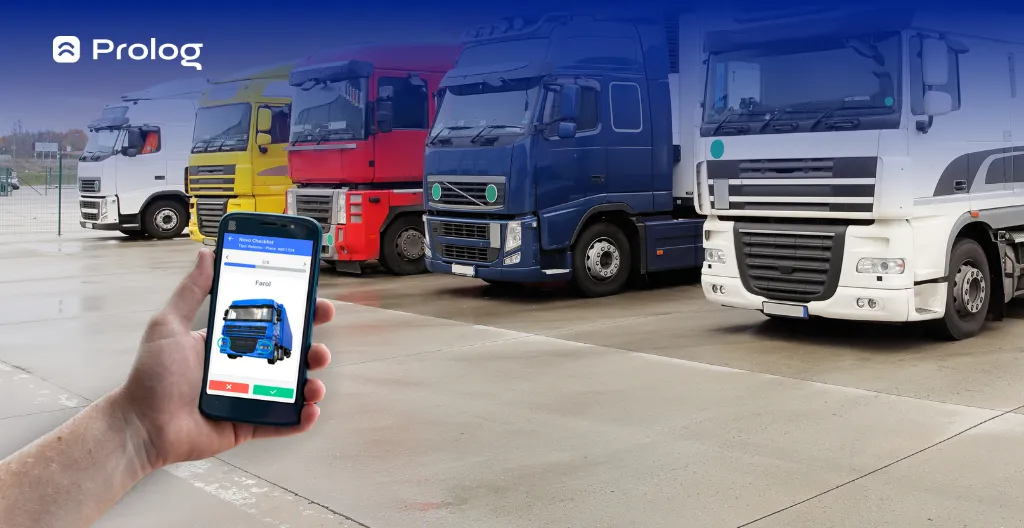
Many carriers still use paper checklists, which can lead to loss of information and a lack of standardization. The digital checklist is a solution that makes inspection faster and more reliable.
With a digital system, drivers can fill out the inspection directly on a phone or tablet, sending the information to managers right after completing the record.
This makes it possible to keep more accurate track of the fleet's condition, makes decision-making easier and eliminates problems such as lost documents or incorrectly filled-out checklists.
Define drivers' responsibilities for the checklist
Drivers are fundamental to the truck inspection checklist, because no one knows the truck better than the person driving it every day. That is why it is essential that they know exactly what to check and why it makes a difference.
Some practices to ensure drivers' buy-in include:
- Periodic training on how to carry out the checklist and why it matters.
- Defining a simple and practical workflow for filling out the inspection.
- Constant feedback and open communication to encourage drivers' active participation.
When drivers understand that the checklist is a tool that also protects their safety and prevents problems during the trip, they tend to carry out the inspection with more attention and commitment.
Doing the freight transport checklist is essential, but filling it out on paper no longer makes sense. With a digital checklist, everything becomes faster, more accurate and more accessible to managers.
If you want to optimize the inspection of your trucks, learn about Prolog's digital checklist solution!
Frequently asked questions
What should a freight transport truck checklist include?
Which documents should be checked in the freight transport checklist?
How often should the truck be inspected?
Why use a digital checklist instead of paper?
How do you get drivers to adopt the checklist?
// newsletter
Fleet management content, straight to your inbox
Articles on tires, maintenance and fleet operations. No spam.