
Hidden fleet costs: 6 examples and how to identify them
 Jade Zart 5 min read

Some costs are visible and easy to account for, such as fuel, maintenance and tires. The real challenge is uncovering hidden fleet management costs that are not so obvious at first glance.
These costs include unplanned overtime, engine idling that consumes fuel unnecessarily and inadequate fleet sizing, which can lead to an excess or shortage of vehicles available for work.
Indirect costs may be the real culprits behind reduced transport efficiency and productivity, negatively affecting vehicle quality and the overall progress of operations.
That is why identifying and managing these hidden costs is essential to optimizing fleet performance. Learn more below:
- What are the hidden costs in fleet management?
- How do hidden costs hinder fleet management?
- How can hidden fleet management costs be identified?
- Does fleet management software also have hidden costs?
What are the hidden costs in fleet management?
Driver overtime
Driver overtime is a significant hidden cost in fleet management. These expenses often arise from route inefficiency or underestimating the time needed to complete deliveries.
This excess work increases direct operational costs, but it can also lead to higher turnover, affecting team morale and increasing recruitment and training expenses.
Engine idling
Engine idling, when vehicles are left running unnecessarily, represents one of the hidden fleet management costs, not just because of wasted fuel but also because of additional wear on the engine and other vehicle components.
It is a habit that can reduce vehicles' useful life and increase maintenance frequency, raising operational costs. That is why the topic should be part of routine management, based on reliable operational records, driver guidance and analysis of recurring stops.
Inadequate fleet sizing
Inadequate fleet sizing can lead to both overutilization and underutilization of vehicles.
In the first case, vehicles can be overloaded, accelerating their deterioration and increasing maintenance costs.
In the second, investment in vehicles that remain idle much of the time represents an inefficient cost, negatively affecting return on investment.
Costs of fines and penalties
Fines and penalties for traffic violations or noncompliance with specific industry regulations can accumulate quickly, becoming a significant operational cost.
That is why keeping control of these events should also be part of analyzing hidden costs, along with other expenses that do not appear clearly in the fleet budget.
Expenses from delays and interruptions
Delivery delays and interruptions, often caused by logistical problems or vehicle maintenance failures, can result in high costs that are not fully apparent.
These expenses include direct ones related to resolving the problems, as well as some indirect ones related to damage to customer relationships and possible financial compensation.
Accelerated vehicle deterioration
Deterioration is a cost resulting from improper use, poor maintenance or constant overloading. It appears in the need for premature replacements and increased maintenance expenses, as well as affecting vehicle resale value.
How do hidden costs hinder fleet management?
Hidden fleet management costs draw on unbudgeted financial resources, complicating budget planning and reducing profit margins.
They can also indirectly affect service quality, since they may be related to vehicle upkeep and driver behavior on the road.
Fleet management requires not only control of visible costs but also an efficient strategy to identify and reduce these hidden fleet management costs, ensuring an operation without losses.
This reasoning is close to total cost of ownership: besides direct costs, indirect and hidden costs are included, such as operation, maintenance, unavailability and the asset's residual value. This perspective helps improve resource allocation, budgeting and supplier assessment.
How can you identify hidden costs in your fleet?
Identifying hidden fleet management costs requires close attention to operational details and a commitment to in-depth analysis.
Using technological tools, such as integrated fleet management software, can help reveal less apparent costs by organizing records, standardizing entries and making it easier to compare vehicles, routes, workshops, tires, drivers and periods.
Instead of relying on isolated impressions, management needs to cross-reference routine data: work orders, inspections, refueling, stops, delays, fines, consumption, vehicle availability and maintenance history. This makes it easier to separate an isolated problem from a pattern that eats into margins every month.
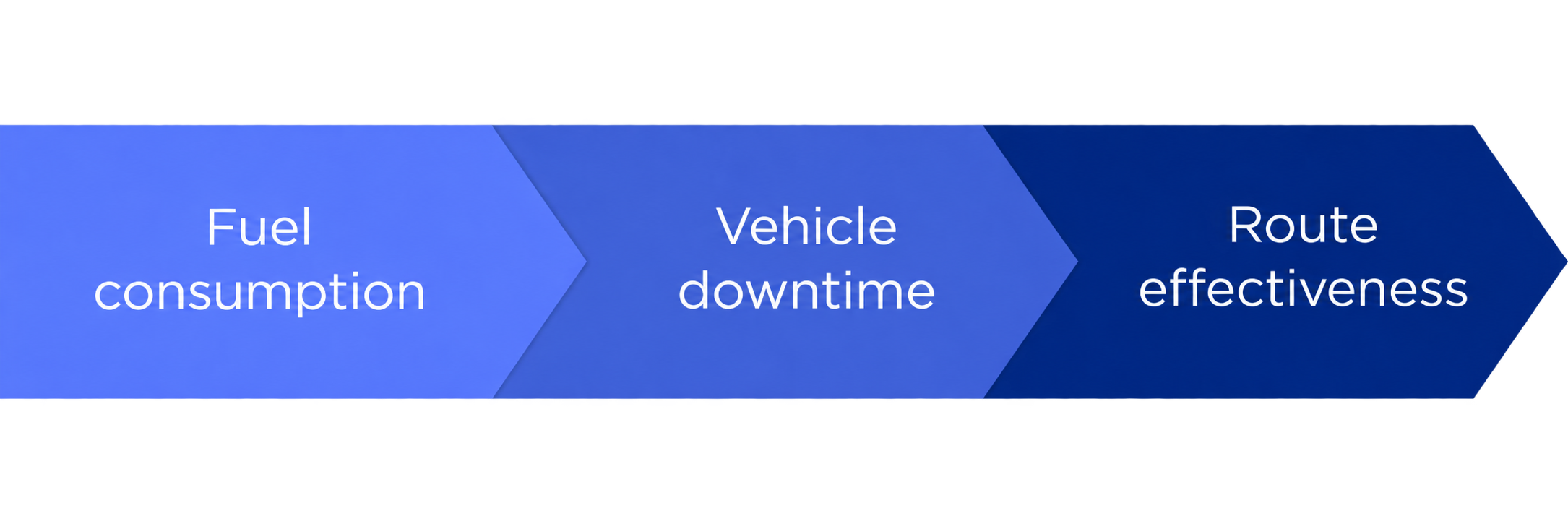
By monitoring indicators such as fuel consumption, vehicle downtime and route effectiveness, managers can identify areas of inefficiency that previously remained invisible.
It is also worth reviewing routes and journeys, because planning more efficient journeys can reduce distance traveled, stops at traffic lights and time in congestion. A comprehensive maintenance strategy, in turn, helps managers and drivers keep vehicles running more efficiently.
Does fleet management software also have hidden costs?
Yes, even fleet management software can bring hidden costs, especially if it is not carefully selected and implemented.
These costs can include unexpected licensing fees, expenses for training the team to use the software, additional costs for extra features or updates and technical support expenses.
In addition, incompatibility between the system and the company's existing tools and processes can lead to unplanned spending on integrations or on acquiring new compatible equipment.
Therefore, it is essential to carry out a detailed analysis of available fleet management software, considering all potential direct and indirect costs, to ensure an informed decision that aligns value for money with operational needs.
It is time to take the next step toward optimizing your fleet management, eliminating hidden costs and maximizing your fleet's operational efficiency.
Schedule a demonstration and discover how more organized management can help your operation record problems, prioritize actions and reduce costs that currently go unnoticed. Talk to a specialist.
Frequently asked questions
What are the hidden costs of a fleet?
Why is engine idling a hidden cost?
How does incorrect fleet sizing generate costs?
How can hidden costs in fleet management be identified?
Does fleet management software also have hidden costs?
// newsletter
Fleet management content, straight to your inbox
Articles on tires, maintenance and fleet operations. No spam.


