
Cost per kilometer driven: how to calculate it in the fleet
 Jade Zart 4 min read

Knowing a vehicle's cost per kilometer driven helps identify which vehicles have the best cost-benefit in your operation and which have above-average costs.
Identifying vehicles with problems related to maintenance and daily care also becomes more practical — as long as you have control over the fleet's expenses and budgets.
See below:
- What is cost per kilometer driven?
- How do you calculate cost per kilometer driven?
- Why is this calculation important?
What is cost per kilometer driven?
Called “CPK”, this is a performance indicator in vehicle management that shows how economical a vehicle is in your operation. Because it helps you understand costs, it can also be considered a financial indicator.
Cost per kilometer driven shows the amount a vehicle needs, per kilometer, to carry out its route.
Its main goal is to identify the models and makes with the greatest operational efficiency, that is, those that operate with a balance between higher performance and lower costs.
In addition, CPK can be calculated exclusively for the vehicle's tires, where the goal is practically the same: compare the different tire models and makes to identify the most economical and efficient ones.
How do you calculate cost per kilometer driven?
For this calculation, you need to first define the analysis period, whether it is a month, a quarter or even the full year. That way, it will be easier and more organized to gather the data for your calculation.
And this data is:
- The vehicle's monthly costs, fixed and variable
A vehicle's costs can be fixed, such as IPVA (Brazil's annual vehicle tax) and licensing, or variable, such as fuel and maintenance services.
It is important that you know how to gather and identify all of them so that your cost per kilometer driven results are more accurate.
- The vehicle's mileage driven
This information represents the distance traveled, either per route or within a period of time, which is what we are looking for in our vehicle CPK calculation.
The calculation to find the vehicle's CPK is:
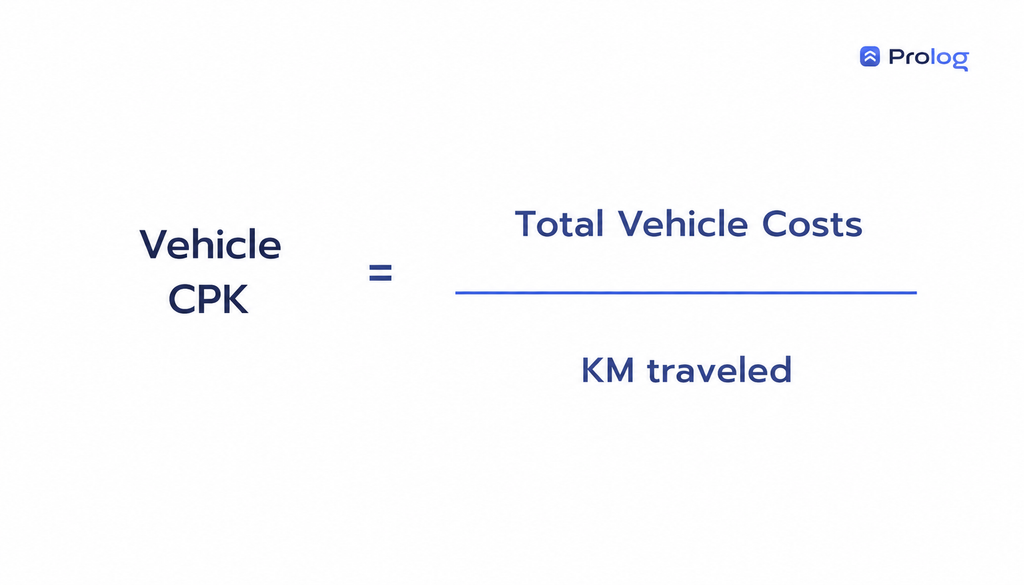
Calculate the vehicle's fuel consumption cost
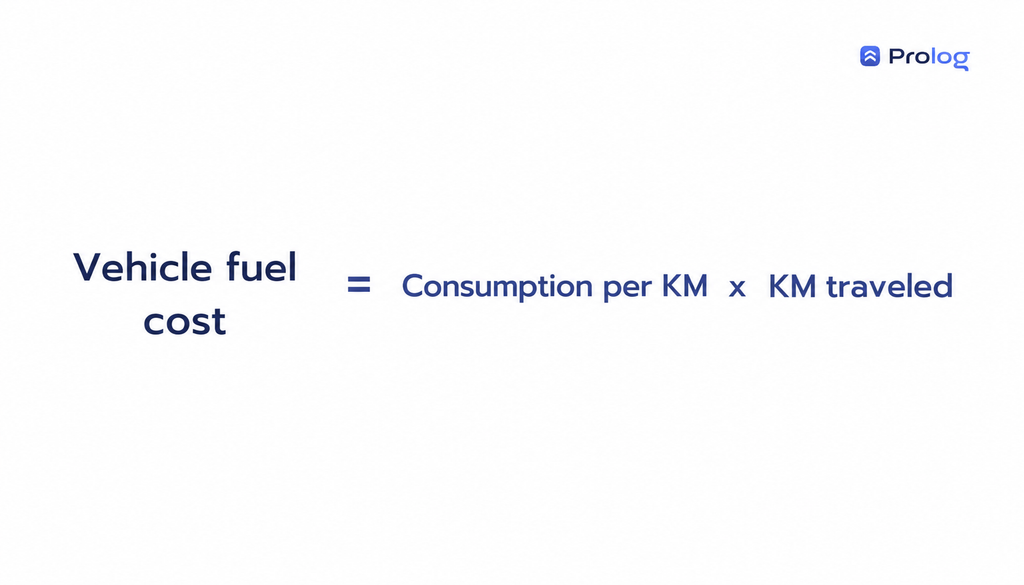
On the other hand, to calculate fuel expenses for a vehicle model in a given period, you need to know the fuel price in the analysis period and the vehicle's average consumption.
First, do the calculation:
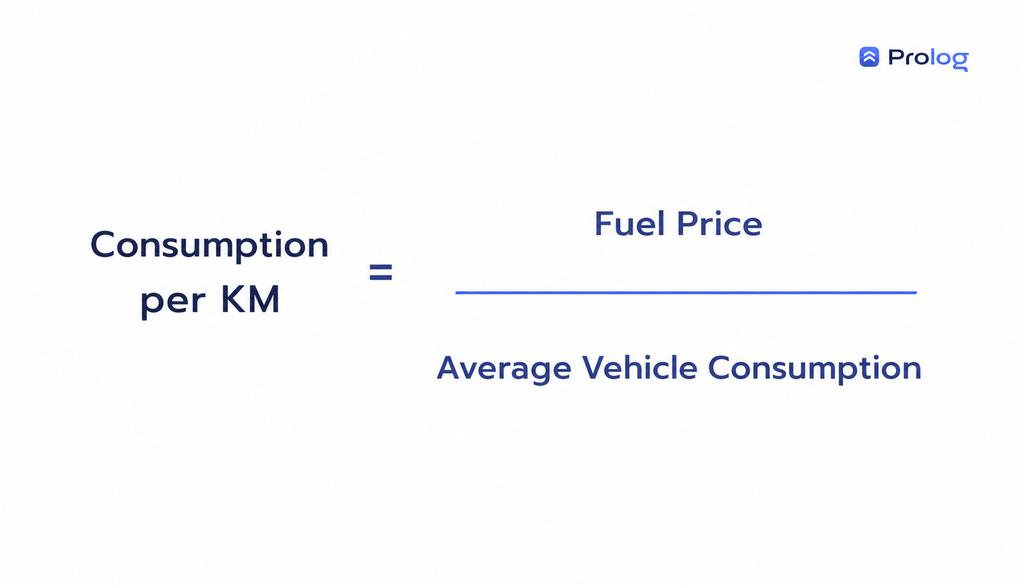
Then, with the result, calculate:
Why is it important to know how to calculate cost per kilometer driven?
Calculating this cost makes it possible to keep closer track of fleet expenses, assess vehicle performance and identify opportunities for improvement. It also helps you understand a vehicle's performance and make decisions about fleet renewal, control technologies, driver training, and so on.
Take a closer look at these factors:
The manager needs to identify the vehicle models with the best cost-benefit
The result of the cost per kilometer calculation makes it possible to compare the different models in your fleet. That is why it is an indicator that helps identify the cost-benefit of each asset.
This way, you can decide which models should be kept in operation and which can be resold, for example.
The calculation also establishes an operating benchmark, making it easier and faster to identify problematic issues when you notice an unexpected increase in the results.
Remember that factors such as the driver's behavior in traffic and lack of maintenance can influence the calculation.
Keep closer track of fleet expenses
When you calculate a vehicle's CPK, you also get a better view of what is being spent on fuel, maintenance, insurance and other costs related to each vehicle.
When changes occur in the cost per kilometer values of a vehicle, it is also an indication that other areas may have high costs. When you notice increases, you can investigate these related areas and find the necessary measures in advance.
Assess fleet performance
Knowing how to calculate cost per kilometer driven also makes it possible to assess fleet performance. That is because, by comparing the costs of different vehicles, you begin to identify those that are more efficient in fuel consumption and in the number of maintenance services.
These vehicles can become your new reference for choosing new vehicles and for improving the routine and activities of your fleet's preventive maintenance.
Identify opportunities for improvement
This is another benefit of knowing how to calculate cost per kilometer driven. By analyzing costs more carefully, it is possible to discover where resources are being wasted and take the appropriate measures to correct the situation.
For example, maintenance problems cause higher fuel consumption and can lead to delivery delays. With CPK being calculated and assessed regularly, it is possible to identify these problems and act to resolve them, improving the company's allocation of resources.
Keep learning about fleet performance indicators and how to use them in your management.
Frequently asked questions
What is cost per kilometer driven (CPK)?
How do you calculate a vehicle's CPK?
What data do you need to calculate CPK?
Why is calculating CPK important for fleet management?
Can CPK also be calculated for tires only?
// newsletter
Fleet management content, straight to your inbox
Articles on tires, maintenance and fleet operations. No spam.


