
Most used transport system in Brazil
 Jade Zart 5 min read
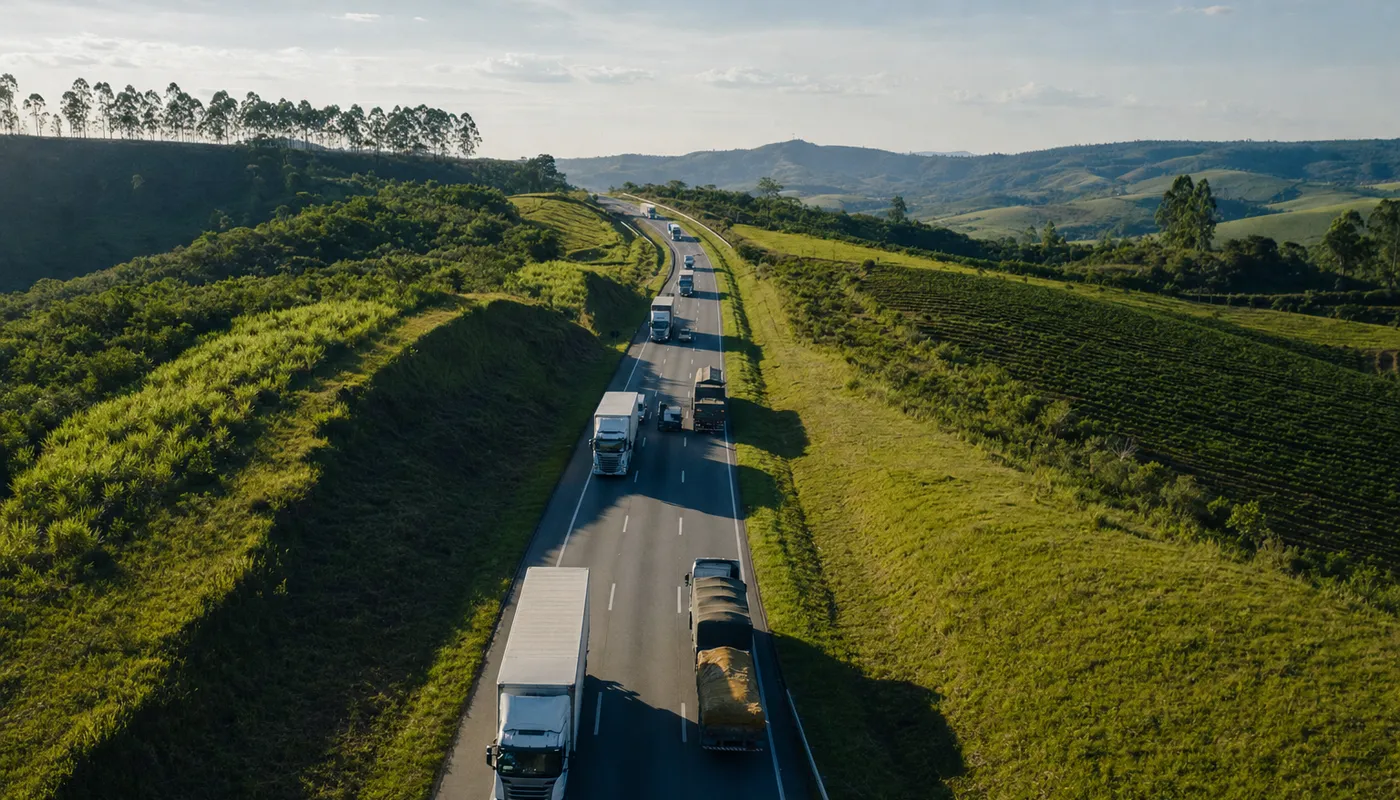
The most used transport system in Brazil today is road transport, which accounts for a large share of the transport of freight and passengers in the country.
This predominance reflects Brazil's geographic and economic characteristics, in which roads and highways remain the main route for trade and logistics flows.
Dependence on this system raises relevant questions about infrastructure, efficiency, costs and environmental impacts.
These aspects reinforce the need to better understand the transport matrix, its modes and the strategies capable of reducing bottlenecks without losing the flexibility of road transport.
See below:
- What are the transport systems?
- What is the most used transport system in Brazil?
- What is the most used transport system in other countries?
- Challenges faced by the most used transport system in Brazil
- What are the trends for the most used transport system in Brazil?
What are the transport systems?
A transport system brings together modes, services and infrastructure organized to enable the movement of people, cargo, goods and merchandise. In practice, each mode is better suited to certain types of operation, distance, cost and volume transported.
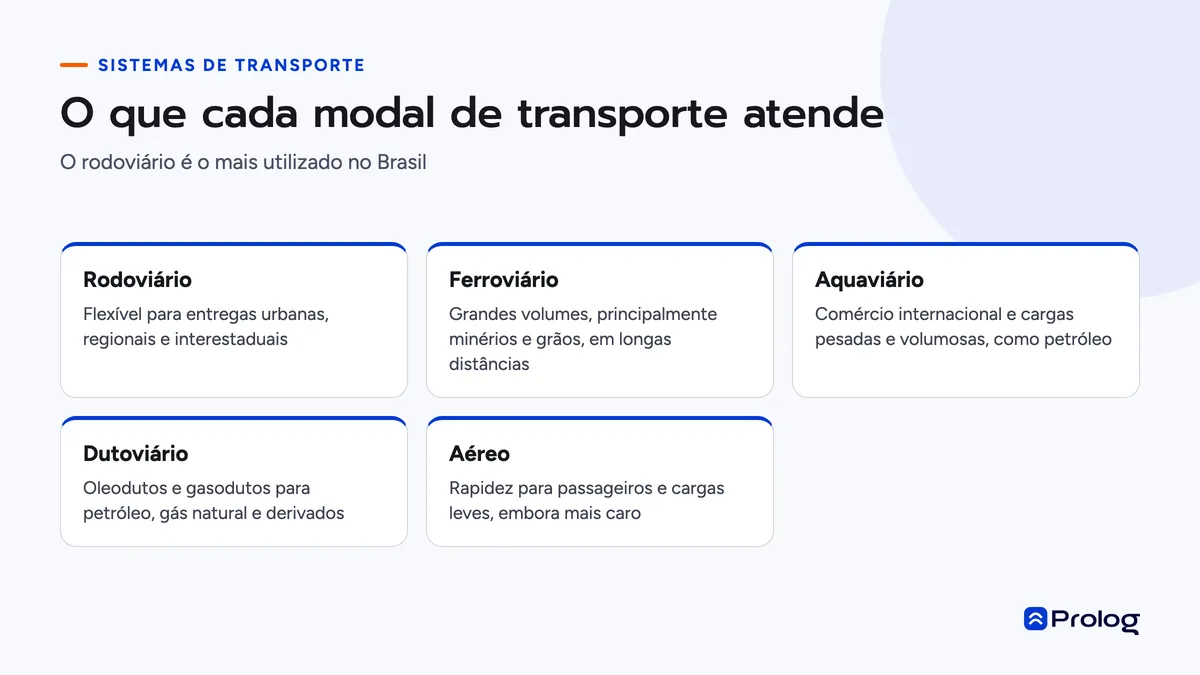
Road
Road transport is essential for moving freight and passengers. The wide network of roads and highways in Brazil makes it easier to reach different regions and makes this mode a flexible option for urban, regional and interstate deliveries.
Rail
Rail transport, although less extensive than road transport, is important for transporting large volumes of cargo, mainly ores and grains, offering an efficient option for long distances and for highly predictable flows.
Waterway
Waterway transport, made up of sea and river routes, is used mainly for international trade and heavy and bulky freight transport, such as oil and oil products.
Pipeline
The pipeline system, which includes oil pipelines and gas pipelines, is used to transport products such as oil, natural gas and their derivatives, and is a safe and continuous option in specific operations.
Because its installation is more expensive and depends on dedicated infrastructure, it is one of the least used modes in day-to-day cargo operations.
Air
Air transport in Brazil is fundamental for the fast transport of passengers and light cargo. Although more expensive, it is essential for remote areas, for urgent cargo and for transporting high-value items.
What is the most used transport system in Brazil?
The most used transport system in Brazil is road transport, responsible for moving most of the freight and passengers in the country.
This system is the most widely chosen because of the extensive road network that connects many cities and regions, providing flexibility and accessibility to most destinations.
The predominance of road transport also reflects Brazil's economic and geographic structure, making it the main choice for many transport needs, for both short and long distances.
At the same time, national logistics plans treat the adjustment of the transport matrix as a planning issue, with a focus on reducing costs, improving the level of service and seeking greater balance among the modes.
What is the most used transport system in other countries?
Although the most used transport system in Brazil is road transport, in nations with more diversified transport infrastructure, such as many European countries and the United States, there is a greater balance among road, rail and waterway modes.
While Brazil stands out for its dependence on road transport, other countries invest more in railways and canals for distributing heavy and long-distance cargo, which can result in greater efficiency and productivity.
This contrast helps explain why integration between transport modes appears as an important guideline in mobility and logistics policies: combining modes can broaden the alternatives for different types of cargo and route.
Challenges of the transport system in Brazil
Road infrastructure and maintenance
Roads in poor condition, a lack of adequate signage and the constant need for repairs contribute to higher operating costs, affect transport efficiency and raise the risk of accidents.
That is why planning public and private interventions in transport infrastructure is a decisive point for improving the organization of the sector and reducing bottlenecks in important logistics corridors.
Congestion and efficiency
The road transport system in Brazil faces serious congestion problems, especially in large cities and main logistics corridors.
This results in delivery delays, higher fuel consumption and lower overall efficiency of the transport system.
In urban operations, integration between modes and services can also help mitigate the environmental, social and economic costs of moving people and cargo.
Environmental impact and sustainability
Road transport is one of the major contributors to greenhouse gas emissions in Brazil.
The search for more sustainable alternatives, such as more efficient vehicles and alternative fuels, is essential to reduce environmental impact and promote sustainability in the transport sector.
Logistics planning documents also point to reducing pollutant emissions as a goal associated with improving the transport matrix.
Transport safety
Although effective solutions to the problem of road safety are emerging, it remains a challenge on Brazilian highways.
Problems such as the high incidence of accidents, lack of enforcement and inadequate driving practices compromise the safety of drivers, passengers and cargo, highlighting the need for improvements in traffic education and infrastructure.
What are the trends for the most used transport system in Brazil?
The trends for the road transport system, the most used in Brazil, point to a future focused on sustainability, intermodal planning and technological innovations.
An increase is likely in the use of electric vehicles and advanced transport management systems, such as those that use artificial intelligence to optimize routes and different areas of the fleet, such as vehicle maintenance management.
Digitalization and connectivity are also becoming increasingly fundamental, with the implementation of systems for real-time monitoring and management of the different stages of transport operations.
Want to stay up to date on the latest trends and insights from the transport sector? Subscribe to Prolog's free newsletter (in Portuguese) to get information that will help improve your fleet management.
Frequently asked questions
What is the most used transport system in Brazil?
Why is road transport the most used in Brazil?
What are the main challenges of the road transport system in Brazil?
What other transport systems exist besides road transport?
How does transport in Brazil compare with other countries?
// newsletter
Fleet management content, straight to your inbox
Articles on tires, maintenance and fleet operations. No spam.


