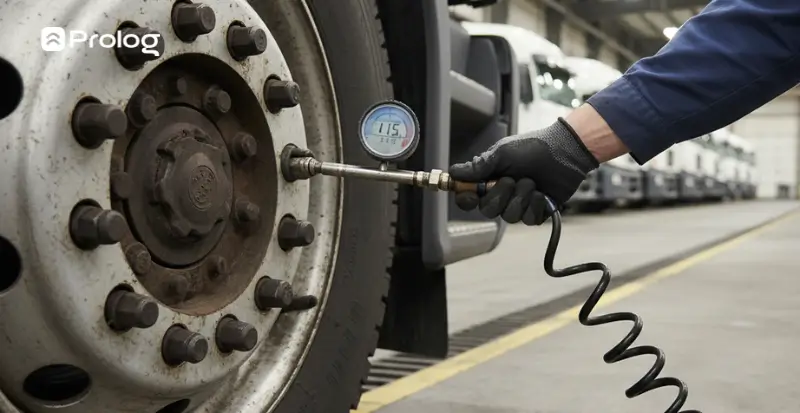
Fleet tire audits and inspections: routines and analyses
 Luiz Felipe 4 min read

The tire audit process helps with quality control and tire preservation in your transport operations.
When managing the tires of a transport fleet, you must always pay attention to tire condition and understand whether a tire is fit for use in the operation.
A tire audit becomes necessary to keep control of fleet tire health, including uneven wear and other damage.
Here is what we will cover:
- What is an audit in tire management?
- What is the routine for a tire audit?
- What analyses are performed in a tire audit?
What is a tire audit?
A tire audit is a verification process to assess whether a tire is in ideal operating condition, as determined by rules, laws, standards and/or regulations concerning these assets.
When performed internally, as part of fleet tire management, it can also be a way to understand whether drivers and other employees are doing their jobs properly and whether tire care meets asset preservation needs.
Tire audit objectives include:
- Gathering information for internal knowledge of the fleet and company;
- Preventing theft and fraud;
- Increasing fleet safety;
- Reducing the company's tire costs.
How does a fleet tire audit routine work?
Inspect tires in use
This inspection is the most important stage of tire management, because the data shows how much faster a tire is wearing than it should.
Besides contributing to a Cost per Kilometer (CPK) calculation, this information also helps plan purchases of the best and most economical tires for your operation.
Prepare the tire report and diagnosis
After collecting and gathering data about your fleet's tires, the next step in the tire audit is to generate the report and diagnose the assets. This is when information is analyzed and understood, identifying whether there are problems in your tire management or whether the tires meet expected standards.
In general, the diagnosis aims to determine whether the tires are in good condition. If so, management continues with existing processes; if the tires are outside the desired parameters, the reason and consequences must be identified, along with actions to improve results.
Adjust processes as needed
After the diagnosis, you need to assess which department has the main problem and the best way to implement the planned changes.
For example, if the tire audit shows a localized wear problem in the tire tread rubber, the most likely cause is harsh braking by the driver.
In this case, the driver should be alerted and instructed on best practices so that this problem can be avoided.
Keep recording tire useful life data
Always recording data is fundamental to efficient tire management and to seeing results from the audit process. If you stop doing this, you will have no way of assessing whether changes after a diagnosis had an effect or even created new problems.
Inspect discarded tires
Discarded tires also need to be inspected and their disposal reason assessed.
This helps determine whether they were discarded correctly or prematurely, understand the reason and identify actions that can be taken beforehand to increase tire durability.
What analyses are performed in a tire audit?
In general, an audit involves three fundamental analyses:
Analysis of tire inspection and maintenance processes
Tire management processes run from acquiring these assets to their disposal, but one activity stands out: tire measurements. It is important to measure internal pressure and tread depth regularly.
That is why the first analysis in a tire audit concerns this routine.
The auditor needs to understand how often these measurements are being taken to determine whether the frequency is considered good, average or inadequate.
This information will also provide a basis for subsequent analyses, considering that problems in the tires' internal structure or rubber may be caused by neglecting tire measurements when the frequency is average or inadequate.
Analysis of tire casings and their scrapping reports
When a tire is discarded, you need to identify the reason and record it in a tire scrapping report (or disposal report).
In more modern management, a tire management system helps with this stage and even allows photos of the scrapped tire to be included to easily identify its condition at disposal. In other management approaches, spreadsheets or manual work order records can be used.
These are the tools that will provide the starting point for analyzing tire disposal data.
In addition, the tires themselves must undergo the audit so the auditor can understand whether the reasons described in the reports match reality, or whether information that could contribute to better fleet results is missing.
Analysis of tire losses
At this point, the analysis takes a broader view.
Previously, the auditor was looking at how disposal information is recorded and whether this is done correctly and completely. Now, the aim is to identify the number of tires lost prematurely and how often this happens.
Discover a tire management system that generates reports automatically after data collection and provides essential information to improve the quality of your operations.
Read our free material and learn about all its features and benefits: download the Tire Management Solution Guide for free here (in Portuguese).
Frequently asked questions
What is a tire audit?
How does a fleet tire audit routine work?
What analyses are performed in a tire audit?
What should you do when an audit identifies uneven wear?
Why inspect discarded tires?
// newsletter
Fleet management content, straight to your inbox
Articles on tires, maintenance and fleet operations. No spam.