
Tire expiration: what the manufacturing date tells you
 Jade Zart 4 min read

Tires are crucial components in transport operations, and understanding their various characteristics helps optimize their use and durability. One of the most common questions concerns tire expiration and how long tires can be used.
This is because tires do not include an expiration date in their information, only a manufacturing date. The reason is that they really do not have an expiration date.
Tires only have an average useful life that accounts for the natural oxidation of rubber, but if they are in good condition, they can be used longer without problems, extending their life cycle.
- Do tires have an expiration date?
- How can you find out when tires expire?
- Is there any risk in driving on expired tires?
- When is it time to replace fleet tires?
- What signs indicate that tires are nearing the end of their useful life?
Do tires have an expiration date?
Truck tires do not have a specific expiration date, but rather a manufacturing date marked on the sidewall.
The period associated with tires generally refers to the warranty, which is normally 5 years from their manufacturing date, but may vary depending on the manufacturer and supplier.
This period is linked to the natural oxidation of rubber.
For tires to reach this useful life, proper care is essential, such as avoiding excessive or uneven wear. Without this care, useful life can be reduced, and the possibility of retreading for reuse may be compromised.
What is a tire's useful life?
A tire's useful life is more easily measured by mileage than by years of use. It is determined by several factors, including conditions of use, maintenance and storage.
Generally, a new tire under ideal driving conditions has a useful life of around 50 to 80 thousand km.
During use, you should have a routine for tire management in the fleet, regularly checking signs of wear, such as tread depth and the evenness of tread wear.
In addition, factors such as exposure to extreme temperatures, improper storage and excessive loads can accelerate wear and reduce a tire's useful life.
How can you find out when tires expire?
To find out about truck tire expiration, it is essential to check the manufacturing date, indicated by a four-digit code on the tire's sidewall. The first two digits represent the week and the last two the year of manufacture.
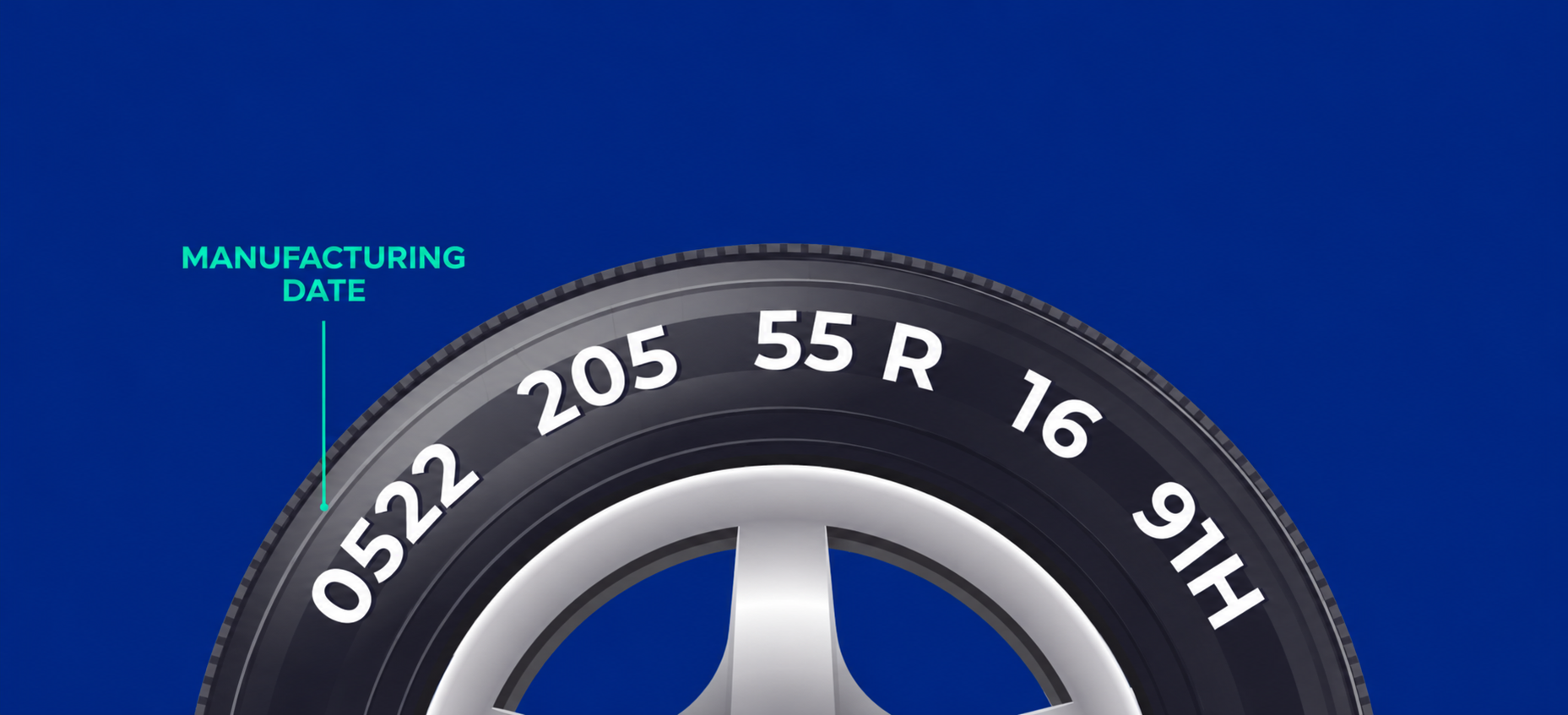
Although tires have no fixed expiration date, the general recommendation is to assess them carefully throughout their use, especially from 5 years of use onward (the average warranty period specified by manufacturers).
Depending on the conditions observed during these assessments, tire replacement may be appropriate.
In general, tire “expiration” has more to do with the natural degradation of rubber and conditions of use than with a specific date.
Is there any risk in driving on expired tires?
Despite having no fixed expiration date, tires grow old and rubber undergoes a natural degradation process, reducing tire grip and making them more susceptible to failures such as ruptures or tread separation.
So yes, there is a risk in driving on old tires.
They can also lose effectiveness in rainy conditions, increasing the risk of hydroplaning.
Another important factor is the internal structure of tires, which can weaken over time, increasing the risk of accidents, especially under heavy loads or at high speeds.
When is it time to replace fleet tires?
The right time to replace fleet tires depends on factors including tread depth, signs of wear and tire age. The main recommendation is to consider replacement when tread depth reaches the 3 mm limit.
Although the minimum legal limit in Brazil is 1.6 mm, once tires reach that stage, they are more likely to be rejected for retreading. Therefore, removing a tire from service between 2 and 3 mm increases its chances of reuse and, consequently, its useful life.
In addition, signs such as uneven wear, cracks, bulges and structural damage indicate that replacement is necessary.
Tires with more than five years of use should also be assessed carefully. Even if they visually appear in good condition, they may have internal damage or casing fatigue.
What signs indicate that tires are nearing the end of their useful life?
One of the most obvious signs is a decrease in tread depth, which, when it falls below 1.6 mm, indicates complete tread wear.
Cracks on tire surfaces are a clear sign of aging and rubber degradation.
Uneven wear may also suggest alignment problems or excessive use, while deformations such as bulges or protrusions indicate serious internal damage.
Other signs of the end of a tire's useful life include visible cuts and punctures.
Keep your fleet safe and efficient with our e-book “Tire Management Guide” (in Portuguese). Download it now to ensure you are making the most of your fleet tires' useful life and running your operations safely and economically.
Frequently asked questions
Do truck tires have an expiration date?
How can you find a tire's manufacturing date?
What is a tire's useful life in kilometers?
At what tread depth should I replace a tire?
Is driving on old tires risky?
What signs indicate the end of a tire's useful life?
// newsletter
Fleet management content, straight to your inbox
Articles on tires, maintenance and fleet operations. No spam.


