Truck bearings: defects, replacement and types
 Luiz Felipe 5 min read
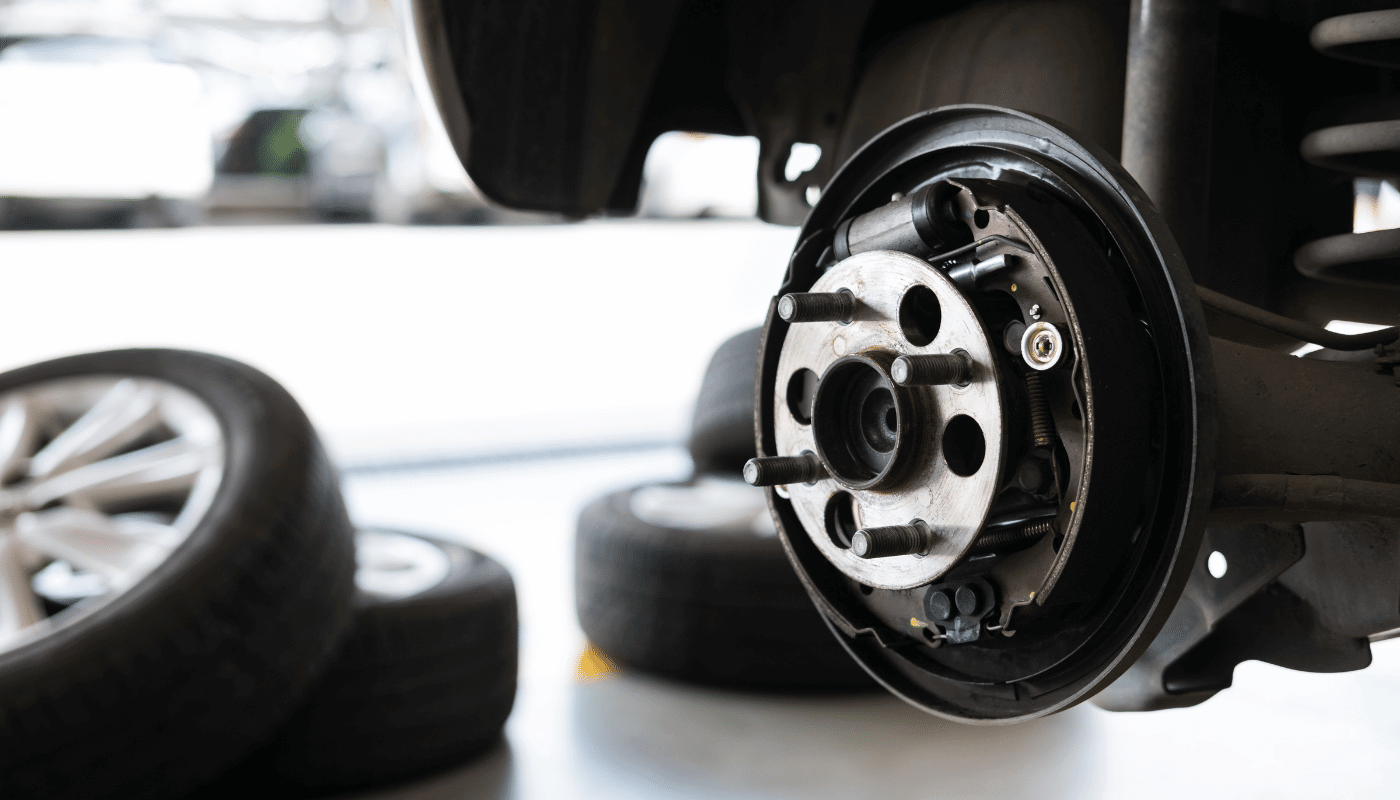
The truck bearing is a component that allows rotational movement between two or more elements.
The part acts as a friction reducer between the vehicle's components, which prevents wear and a shorter useful life for the truck's other components.
Bearings consist of an inner ring and an outer ring, several rolling elements and a cage, and their manufacturing is highly standardized, following strict safety standards.
After all, it is one of the main parts responsible for preventing ruptures in the truck's structure, preventing accidents on the road.
Here is what you will find below:
- Why replace the truck bearing?
- What are the most common defects in the truck bearing?
- When is it time to replace the truck bearing?
- What are the types of bearings?
- What care should be taken with the truck bearing?
Why replace the truck bearing?
The bearing performs a very specific function in the truck's wheels: it ensures that drivers can travel the roads with agility and safety. So it is essential that it always be in the best running condition.
It also serves to provide movement between parts and other elements, which ends up reducing the friction between them and preserving the truck's useful life.
This means that, when in good condition, it brings savings on maintenance and fuel consumption. Otherwise, it can lead to problems such as loss of stability, shaking, increased fuel consumption and accelerated tire wear.
That is why replacement should never be postponed when the evaluation indicates that the part is no longer in a safe condition for use. And here is a tip: always opt for original brands of proven quality.
What are the most common defects in the truck bearing?
Some of the most common problems bearings show are wear, fatigue and mechanical failures. That is why it is so important to keep track of how they are working on a regular basis.
When it is worn, this may be due to inadequate lubrication of the part, contamination by dust, sand or other debris, or excess weight when loading the vehicle.
This last cause also leads to bearing fatigue, just as incorrect mounting can have this consequence.
Mechanical failures can happen for all of these same reasons, so it is essential to evaluate how the bearing is working fairly frequently and to keep the part in stock for any replacement needs that may arise.
Want to improve your fleet's maintenance management? Talk to a Prolog specialist
When is it time to replace the truck bearing?
Because it is easy to access, the wheel bearing can undergo frequent inspections as part of the fleet's maintenance routine. Instead of treating a single mileage milestone as the rule for all trucks, it is worth defining the cadence according to the maintenance plan, the type of operation, the vehicle's history and the condition found during inspections.
Regardless of any maintenance forecast, this does not mean it cannot fail before the next scheduled service.
If the driver notices irregular rolling while on the route, with noise or shaking of the vehicle, they should ask the fleet manager for a maintenance service to evaluate the issue — and arrange for the bearing to be replaced if the suspicion is confirmed.
What are the types of bearings?
There are a few different types of bearings, each better suited to different functions:
Axial
The axial bearing, also called a thrust bearing, is indicated for applications in which the load acts in the direction of the shaft. There are axial ball, tapered, cylindrical and spherical bearing configurations designed to handle high axial loads with precision, always respecting the application intended for each assembly.
Ball
The single-row deep groove ball bearing is suited to high rotation speeds and must always be very well aligned on its shaft.
There are also angular contact and precision ball configurations, used in markets such as automotive, industrial, aerospace and power transmission. In the truck, the choice should consider the part's function in the assembly and the specification applicable to the vehicle.
Roller
The cylindrical roller bearing is one of the options used in heavy-load applications, along with tapered and spherical designs available for a wide variety of uses.
The tapered roller bearing is associated with applications that require control of loads in the assembly, while cylindrical and spherical designs can serve other wheel, axle or system arrangements, according to the component's specification.
Self-aligning
The self-aligning ball bearing has two rows of balls and adjusts to rotation angles. That is why it copes better both when there is wheel misalignment and when there is possible shaft deflection.
Both single-row and double-row self-aligning roller bearings are used for heavy loads, as long as the application, mounting and maintenance are in line with the vehicle's needs.
What care should be taken with the truck bearing?
Keeping a preventive maintenance routine is always the best recommendation. Through it, the inspector can check the bearing's mounting, tightening and tolerance, among other factors that are affected by use.
In addition, failing to replace or maintain it can cause a drop in the vehicle's performance, directly affecting how it performs. Some tips for keeping the bearing in good condition:
- Carry out mounting using the indicated tools;
- Keep the bearing in its original packaging;
- Handle the bearing carefully;
- Lubricate within the recommended intervals;
- Keep up regular inspections of the shaking and noise level.
Beyond that, an important point is to pay attention to lubrication, which can cause problems due to a contaminated lubricant or one of the wrong type for the vehicle model. Sealing and lubrication solutions exist precisely to retain lubricant, block contaminants and extend the bearing's life when applied correctly.
Finally, remember that:
Whenever there are failures in the vehicle as a whole, it means the bearings may be overloaded or damaged. This is one of the reasons that make the vehicle inspection checklist so important.
Other reasons include improving maintenance planning, always identifying the necessary services, such as truck bearing replacement, reducing operating costs and greater safety on routes.
Using a control method, such as spreadsheets or a system, also provides a broad view of the fleet's condition and reduces errors and irregularities in inspection lists.
To start using the best checklist templates, download our templates for free here (in Portuguese). Just print them and start using them!
Frequently asked questions
What is the truck bearing for?
What are the most common bearing defects?
When should the truck bearing be replaced?
What happens if the bearing is bad?
What are the types of truck bearings?
What care keeps the truck bearing in good condition?
// newsletter
Fleet management content, straight to your inbox
Articles on tires, maintenance and fleet operations. No spam.