Truck fuel consumption: table and calculation
 Jade Zart 9 min read
It is common knowledge that truck fuel consumption is one of the main expenses in freight transport fleets. However, not everyone knows how to manage it and plan company expenditure based on reliable data.
To find out, you need to understand complementary factors such as calculating consumption, how many kilometers per liter a truck travels and which records should appear in a tracking table.
Beyond thinking about reducing consumption, you need control of other stages to accurately identify why fuel consumption rises and falls.
Below, learn:
- How to manage truck fuel
- How to calculate truck fuel consumption
- What increases fuel consumption
- Tips to improve truck fuel efficiency.
How do you manage truck fuel?
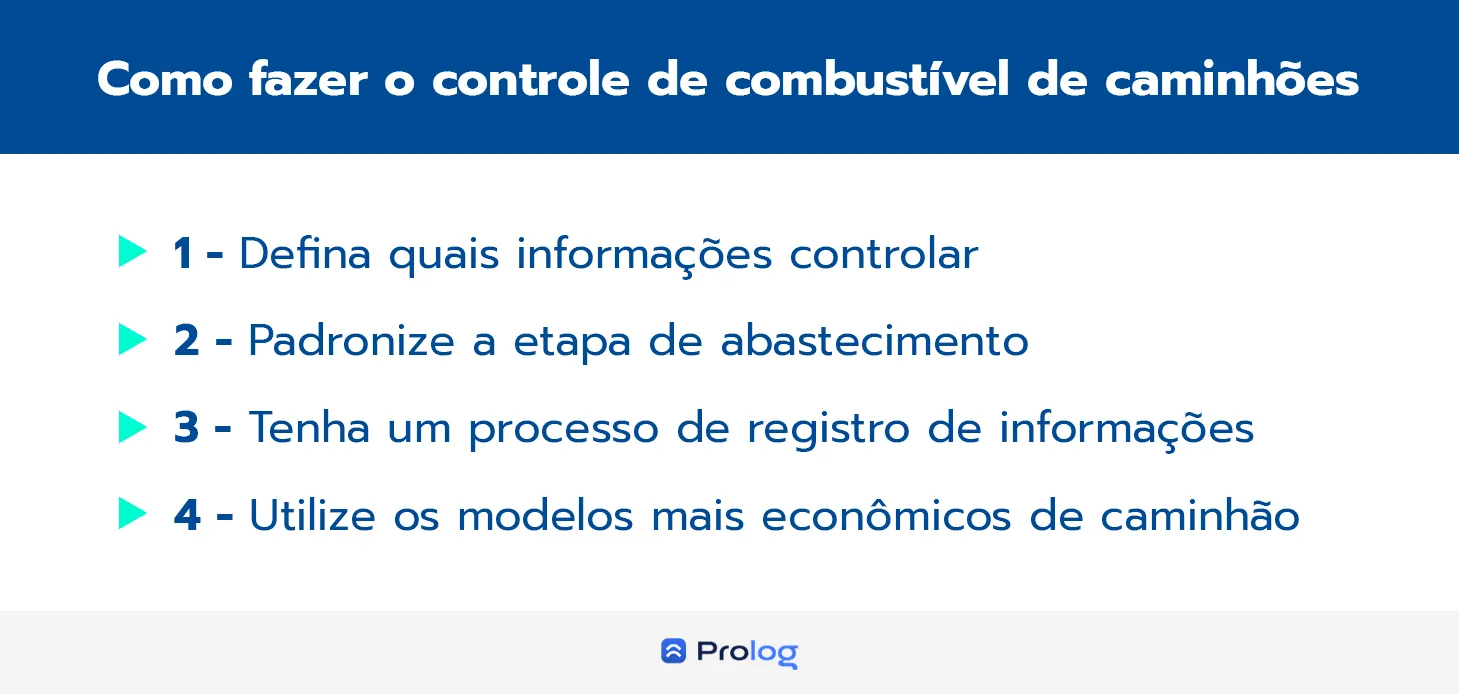
Steps to manage truck fuel consumption.
There is no ready-made formula for results, but rather a combination of tools and good practices to achieve each company's objectives and goals.
When we talk about understanding the processes behind a transport operation, we mean more is needed than asking the driver for an invoice and recording information in a spreadsheet.
You need specific data for each refueling: vehicle, refueling date and time, person responsible for the vehicle, reported mileage, station used, liters added, amount paid and other information to help compare vehicles and routes.
This makes refueling control more accurate, as well as truck fuel consumption control.
Here are the steps to apply this control in your management:
1 – Define which information to manage
All information should be managed. However, some is more important and should also have performance indicators to keep track of it. You need to define which information that is.
For example, seeing each vehicle's mileage is essential to understanding whether consumption is within expected standards or higher than normal.
It is therefore important to have a way to record km driven before every refueling. Without this data, the km/l calculation is unreliable, because it depends precisely on the relationship between distance traveled and liters added.
2 – Standardize refueling
All drivers should know some refueling “rules.” These may concern which partner stations to use, the ideal refueling amount, which payment method to use and so on.
These are small details you should define in driver training or the company's fleet policy. It is also worth instructing the team to use reliable, authorized stations: in Brazil, selling automotive fuel requires authorization from ANP (the Brazilian petroleum regulatory agency), which provides access to registration data and the status of retail fuel resellers.
3 – Have a process for recording information
Besides establishing the necessary data, you need a place to manage all this information.
Spreadsheets are a good alternative for those starting out, while technological systems for transport companies are the ideal solution for those with some form of control who want to optimize operations further.
This means fewer errors and information that can be updated and analyzed faster. The important thing is to standardize the process: if each driver records data differently, the table loses consistency and stops showing which vehicles are actually spending more.
4 – Use more economical truck models
Various makes and truck models are available to buy. Make sure you study the market and understand each type's distinguishing features. Always look for options that bring greater fleet savings.
Some models you can currently explore are:
- Scania R500;
- Volvo FH 540cv;
- VW Delivery 11.180;
- VW e-Delivery;
- DAF XF 105;
- Mercedes-Benz ACTROS 2651.
Even so, do not treat the model alone as the final answer for consumption. Actual km/l depends on operation type, load, route, average speed, maintenance, tire calibration, driving style and refueling patterns. The best table therefore compares performance observed in your own fleet.
Truck fuel consumption table
With constant vehicle use, refueling and fuel consumption control can generate benchmarks to help assess your operation's overall performance. For example, by building a truck fuel consumption table.
Depending on your fleet's data, it could look like this:
| License plate | Model | Average road speed | Consumption in km/l | Monthly km driven | Approximate diesel price per liter | Approximate fuel consumption cost per vehicle |
| ABC1D23 | Scania R500 | 80 km/h | 4.2 | 8,000 | R$ 6.50 | R$ 12,380.95 |
| DEF4G56 | Volvo FH 540cv | fill in | fill in | fill in | fill in | fill in |
| GHI7J89 | VW Delivery 11.180 | fill in | fill in | fill in | fill in | fill in |
| JKL1M23 | VW e-Delivery | fill in according to operation | fill in according to energy used | fill in | not applicable to diesel | fill in according to fleet metric |
| NOP4Q56 | DAF XF 105 | fill in | fill in | fill in | fill in | fill in |
| RST7U89 | Mercedes-Benz ACTROS 2651 | fill in | fill in | fill in | fill in | fill in |
This example does not define fixed consumption per model. It shows how to organize a table for each company to enter values measured in its own operation. To calculate approximate cost per vehicle, divide monthly km driven by consumption in km/l and multiply the result by the approximate diesel price per liter.
How do you calculate truck fuel consumption?
You need to consider three factors for a basic fuel consumption calculation:
- Vehicle weight.
- Kilometers traveled.
- Liters added.
How many km can you travel on a liter of fuel?
With the necessary information to hand, the calculation is: kilometers traveled divided by liters added.
Like this:
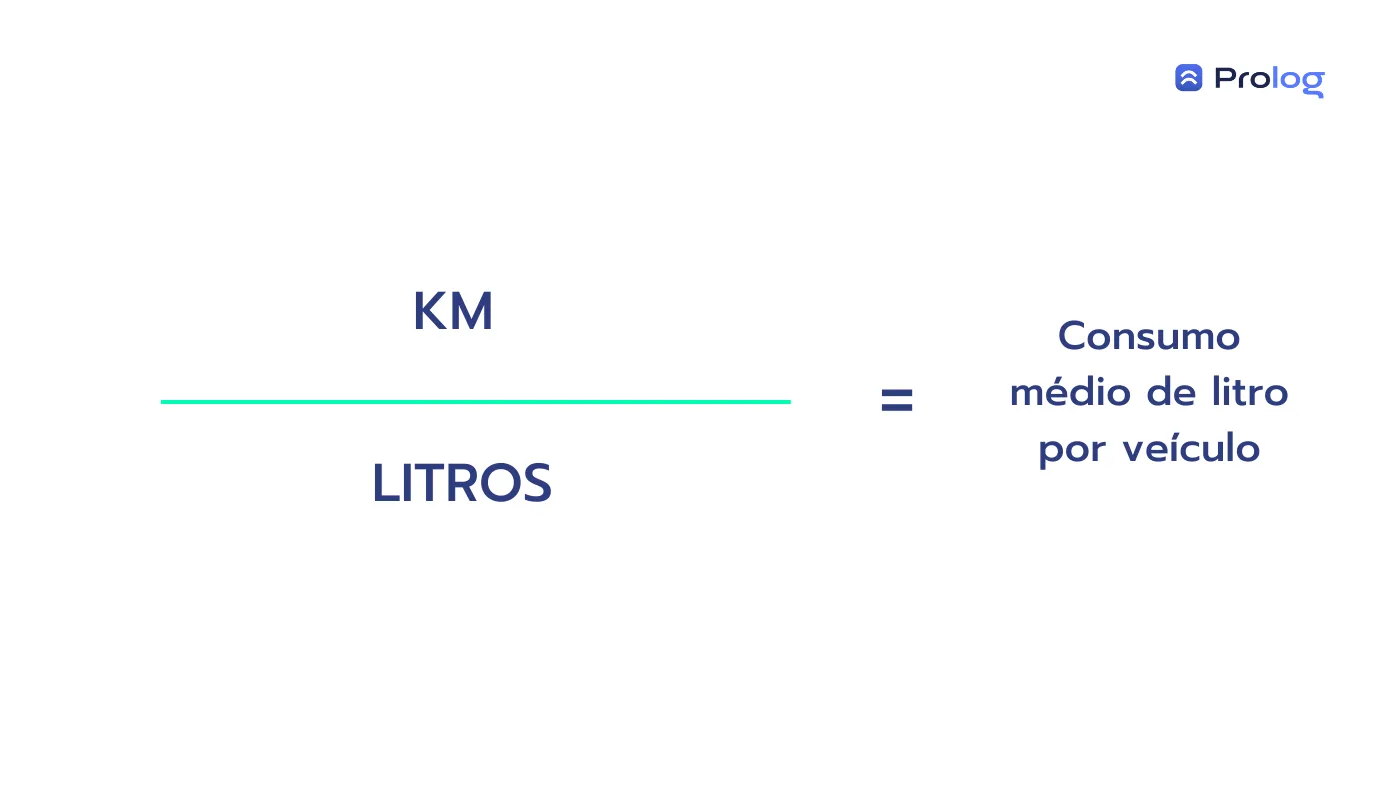
Calculation of average fuel consumption per liter for each vehicle.
You may now wonder: if weight is not in the calculation, why is it important?
Because the heavier the load, the greater fuel use per liter tends to be. Fuel efficiency sources also indicate that extra vehicle weight can reduce MPG, so the weight carried needs to be considered alongside consumption.
With a load weighing X, vehicle X refueled and traveled X km.
But with load Y, it traveled only Z.
By establishing average load weight per vehicle, you can control fuel expenditure per vehicle more accurately.
What increases fuel consumption?
There are factors that negatively affect truck fuel consumption that you need to know to avoid in your fleet. Here are some examples:
- Fuel quality: it is the manager's responsibility to direct refueling to reliable, accredited and compliant stations;
- Excess vehicle load: leaving the body overloaded and requiring more engine effort to move, burning more fuel. Increasing load per vehicle does not mean productivity, only losses.
- Tire calibration: when incorrect, especially lower than ideal, it can increase consumption due to greater rolling resistance, as well as contributing to tire wear. Underinflated tires can reduce fuel efficiency, and maintaining correct calibration can improve consumption.
- Gear changes and aggressive driving: if you shift incorrectly, accelerate and brake abruptly or forget to change gear, the engine suffers the consequences and burns more fuel to compensate.
- Unnecessary air conditioning use: air conditioning can reduce fuel economy, especially on short trips. At low speed, keeping windows open may be more suitable; at highway speed, air conditioning makes more sense, always without setting an excessive temperature.
- Idling: keeping a stationary vehicle's engine running consumes fuel, and leaving air conditioning on before departure can waste even more.
How do you improve truck fuel consumption efficiency?
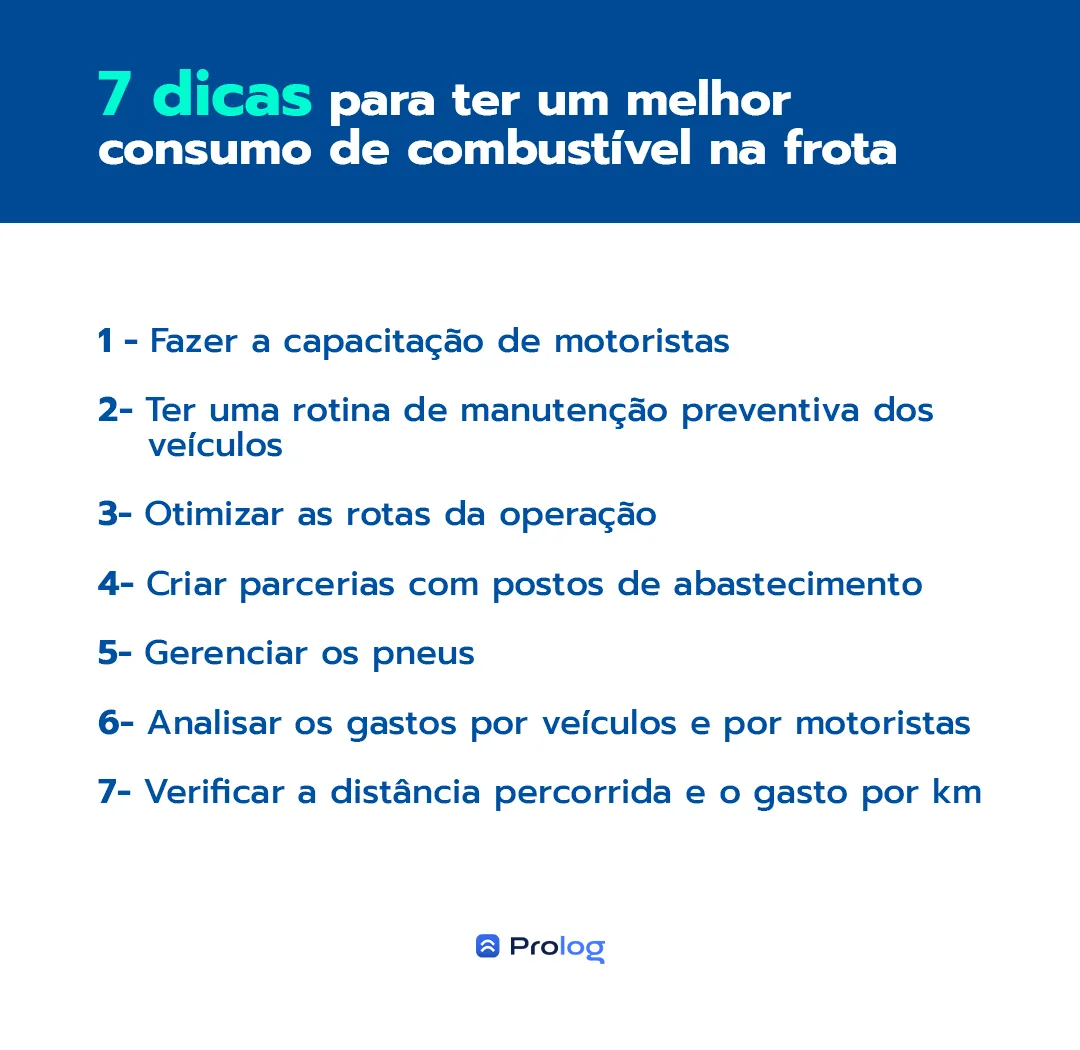
Tips to make truck fuel consumption more efficient.
Some measures you can take to help both fuel consumption control and better spending per vehicle are:
Driver training
Driving style makes all the difference in fuel spending, and defensive driving is the most recommended approach. It recommends behaviors that also contribute to fleet savings.
For example, taking your foot off the accelerator a few meters before reaching a red light to avoid abrupt, sudden braking. Aggressive driving, with excessive speed, rapid acceleration and hard braking, wastes fuel and makes accurate vehicle comparisons harder.
Vehicle preventive maintenance
Ensuring proper vehicle operation and avoiding damage and failures on trips is part of improving truck fuel consumption. It is also one of the defensive driving recommendations discussed earlier.
To do this, implement a vehicle inspection method, define the schedule as needed and ensure drivers understand the importance of correctly completing the inspection checklist.
This means reporting issues when found and arranging correction before they generate higher costs. If the engine light comes on, the recommendation is to take the vehicle to a mechanic for assessment, because this type of fault can reduce fuel economy, increase emissions and lead to more expensive repairs later.
Route optimization
The shortest route is not always best. Road and traffic conditions can greatly increase diesel consumption per route.
In some cases, a shorter route has more traffic lights or turns. This generates more acceleration and braking, increasing total route consumption.
The tip is to carefully assess possible routes and select the one that makes most sense in terms of cost-benefit. Trip planning can also reduce driving time with a cold engine, another factor that helps efficiency.
Partnerships with refueling stations
Establishing partnerships ensures discounts on quality fuel.
Beyond a discount at refueling, you are using fuel that does not damage the vehicle and performs well.
Before agreeing a partnership, check station compliance and set clear team rules: which locations can be used, which data must be recorded, who approves exceptions and how each refueling enters the consumption table.
Individual spending analysis by vehicle and driver
Understanding which vehicle and driver spend more is crucial to better decisions. You can do this both through consumption control, using the calculation presented earlier, and through vehicle inspection checklists.
They identify the driver responsible for that plate and their recurring issues.
In other words, they provide the information needed to understand whether the driver causes the increase in consumption or the vehicle itself is responsible.
Checking distance traveled
Knowing distance traveled is essential to understanding whether vehicles followed the planned route and what happened if they deviated.
Having the reasons to hand helps you know how to respond to unexpected events and what instructions to give drivers for future trips.
Managing distance traveled also helps check whether that vehicle's fuel use per liter was within the standard or whether the truck needs inspection for possible factors increasing consumption (worn tires, engine issues, load carried, etc.).
Tire care
Tire management is directly linked to truck fuel consumption. Incorrect calibration can greatly increase this expenditure.
A more productive routine is not about doing more tasks in less time, but providing ideal conditions to perform tasks with greater quality in the shortest possible time — even if that time is not so short.
In this case, ideal conditions are tires with correct calibration and no excessive wear.
You therefore need to identify ideal calibration for fleet tires and arrange regular tire inspection. This also identifies when wear reaches its limit, since this is another cause of increased fuel consumption.
To better understand how much you could save by applying tire management in your fleet, use the free Prolog calculator when it is available on the website.
Watch the video content (video in Portuguese):
Frequently asked questions
What should go in a truck fuel consumption table?
How do you calculate a truck's fuel consumption?
How do you manage fleet fuel?
What increases truck fuel consumption?
How do you improve fuel consumption efficiency?
How can you tell whether higher spending comes from the vehicle or the driver?
// newsletter
Fleet management content, straight to your inbox
Articles on tires, maintenance and fleet operations. No spam.