Bus tire control: how to do it in your fleet
 Luiz Felipe 5 min read
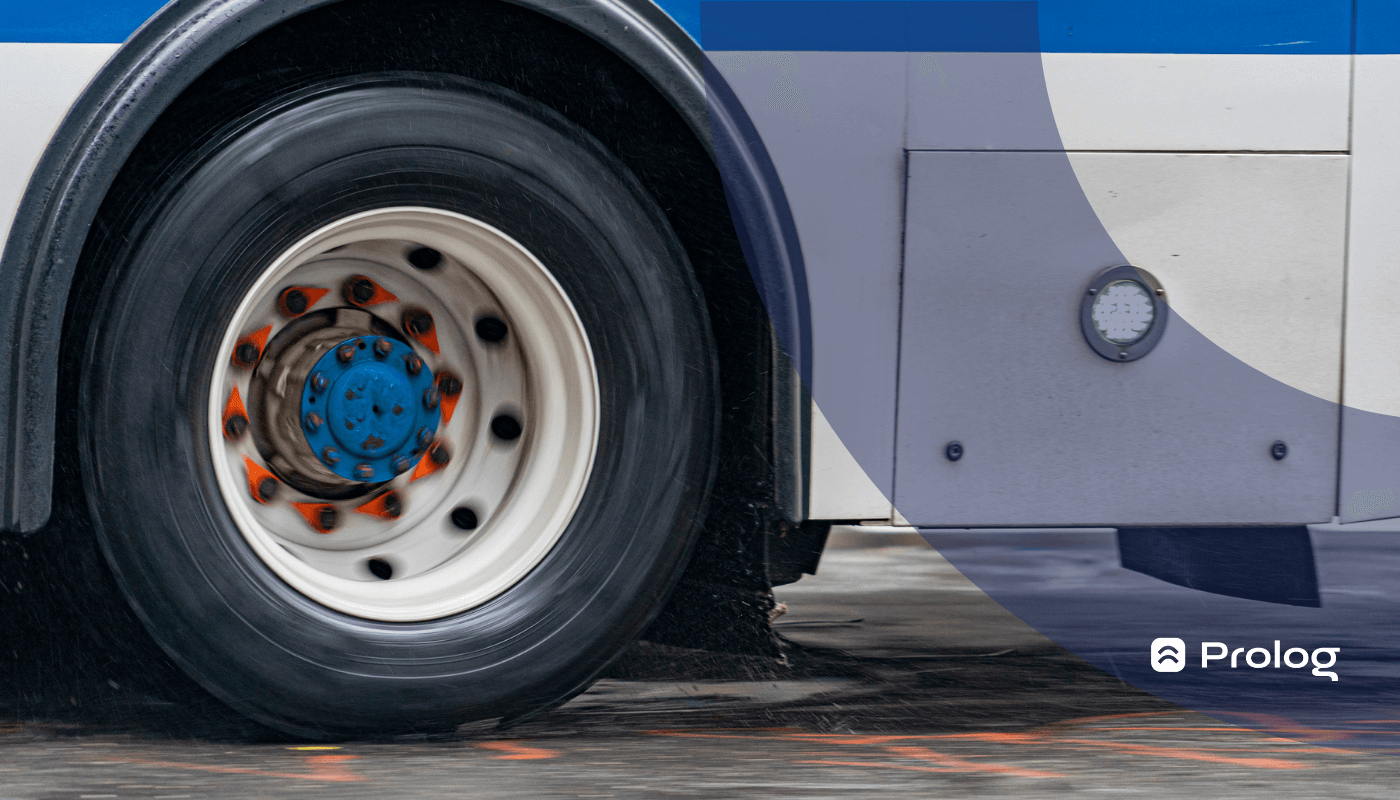
People who land on a post about bus tire control are often looking for information about savings and cost reduction in the fleet.
But why does this happen?
Well, because tires account for about 18% of a trucking company's operating costs, according to the Brazilian Production Engineering Association. In fact, companies often lose tires prematurely.
However, by learning and applying the tactics of good tire management, these costs can be reduced significantly, especially when the fleet stops deciding based on impressions alone and starts recording the history of use, pressure, tread depth, reconditioning and costs.
Now…
How should tires be marked for control?
Tires are marked so that control is effective. You need some kind of code that gives each tire a unique identity and makes it possible to keep track of the tire throughout its useful life, including when it changes position, undergoes maintenance or goes for reconditioning.
Not all brands have it, but on some models there is a field on the side of the tire with the words “mark tire here”. This is the most suitable space for the hot brand, because it was already designed for this type of identification.
If the tire does not have this inscription, avoid choosing a spot that could cover or confuse important tire markings, such as the manufacturer's brand, the size, the load index, the DOT or the TWI indicators. The best approach is to create an identification standard that is legible and repeatable, without competing for space with this information.
The device used for this marking is the electric tire marker. It is a task that can be carried out either within the fleet itself or by a third-party service. All you need is the necessary equipment and a coding standard that does not repeat, is legible and can be recorded in the control method chosen by the company.
How do you control bus tires?
For tire control that generates the expected savings, you first have to invest some time in planning it.
What should be included in the planning?
This should be the first thing on your mind. At this point, you need, for example, to analyze the current costs you have with your tires in order to set objectives and goals for the new control method you select.
In addition, you need to identify how many tires are lost each month, what their average lifespan is, which vehicles they run on and which occurrences appear most often. This information helps separate purchasing issues, maintenance failures and the wear expected from the operation.
In any case, a next step would be to choose and implement a bus tire control system — the most recommended are the spreadsheet or software. A spreadsheet can work in smaller fleets with few tire relocations, while software tends to make the history, the lookup by tire and the standardization of records easier.
Implementation should include, as a “sub-task”, training for drivers and the others responsible for tire inspection and care. In addition to learning how to use the management method, they should always receive instructions on defensive driving, traffic safety, identifying anomalies, reporting damage and recording information correctly.
Beyond that, your bus tire control needs to create routines for inspection, calibration, rotation and any other service related to tire care. The ideal pressure varies according to factors such as the tire size and the axle on which it is used, and pressure below the recommended level increases the tire's rolling resistance. Periodic calibration helps keep this care in the routine; some manufacturers recommend calibration every 15 days, always respecting the reality of the operation and the applicable technical guidance.
With planning, everything will be distributed in a well-organized schedule.
How do you choose the best tires for the fleet?
This is a question we really hear a lot. And we will answer it as simply as possible, OK?
First, to choose any tire, you need to consider three initial pieces of information:
- The tire size compatible with the bus, checking the size indicated on the tire itself;
- The model's type of tread, according to the predominant road surface on the route (asphalt, sand, stone, dirt or mixed operation);
- The severity of use and the load capacity indicated for the tire.
Severity remains a useful reference, but it should not become an absolute rule of “tough tire for the city” and “light tire for the highway”. Before deciding, check the tire markings, such as size and load index, and also look at the label that shows, on a scale from A to G, the impact of that tire on the vehicle's fuel consumption.
- On urban trips, with a lot of acceleration and braking, fleets tend to pay closer attention to durability, wear and the maintenance routine.
- In mixed operations, the tire needs to balance performance on different surfaces, without losing grip or compromising durability.
- On long, paved highway routes, fuel consumption, regular calibration and the type of tread indicated for this application come into the calculation.
Then there are also mixed tires, which are better suited to roads that mix asphalt and dirt, since they have somewhat better resistance and still maintain good performance on “regular” roads. Even so, the decision should consider the tire markings and the data the fleet already has on use, pressure, tread depth, reconditioning and cost.
Now, to choose the BEST tire, there is only one thing you can do:
COLLECT DATA!
With a history of tread depth and tire pressure, as well as information such as the purchase and reconditioning price (plus the number of reconditionings carried out), the system can calculate the CPK of each tire — the cost per kilometer. This history also helps compare models without relying only on the perception of whoever is keeping track of the operation day to day.
This figure (CPK) indicates which tire offers the best cost-benefit for each operation (or vehicle) in your fleet.
And how is this possible?
With tire management software that also includes a digital tread probe. You also get access to a system that delivers ready-made reports and an invaluable knowledge base.
How about getting to know this system better? See all the features and benefits of digital bus tire control!
Frequently asked questions
How should bus tires be marked for control?
How much do tires account for in a trucking company's costs?
How do you choose the right tire for a bus?
What is a tire's CPK?
// newsletter
Fleet management content, straight to your inbox
Articles on tires, maintenance and fleet operations. No spam.