Green tires: what they are and what the ENCE label measures
 Jade Zart 7 min read
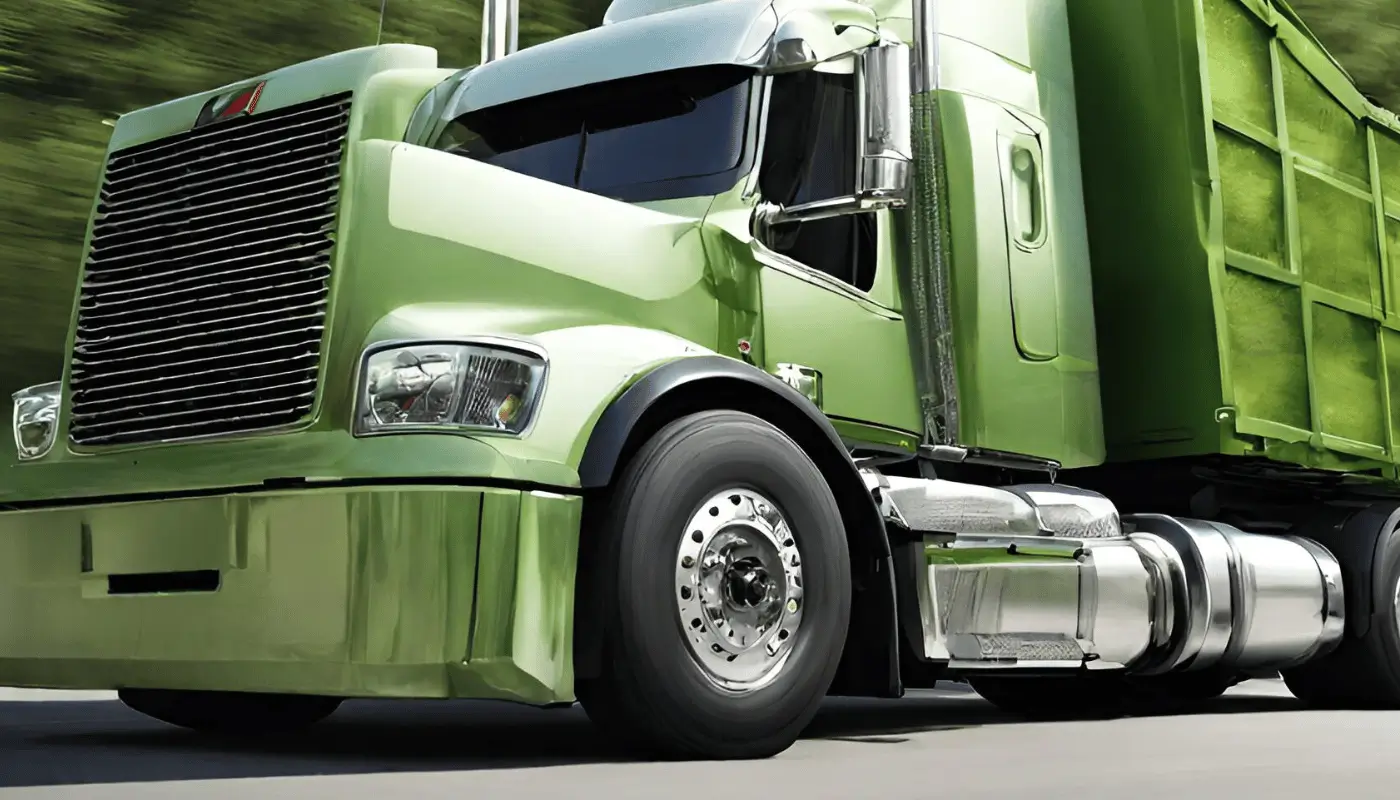
Green tires are known for their eco-friendly construction and greater energy efficiency, representing an important innovation in the transportation sector.
They are also in line with the sustainability and environmental responsibility agenda that has been growing in the transportation sector, largely driven by discussions about ESG practices in transportation.
Learn more:
- What is a green tire?
- Why green tires?
- What is the difference from conventional tires?
- When to invest in green tires for truck fleets?
- How does a green tire perform?
- How to assess these tires in your fleet?
What is a green tire?
Green tires are tire models designed with a focus on sustainability and efficiency. They are made with materials different from those used in conventional tires, with the aim of reducing the product's environmental impact.
Besides being presented as less harmful to the environment, green tires can reduce the vehicle's fuel consumption and carbon dioxide emissions.
The construction of green tires also includes optimizing the design of the tread and the casing, aiming to offer better performance under varied road conditions.
A caveat that helps at purchase time: “green tire” is a trade name, not a category in Brazilian regulations. What the official rule requires is something else — rating the tire on measured parameters. According to Inmetro, the Brazilian national metrology and standards institute, the Etiqueta Nacional de Conservação de Energia (ENCE), Brazil's National Energy Conservation Label, rates three tire parameters: rolling resistance, on a scale from A to G; wet grip, from A to F; and sound pressure level (noise). The label is among the mandatory markings listed by Inmetro for passenger car, truck and bus tires.
Why green tires?
The choice of these tires is driven mainly by growing environmental awareness and by the need to adopt more sustainable practices in the transportation sector.
Using materials that are less harmful to the environment and production techniques that minimize pollutant emissions, green tires are presented as a step toward ecological responsibility.
In addition, the lower rolling resistance these tires provide can lead to a decrease in fuel consumption and, with it, a reduction in greenhouse gas emissions.
This is a parameter taken seriously by regulation, and not only by marketing: it is no coincidence that rolling resistance is rated precisely on the label called the National Energy Conservation Label, issued by Inmetro under Brazil's national policy for the conservation and rational use of energy.
This is in line with global carbon emission reduction goals and with the ESG principles (Environmental, Social, and Governance) that many companies are adopting.
Therefore, choosing green tires is not only a choice that can benefit the environment, but also a decision that tends to fit the corporate image and the demands of a market increasingly aware of environmental issues.
What is the difference between green tires and conventional ones?
The most frequently cited difference between the two types of tires is in their compound.
While conventional tires are made with carbon black, green tires replace part of that component with silica, or silicon dioxide — presented as a more sustainable material and associated with lower pollutant emissions.
In addition, green tires usually have a design optimized for better grip and even wear, which can extend their useful life and reduce how often they need to be replaced.
On the other hand, conventional tires, although they may have a lower initial cost, tend not to offer the same fuel-saving efficiency over their use.
However, when it comes to making the purchase decision, the compound itself is the least comparable data point. What can be objectively compared between two models is how each one is rated on the three measured parameters — rolling resistance, wet grip and noise — and what each one costs per kilometer driven in your operation.
When to invest in green tires for truck fleets?
The ideal time to do so usually coincides with the company's growing environmental awareness and its pursuit of more sustainable transportation operations.
When long-term savings are a priority, such as lower fuel costs and less frequent tire replacement, green tires can become an advantageous choice.
The decision to invest in green tires should be based on a careful cost-benefit analysis, taking into account the purchase price and the long-term benefits — fuel savings, durability and environmental impact.
A practical precaution avoids an unfair comparison: test the new tire in the same application where the current one runs. Position on the vehicle, type of route, load and calibration affect the result as much as the tire model does, and a pilot run under different conditions does not answer the question that prompted the switch.
How does a green tire perform?
These tires are designed to minimize rolling resistance, which can translate into fuel savings. Grip and response in wet conditions contribute to safer and more comfortable handling, and they are rated on the label on their own scale, from A to F.
Their compound with silica and eco-friendly materials is cited as a factor that increases the tire's useful life, which would reduce how often they are replaced and keep good performance for longer.
Many green tires also have reduced noise levels, contributing to quieter driving — and this is the third parameter the ENCE rates, the sound pressure level.
It is worth understanding the limit of this information: the label compares tires with one another on the parameters it measures. It does not promise savings in reais for your route, with your load and your driver profile.
How to assess green tires in your fleet?
Before purchasing the tires, it is important to check their compatibility with the fleet's vehicle types and operating conditions, making sure they are suitable for the specific operations.
Also ask for the declared rating of each model. Here there is a condition that catches many fleets by surprise: in Brazil, the Consolidated Regulation for New Tires (Inmetro Ordinance No. 379/2021) requires the ENCE to be visible at the point of sale, but its Article 7 makes affixing the label optional on new tires intended for commercial and towed vehicles sold exclusively to fleet operators — an exemption that, under the sole paragraph of the same article, does not apply to tires intended for resale in retail stores, authorized dealers and vehicle dealerships. In other words: when buying directly as a fleet, you may simply not receive the label — and then you need to ask for the numbers. The same regulation requires the supplier to declare the performance of tires for commercial vehicles in terms of rolling resistance, wet grip and noise emission.
After purchasing and using them, you need to understand whether their performance is satisfactory and whether they deliver what they promise.
For example: lower fuel consumption, fewer pollutant emissions and greater asset durability are three notable characteristics attributed to these tires.
That is why, to assess whether green tires really make sense for your fleet and whether they are generating the expected impact, you can start by analyzing these aspects in comparison with other types of tires. In practice, this means keeping track of the cost per kilometer of each tire, by make and model, and comparing the consumption of vehicles that run equivalent routes.
Remember to consider the environmental benefits, such as reduced CO2 emissions, which can align the fleet's operation with sustainability and ESG goals.
And remember that the tire's environmental cycle does not end at purchase. In Brazil, CONAMA Resolution No. 416/2009 (CONAMA is the Brazilian National Environment Council) places on manufacturers and importers of new tires weighing more than 2.0 kg each the obligation to collect and properly dispose of end-of-life tires, and requires retail establishments to receive and temporarily store, at no cost to the consumer, the used tires handed in at the time of replacement. The same resolution prohibits the final disposal of tires in the environment — abandonment, dumping into bodies of water, vacant lots or wetlands, disposal in sanitary landfills and open burning — and also prohibits the final disposal of used tires that are still suitable for retreading processes, according to the technical standards in force. For the fleet, this means that discarding a recoverable tire early is not just a waste of an asset.
Want to optimize your fleet's tire management and better understand the performance and cost-benefit of green tires? With each tire's history updated at every inspection, you can compare CPK by make and model and decide based on data from your own operation, instead of the catalog's sales pitch.
Schedule a free demo of the Prolog App tire management system.
Frequently asked questions
What is a green tire?
What is the difference between a green tire and a conventional tire?
What does the ENCE label rate on a tire?
When is it worth investing in green tires for the fleet?
Is the Inmetro label mandatory on tires sold to fleet operators in Brazil?
// newsletter
Fleet management content, straight to your inbox
Articles on tires, maintenance and fleet operations. No spam.