Load distribution: Brazil's PBT, axles and loading
 Jade Zart 4 min read

Load distribution must always comply with the applicable legislation in Brazil and consider the vehicle type, load and road to be traveled.
This knowledge is fundamental for all employees in warehousing and vehicle loading, whether an operations assistant or the driver.
It is a way to optimize services offered to customers and also reduce the company's logistics expenses.
After all, overloading caused by a lack of care during distribution generates higher fuel consumption, vehicle damage and increased risks of accidents — and fines.
Below are the topics you will find in this article:
- What truck load distribution is;
- Why good load distribution matters;
- How to distribute loads in a truck;
- What can make the process simpler.
What is truck load distribution?
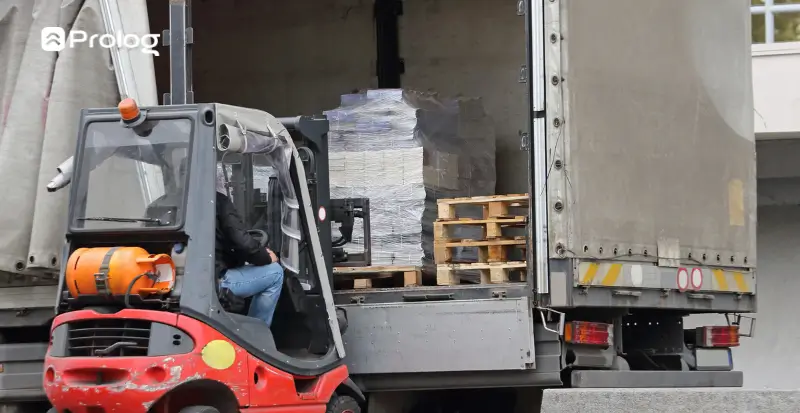
Load distribution consists of arranging goods evenly inside a truck according to the Gross Vehicle Weight (PBT in Brazil) stated in the manufacturer's manual.
In addition, respecting each axle's maximum capacity and avoiding excess weight on specific parts of the vehicle is crucial to avoid losses.
These losses may include goods moving and being damaged, destabilizing the body and causing the vehicle to roll over, especially on bends, and increasing vehicle maintenance costs.
Want to see this in your fleet? Talk to a Prolog specialist
Why does good load distribution matter?
First of all, even and proper truck load distribution is required by legislation in Brazil, in Art. 100 of the Brazilian Traffic Code (CTB):
“No vehicle or combination of vehicles may travel with passenger capacity, gross vehicle weight, or gross vehicle weight combined with axle weight exceeding that specified by the manufacturer, nor exceed the towing unit's maximum traction capacity.”
Therefore, in Brazil, loading only up to the maximum weight limit stated in the manufacturer's manual is mandatory, with fines for noncompliance.
Beyond the obligation, good load distribution allows:
- Safer, more viable operations;
- Smoother, more effective delivery;
- Organized, quick loading;
- Immediate product identification;
- Reduced truck wear;
- Preservation of tires and other truck components;
- Fuel savings;
- Better stability.
How do you distribute loads in a truck?
You can organize loads using different methods:
Distribution by type
Ideally, each vehicle should transport a specific type of material, taking special care with each individually. Some companies do not have this variety and must take extra care when loading.
For example:
Fragile materials need to be well packaged and kept from contact with heavier, larger goods.
Materials of varying sizes should fit together, avoiding spaces that allow movement and could cause damage. Also use supporting materials to protect loads, such as foam and cardboard.
Larger products should be laid down if possible, and materials of varying weights should be distributed evenly in the body without overloading either side.
Load distribution by axle
To organize a load by weight, it is essential to know the position of the truck's axles.
Among the goods transported, place the heaviest in the center to avoid excess weight on the sides, creating a balance point and reducing impact on the ground, maintenance costs and accident risks.
All load types must take weight into account when arranging the truck body.
Tip: always start load distribution at the rear axle. This gives you a better view of product arrangement and makes it easier to reorganize if you notice an error or poor use of space.
Distribution according to the route
The route must always be analyzed so goods can be arranged to prevent frequent bends, climbs and descents on the highway from affecting product integrity and the safety of those transporting them.
Packages can also be arranged in delivery order, leaving the first ones the driver and assistant will unload closest to the door.
This type of organization should start first with route planning by the operations manager.
What can make the load distribution process simpler?
You can indeed follow a set of factors that will simplify the work of arranging loads across truck axles. Work begins outside the truck, with the organization of packages and products in inventory, the warehouse or distribution center.
That means identifying full or empty packages, larger and smaller products, and lighter and heavier ones. This allows you to make a plan for balancing weights during loading.
Then, start at the rear axle, as explained above. This speeds up getting an overview of all the loads. Depending on load types, distribute them according to the previous instructions, such as laying larger products down and centering the heaviest ones.
Combining these actions will provide a guarantee of safety in your fleet's transport operations.
Want to learn more about managing a truck fleet? Read our post on the subject.
Frequently asked questions
What is truck load distribution?
What does the law say about load weight?
How should loads be distributed in a truck?
Where should truck loading begin?
What are the benefits of good load distribution?
// newsletter
Fleet management content, straight to your inbox
Articles on tires, maintenance and fleet operations. No spam.