Fleet logistics optimization: what it is and where to start
 Jade Zart 8 min read
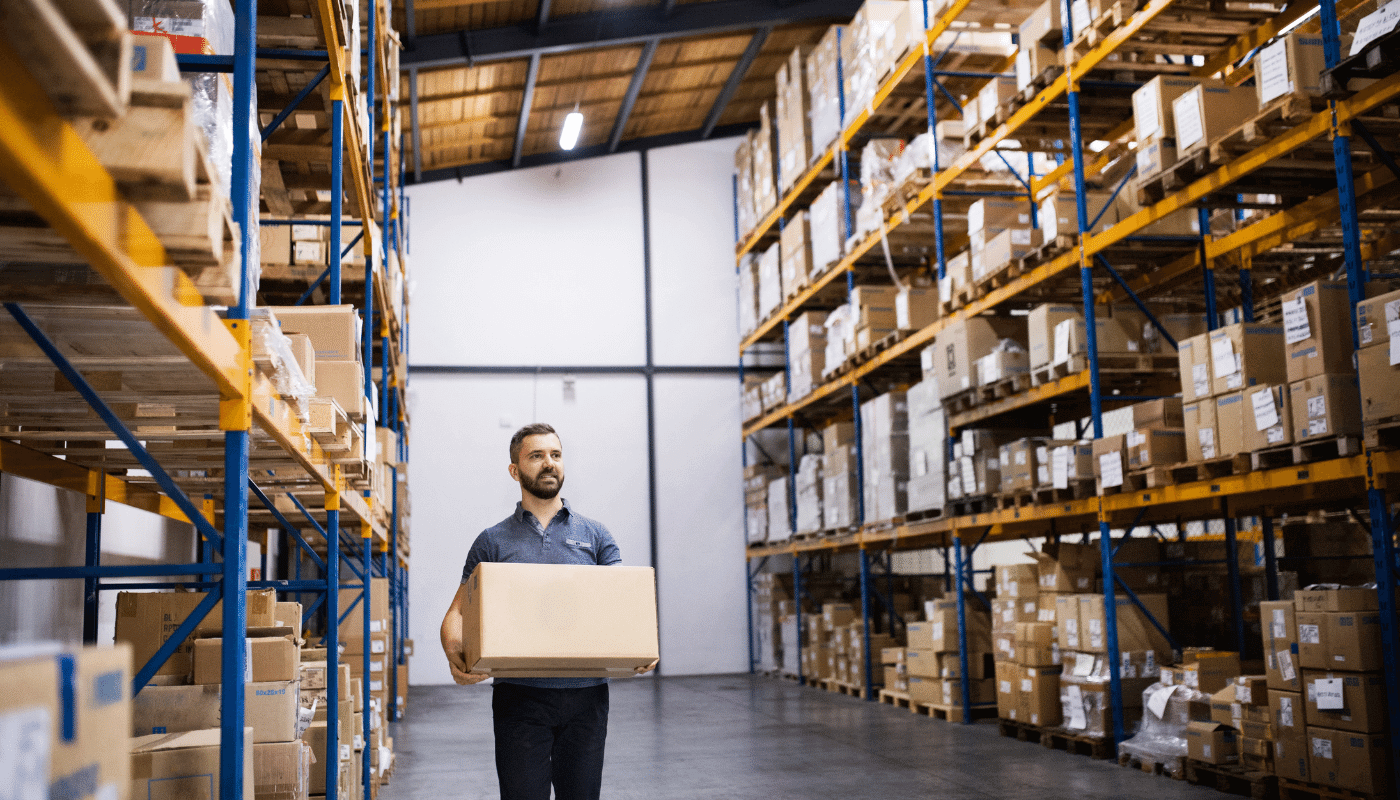
Logistics optimization seeks methods to define the most effective solution to an operational problem or difficulty. This means making activities more efficient to avoid failures and reduce costs.
To achieve these objectives, you need to analyze and identify where improvements can be applied. That is why in this post you will see:
- What is logistics optimization?
- What is it for?
- Can logistics optimization be applied to the fleet?
- What impact can it have?
- Where should you start?
What is logistics optimization?
Logistics optimization can be defined as improving logistics and supply chain operations. Its main objective is to generate efficiency and reduce fleet costs.
Basically, its application improves how the transport company handles all operational processes to solve daily problems or difficulties, whether for the company itself or its customers.
Just as raw materials and supplies are in constant flow until they are sent to customers as a final product, optimization should also be a constant process.
To do this, you need to observe what the company has been doing in logistics and how it can improve. After all, frequent analysis reveals relevant indicators and allows decisions based on what the operation shows rather than what is assumed about it.
It is worth distinguishing two uses of the term, because they appear together and are not the same thing. There is optimization as calculation — route planning, load planning, vehicle allocation, decisions that respond to a model with constraints. And there is optimization as a management routine: reviewing processes, correcting bottlenecks, standardizing what worked and measuring again. The latter is where almost every fleet starts, and it requires no sophisticated tool to get going.
What is logistics optimization for?
Do you know why every company has goals? The answer is simple: they are what keeps activities functioning properly. Logistics optimization helps companies, especially transport companies, achieve their goals and overcome obstacles.
Nowadays, when strategies always need improvement, this constant search for improvement is fundamental. It is what makes the company attractive to customers by offering them better experiences.
It also serves to encourage innovation in the transport industry, using centralizing technologies that can be extended to other areas and implemented with integration between them to obtain more positive results.
In daily work, it serves to answer three questions the operation asks every week: what is costing more than it should, what is running late and what keeps recurring. As long as these answers depend on the memory of the longest-serving employees, what exists is not optimization — it is well-intentioned improvisation that works until the person takes a vacation.
Can this type of optimization be applied to the fleet?
Certainly. Optimization can add more value to a product and reduce costs, while also supporting productivity.
With a management team and trained employees, goods delivery is planned from the point of origin to the point of consumption.
A company delivering quickly may have an excellent reputation, but if products are not well arranged in the vehicles, errors can happen, including problems with damaged goods.
Among other things, you need to consider variables such as:
- Nearest customer;
- Best route to take;
- Customer opening hours;
- Delivery order;
- Vehicle best suited to the route;
- Amount of cargo sent on the route;
- Among others.
There is also a constraint that is nonnegotiable and often left out of this calculation: driving hours. In Brazil, article 67-C of Brazil’s Traffic Code prohibits professional drivers from driving collective road passenger transport or road freight transport vehicles for more than five and a half uninterrupted hours. Any route planning done without this limit produces a plan that looks good on paper but that the operation cannot fulfill on the road.
To achieve logistics optimization, it is the manager’s responsibility to plan and coordinate the flow of information about transport operations, as well as negotiate and establish standards in logistics processes.
The driver, in turn, participates in optimization by fulfilling the responsibilities of following the manager’s route and loading plans and performing vehicle inspections according to the planned schedules.
What impact can logistics optimization have?
Cost reduction
Constant review and/or supervision of fleet processes helps identify what needs improvement, allowing resource allocation. This way, you can understand how best to distribute those resources to balance fleet spending — achieving reduced expenses.
Another important issue that can contribute to this objective is reducing cargo theft and loss through precise transport monitoring. Dedicated third-party solutions are available on the market for this, such as cargo tracking tools and outsourced risk management, and what makes sense depends on the operation’s cargo profile and routes.
A methodological warning is worthwhile here: savings are only savings when they appear in cost per kilometer or per delivery. Cutting an isolated expense and shifting it to another line — replacing preventive maintenance with corrective maintenance, for example — shows up as a gain for the month and a loss for the year.
Competitive advantage
The search to optimize operational processes, besides enabling a more productive routine, offers a competitive advantage.
With optimization, you will be able to offer higher-quality services, with greater safety and more organized processes. Especially if you have technology’s support, since you will find tools that make activities easier.
In transport, much of this advantage is contractual. Shippers demanding service levels, proof of delivery and incident history tend to compare suppliers by what they can demonstrate through records, rather than what they claim in a meeting.
More productivity
Optimizing means seeking ways to make processes more agile without losing quality.
As mentioned above, you can and should rely on tools for support. Among the options available on the market, you will find technologies for planning more efficient routes, organizing trip schedules, speeding up inspections and so on.
All of this will result in increased operational productivity. The improvement, however, usually comes less from doing each task faster and more from eliminating the wait between them: a stationary vehicle awaiting release, a paper checklist awaiting data entry, a work order awaiting approval.
Increased customer satisfaction
As in many businesses, a failure can snowball into a series of problems, potentially affecting customers and the company’s image.
Process optimization tends to result in fewer failures, greater cargo safety and fewer delays. All these factors result in better service, conveying greater confidence and professionalism to customers.
And let’s be honest: that is what every customer expects.
Where should fleet logistics optimization start?
1 – Recognize and analyze daily processes
By mapping processes, detailing how they happen and who is responsible, you gain a better understanding of the workflow as a whole. For the logistics chain to function properly, especially in cargo handling and transport, this stage is fundamental.
For this reason, it is one of the first steps toward starting logistics optimization in your transport operations.
Based on what is observed at this point, you can take some measures, such as:
- Providing team training and development;
- Seeking new business partners and/or suppliers;
- Finding the operation’s biggest pain points and the ideal solutions.
One precaution prevents this stage from becoming a document left in a drawer: map the process as it happens, observing the person performing it, rather than as described in the procedure. The difference between the two is usually precisely the bottleneck you are looking for.
2 – Define and keep track of performance indicators
Performance indicators are essential to assess operations based on what actually happens in fleets’ daily work.
In the first step, you assess processes and understand the point that may need optimization. Here, you should seek the most important indicators that help you understand solutions for improvement.
If the vehicle inspection process is very time-consuming, for example, you need to keep track of the average time to complete a checklist and how many are performed daily, among other information.
Then assess the alternatives: is adopting a digital checklist solution more worthwhile? Or partnering with specialized workshops to handle the entire process?
All the answers are found through KPIs (performance indicators).
Start with a few linked to the problem you mapped. Cost per kilometer, fleet availability, delivery deadlines met and vehicle downtime already support much of the initial decision-making — and all depend on a dashboard or a consistently maintained spreadsheet to be worth anything. An indicator that nobody opens on Monday is not an indicator; it is a report.
3 – Acquire tools that can help with optimization
As we have said a few times so far, technologies are very important for logistics optimization. With them, it is possible to anticipate demand, automate tasks, centralize data and much more.
The digital checklist itself is a modern technology that delivers better results, as do tire management systems, fuel management systems, or maintenance management and inventory control systems.
Before adopting a tool, check how data can be extracted from it. If it neither exports nor integrates with what the company already uses, you trade manual control for an information silo — and go back to entering the same data twice, now with the feeling of modernizing.
Arranging fleet optimization is a long-term practice. It is also an ongoing activity, since transport operations have many processes and need constant assessment.
In other words, there is always room for improvement.
After these three initial steps, you can make your fleet even more productive and efficient with high-level management. To do so, download for free our Fleet Management Guide e-book (in Portuguese).
Frequently asked questions
What is logistics optimization?
Where should fleet logistics optimization start?
What impact can logistics optimization have?
What variables should be considered when optimizing fleet deliveries?
What tools help with logistics optimization?
// newsletter
Fleet management content, straight to your inbox
Articles on tires, maintenance and fleet operations. No spam.