How do you manage multiple systems without complicating fleet operations?
 Jade Zart 4 min read

Operational complexity with different systems does not have to be a reality in your fleet. In fact, the main goal of the variety of technologies used in fleet management is to make operations and strategic decision-making easier and faster.
But in situations where operational needs are not so clear, specialized solutions can end up creating greater operational complexity.
So, before adopting new technologies, you should assess how a variety of systems will contribute to your management and how it could bring new complications to fleet operations.
Explore below:
- What are the different systems for fleet management?
- Does having different fleet systems increase operational complexity?
- Is it efficient to use multiple systems in fleet management?
- How do you manage multiple systems without complicating fleet operations?
What are the different systems for fleet management?
Some of the main systems used for fleet management include:
- Vehicle tracking and monitoring: they can provide real-time location and a history of routes traveled.
- Maintenance management: helps schedule and keep track of preventive and corrective maintenance.
- Telematics: collects data on vehicle performance and driver behavior.
- Fuel management: monitors fuel use and efficiency.
- ERP (Enterprise Resource Planning): integrates various operational and administrative functions into a single platform.
- Route planning: optimizes routes to improve delivery efficiency.
Does having different fleet systems increase operational complexity?
If well managed and integrated, different systems can offer a comprehensive and detailed view of fleet operations, contributing to management's operational efficiency.
On the other hand, having different fleet management systems can increase operational complexity, especially if they are not integrated.
This causes communication and efficiency issues, such as data duplication and the need for training on several platforms.
In addition, consolidating information from different sources to make informed decisions can be challenging.
So, before adopting new technologies, you need to plan and understand how they will be integrated both with other systems used and with the routine of the team responsible for using them.
Is it efficient to use multiple systems in fleet management?
When done correctly, using different systems to manage your fleet operations is very efficient.
This approach can provide a more complete and varied view of fleet operations, allowing detailed, specific management in different areas such as maintenance, tires, costs, route planning and fuel monitoring.
However, you need to ensure the systems communicate with one another, avoiding data duplication and discrepancies, and that the team is properly trained to use each of them.
Challenges of operational complexity with different systems
End-user use
End users, who are directly involved in the operational stage, face challenges with the operational complexity of different systems.
These include difficulties handling multiple interfaces, the need to adapt to different procedures and the possibility of errors due to a lack of technological skills.
Such challenges can affect daily work, increasing the risk of delays and operational errors.
System integration in fleet management
Without proper integration, data can become isolated in each system's own “repositories,” making vital data harder to access and analyze.
This can lead to less informed decisions and increase the time needed to perform tasks that depend on information from multiple systems.
Effective integration is essential to ensure data is consistent, accurate and easily accessible.
System maintenance and updates
Keeping multiple systems up to date and running smoothly requires constant effort and can cost time and resources.
In addition, each system update or change may require adjustments and additional training for end users, further increasing operational complexity.
How do you manage multiple systems without complicating fleet operations?
To manage well and avoid operational complexity with different systems, follow these steps:
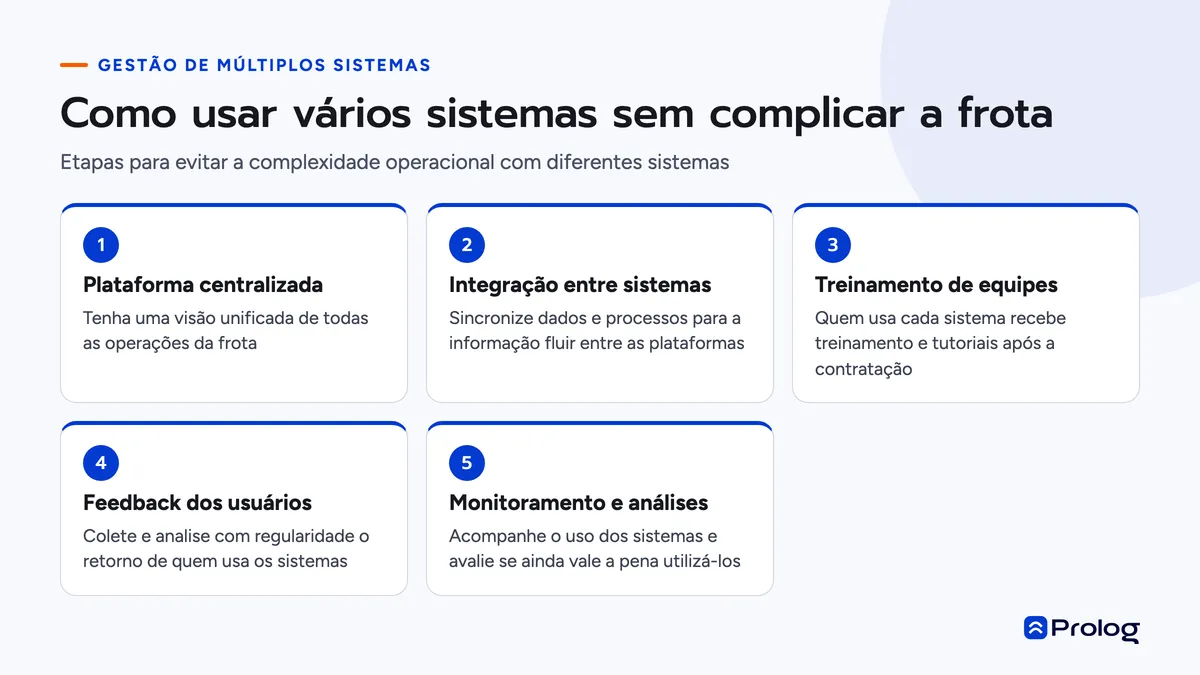
Centralized platform
Use a centralized platform to manage all systems. You will have more efficient control, with a unified view of all fleet operations, making data easier to access and reducing complexity.
For this to be possible, you also need integration between systems, which involves synchronizing data and processes. This ensures information flows smoothly between platforms, improving efficiency and reducing redundancy.
Team training
For correct, effective use of the different fleet-specific systems, each team member who interacts with these technologies should receive training and tutorials after this software is acquired.
This action helps minimize errors and maximize operational effectiveness, ensuring everyone is able to use the available tools.
User feedback
Besides providing training, it is equally important to regularly collect and analyze feedback from the systems' end users.
This allows you to identify areas for improvement, making it easier to adjust and optimize systems according to operational needs.
Monitoring and analysis
To identify trends, bottlenecks and improvement opportunities, keep track of system use and assess whether using them is worthwhile.
If you notice operational complexity with different systems increasing, you will need to make the necessary interventions to simplify processes and find the best solution for continuing to benefit from the technologies in your operation.
This will ensure the systems continue to meet fleet needs efficiently.
How about using Prolog's maintenance management and tire management solutions in your fleet and making integration with all the technologies already used easier? See how it works in a free demonstration — schedule now.
Frequently asked questions
Is it worth using several specialized systems in fleet management?
My team wastes time switching between systems. How can this be resolved?
What happens when fleet systems are not integrated?
What should you assess before acquiring another fleet system?
How do you know whether the number of systems is worthwhile?
// newsletter
Fleet management content, straight to your inbox
Articles on tires, maintenance and fleet operations. No spam.