
Software for transport companies: types and how to choose
 Luiz Felipe 7 min read

The processes of a transport operation can be much simpler and faster with the help of software for transport companies.
There are many models, with different features and functions for each need that transport operations have. That is why you need to understand which is the best choice for your transport company. To do that, check out the following:
- What software for transport companies is;
- What the benefits of using software for transport companies are;
- How to choose software for transport companies;
- What the system options are;
- How many systems to use in your operation.
What is software for transport companies?
It is a technology designed to give greater control over the management of a company's transport operations, whether the company is a transport company or a business with its own fleet.
Generally speaking, it is an enabler of fleet management and can cover the processes of every department, from administrative to operational.
It can also be used for both freight transport and passenger transport.
What are the benefits of using software for transport companies?
Greater visibility of fleet processes
With a system, it is more practical to centralize all the data generated in the daily routine of a transport operation. In fact, you do not even need all the information, only the information that is relevant to your decision-making.
In this sense, software for transport companies also makes your work easier, because it lets you select what you want to view through search filters.
Better cost control
By keeping track of the actions carried out and planned in the transport operation through a system, you can also associate which amounts are being allocated to each area.
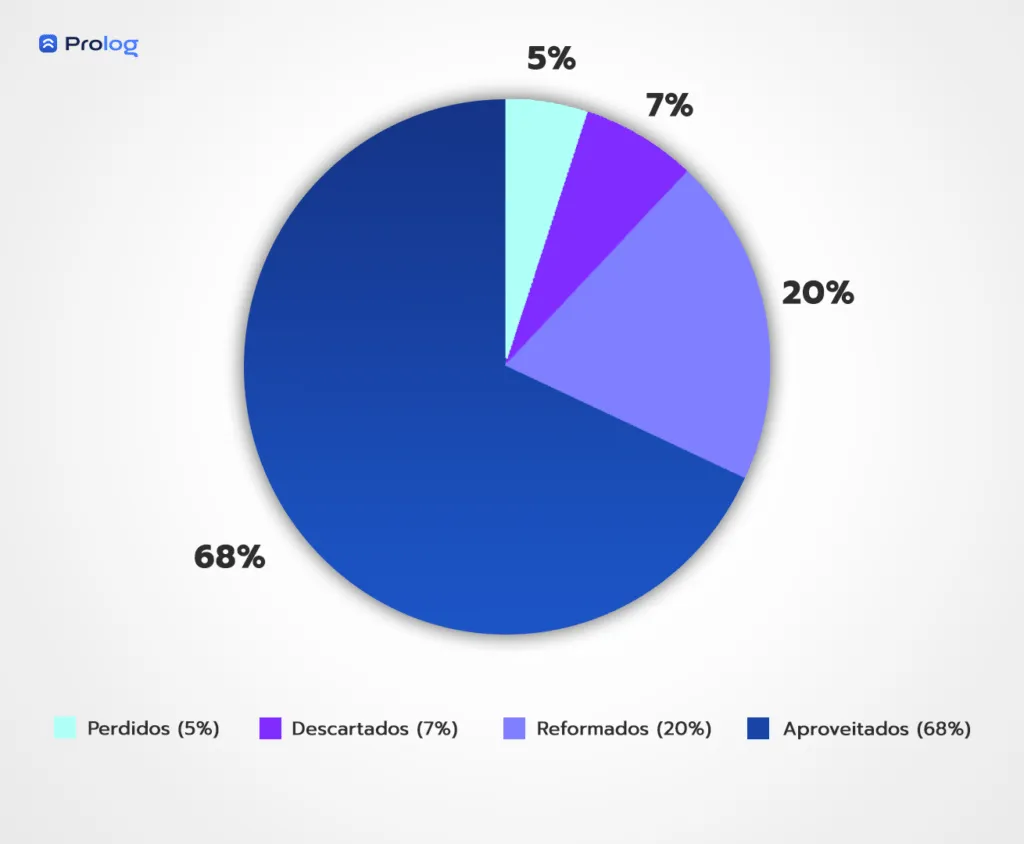
In some cases, it even generates charts and comparison tables, with percentages for each area. In a tire management system, for example, you will have charts showing the percentage of tires that were lost, disposed of and retreaded in a given period.
Fewer errors
Reducing manual entries on paper and spreadsheets prevents information errors in your fleet. If you sometimes come across flawed or inconclusive data, it may be the result of an error made on the operational side.
Higher productivity
Having software for transport companies in your routine helps automate tasks, greatly reducing the time it takes to complete them and generating productivity through digital tools.
It also optimizes the manager's analytical and administrative work. There is no longer any need to look for data and add it to reports, since the reports are also generated automatically in the system.
Integration between technologies
When you use more than one type of system, which is quite common in transport operations, you can integrate them and ensure that all the data is centralized in a single view.
This makes it easier to understand how your company and fleet are working.
How do you choose software for a transport company?
To choose a system for your business, answer the following questions:
- What does the company need?
Before you start researching the software options for transport companies on the market, you need to analyze what needs your company has.
If the goal is to reduce early tire losses, invest in a tire management system. Or, if you need to identify which drivers are causing the most issues, a driver management system or even an electronic checklist are the alternatives to look for.
If there is a need to resolve an issue or optimize an activity, that is the first sign for choosing a system for the fleet.
- How well does it integrate with other software?
As we mentioned above, integration between technologies is a fundamental item for making your management easier and bringing the company's data together in one place. Therefore, one of the criteria for choosing software for transport companies is how well it integrates with the other technologies in use.
- What are the updates and support like?
Technologies are prone to failures and malfunctions, just like any tool. So, when acquiring a solution for your fleet, make sure to choose one that has a support and customer service team available.
Likewise, opt for systems that are always kept up to date, avoiding the loss of important data and information about your fleet.
- What are the interface and day-to-day operation like?
Remember that the systems will also be used at the operational stage, by many employees. That is why they should have a clear and intuitive view, making it easy for anyone to adapt and use them without trouble.
If possible, run a trial period of the tool before closing a long-term contract. That way, you can evaluate whether it works well or falls short.
- What budget is available?
To choose a good fleet system that meets your needs, you have to consider the available budget. After all, if the purchase amount for the technology exceeds the resources you have, it does not suit your business at this moment, right?
Consider the budget for each area of fleet management: tires, fuel, maintenance and so on.
With this in hand, you can start to better understand which types of software for transport companies can serve your operation.
What are the software options for transport companies?
Transportation management (TMS)
This system focuses on controlling cargo transit. To do so, the software has route optimization and freight audit functions.
In general, it centralizes the basic processes of a transport operation. This helps with the company's financial control, gives greater visibility of the transport chain and makes it possible to analyze some KPIs.
Resource planning (ERP)
Also known as an Integrated Business Management System, this type of platform is ideal for managing and integrating the company's different departments.
So, in addition to the control a TMS provides, you also find features for customer and supplier records, as well as billing data and inventory management.
More than that, because it is an integrated system, it allows the transport company to contract more technologies and use them with communication between platforms, without losing data and information.
Warehouse management (WMS)
Depending on the supplier of the software for transport companies you choose, the WMS may even be part of the ERP.
However, if that is not the case, a warehouse management platform will be a way to better control operations inside the warehouse. That is, basically, a means of managing and moving inventory before the actual transport.
Maintenance management
A maintenance system needs to have several functions, such as generating stand-alone work orders, inventory control of vehicle parts, and viewing quotes and the types of maintenance performed in each period.
Electronic checklist
The electronic checklist is a platform that complements maintenance management. It lists the vehicle items that must be inspected before and after a route.
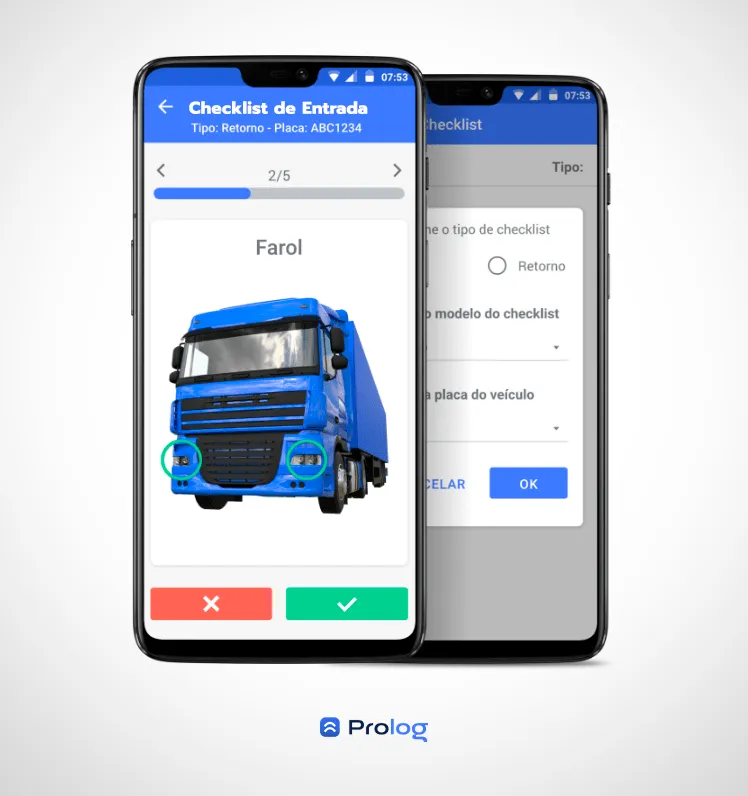
It is part of the fleet's preventive maintenance and aims to prevent vehicle damage and breakdowns, also generating savings for the operation by reducing unplanned corrective maintenance.
Telemetry
Telemetry is a technology used to monitor and track cargo, thereby increasing the safety of transport.
Its advantage over other types of fleet trackers is the ability to collect data on the vehicle's speed on each route, as well as engine idle time and other information.
Tire management
With a tire management system, you can fully control the tires on the fleet's vehicles, keeping their relocation up to date and keeping track of their wear level to avoid losing these assets prematurely.
How many systems should transport companies use?
There is no limit to how many systems to use, as long as you stay organized and do not end up wasting resources by trying to implement every option available.
The company can opt for a more general system for transport companies, or for implementing several software products that are more complete and will be integrated into a central management system.
To decide how to choose, consider the tips we gave above and calmly analyze what kind of issues you want to resolve in your transport operation.
Schedule your Prolog App demo and see how we can contribute to managing your operations.
Frequently asked questions
What is a transportation management system (TMS)?
What is the difference between TMS, ERP and WMS?
How do you choose software for a transport company?
What are the benefits of using software for transport companies?
How many systems should a transport company use?
// newsletter
Fleet management content, straight to your inbox
Articles on tires, maintenance and fleet operations. No spam.


