Reduce fuel consumption with Prolog App
 Luiz Felipe 3 min read
Fuel consumption is one of the greatest difficulties in fleet management, so reducing costs in this area also becomes complicated.
However, good management, tire care and a commitment to preventive maintenance are some alternatives to help achieve greater control and reduce fuel consumption.
With that said, today we will show how the Prolog App tool can contribute to this mission. First, we will give an overview of how to reduce costs at a transport company, then finish with how we fit into this process. Let’s get started!
How to reduce expenses at a transport company
First of all, reducing costs requires strict control over what happens within the company. The fleet manager needs to know the expenses for maintenance, drivers, fuel, trips and so on.
Only with this overview will it be possible to make an effective action plan. Otherwise, the transport company may end up with excessive costs and flawed transport operations.
Want some ideas to help you save more in your fleet management? These are some items that will help with that task and, best of all, without affecting the efficiency of your operations:
- a routine for keeping track of expenses;
- operational monitoring;
- route optimization;
- driver qualification;
- budget planning and control;
- setting savings goals;
- performing preventive maintenance.
Almost all the tasks include some type of initial expense to carry out, but they all aim for greater savings over the long term.
How to reduce fuel consumption
Speaking specifically about fuel consumption, several factors influence it. For example, the driver’s driving style, air conditioning use, tire care and the weight of the loads transported, among others.
So, to reduce consumption, you need to address these factors head-on and outline solutions for each. For example, you can address excessive expenses caused by driving style and air conditioning use through training and seminars aimed at drivers.
In addition, avoiding overloading vehicles is essential. Beyond reducing fuel costs, you also avoid fines during the trip.
Some tasks related to vehicle care are essential for good fleet performance and reducing expenses. Tire management and preventive maintenance are two very important examples, and this is where Prolog comes in.
What Prolog App can do for you
Prolog App is a Brazilian SaaS platform for fleet management, with features for tires, preventive maintenance and electronic checklists. Here, for our present purpose, we will focus on tire management and the electronic checklist.
Tire management
After all, what is the relationship between tire care and fuel savings? It may not seem so, but there is indeed a direct relationship. Worn tires reduce friction when the driver needs to use the brakes, causing greater braking effort to actually slow down and stop the vehicle. In other words, this uses more fuel.
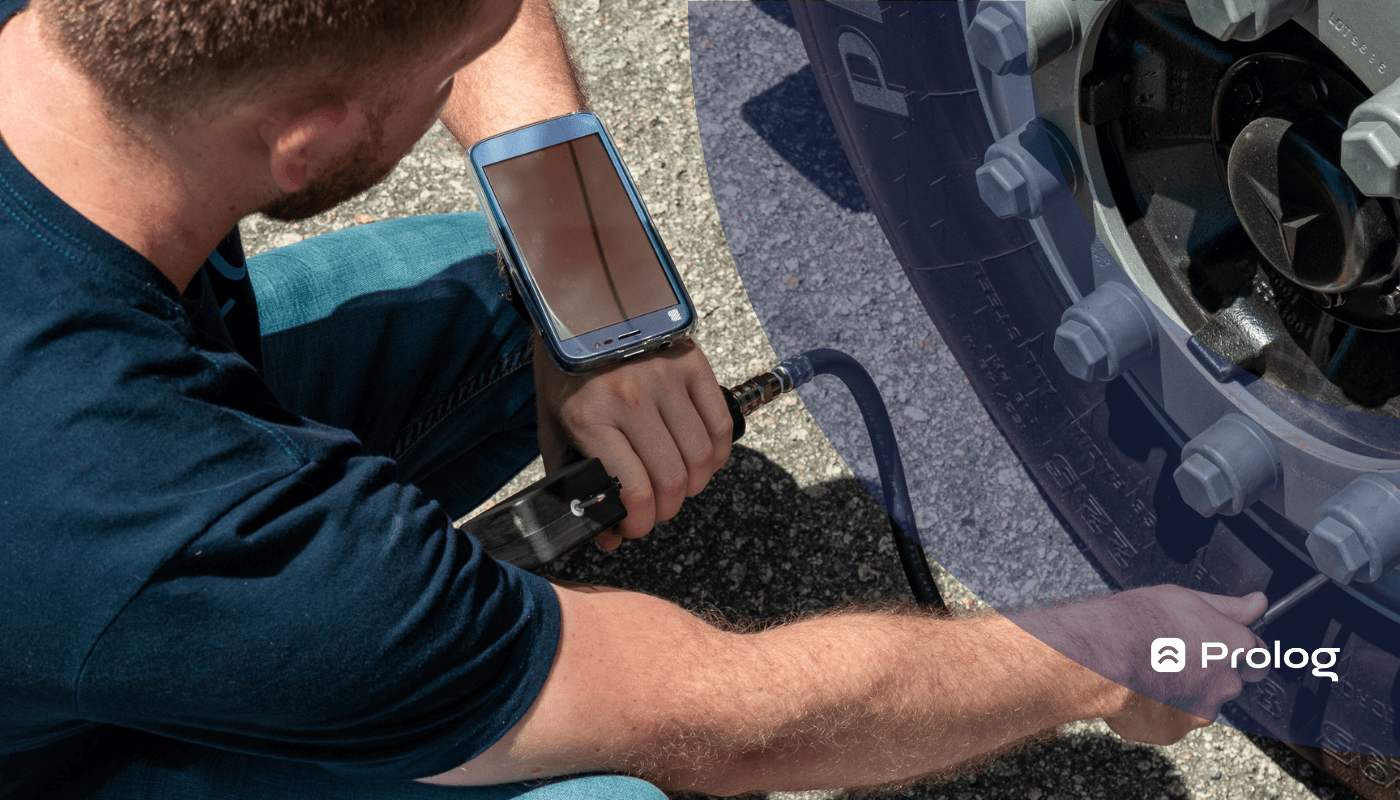
The same logic applies to controlling ideal tire pressure. Each vehicle and tire model has an ideal pressure that must be respected to increase its useful life.
With Prolog App’s system, tire management starts bringing together individual control of each tire, wear, retreading, life cycle and cost per tire. Within the system itself, there is also control of inspection schedules, data analysis and correction of deviations.
This way, you can keep tires in good condition and predict when they will need replacing.
Electronic checklist
The checklist is an essential part of carrying out preventive maintenance. Traditionally, it uses a clipboard, paper and handwritten notes. However, we now have the electronic checklist.
Now, instead of having to write down every detail and then pass it on to those responsible for the necessary corrections, simply fill in the information in the checklist system. Digital inspections by phone help record the problems found and can open Work Orders automatically for preventive maintenance.
Furthermore, within Prolog App’s checklist, you can create customized checklists according to your needs without using more paper and add photos of problems.
The two tools combined help organize fleet management, making the routine faster and more productive.
Talk to one of our fleet management technology specialists and learn more about how Prolog App can support your operation in tire management, electronic checklists and preventive maintenance. You can also talk to the team on WhatsApp.
Frequently asked questions
How can you reduce fleet fuel consumption?
What is the relationship between tires and fuel consumption?
What does Prolog App do in tire management?
How does the electronic checklist help with preventive maintenance?
Do savings actions require an initial investment?
// newsletter
Fleet management content, straight to your inbox
Articles on tires, maintenance and fleet operations. No spam.