9 common tire management mistakes and how to avoid them
 Jean Zart 7 min read

Have you ever considered how much fleet tires influence your operation's performance, costs and even safety? It may seem simple, but tire management mistakes can become a major everyday headache.
Simple factors, such as driving above the permitted speed limit or not having a preventive maintenance routine for tire alignment and balancing, are mistakes that can be costly.
See below:
- What fleet tire management involves
- What the tire management mistakes are
- How to avoid these mistakes and get the most from fleet tires
What does fleet tire management involve?
The tire management of a fleet is an activity combining operational and managerial aspects.
The work also involves continuously keeping track of tire condition, including pressure, tread depth and general condition, along with management tools that record and analyze data to identify wear patterns.
Planning preventive maintenance is another central task, establishing schedules for inspections, rotations, alignments, balancing and suspension adjustments, always with the goal of avoiding unexpected failures and reducing costs.
The person responsible for tire management must also control inventory, recording each tire's history in detail from purchase to disposal, as well as organizing the inventory of new, retreaded and used tires to ensure their availability whenever needed.
This detailed control allows better decisions, such as determining the ideal time for retreading or replacing worn tires.
Managers must also analyze tire performance data, such as cost per kilometer (CPK), using this information to assess the best makes and models for the fleet.
Besides operational activities, tire managers can play a strategic role that includes negotiating with suppliers, implementing efficient processes and using intelligent systems to optimize control and information management.
They should make drivers and teams aware of the importance of proper practices, such as inflating tires correctly, carrying out regular inspections and recording everything in an organized way.
While keeping track of wear and controlling it are essential day to day, strategic analyses and long-term planning ensure the fleet operates with lower costs, better performance and longer tire useful life.
What are the tire management mistakes?
Overloading vehicles
Each tire make and model has a maximum supported load weight. This information can be found on each tire's sidewall. If you did not know this, see how to find and read this data here.
Putting excessive weight on tires causes irregular wear, compromises the casing and can result in early disposal, increasing operating costs.
Besides affecting tires, overloading increases vehicle fuel consumption because the vehicle loses performance efficiency, and you may also end up with a fine.
Driving above speed limits
We are not necessarily talking about legal limits on highways and municipal roads, but the tires' own limit.
Alongside the load limit the tire supports, in the sidewall data, there is also the speed limit at which tires can run before suffering unusual damage. It is important not to exceed these limits, as doing so can result in overheating, increased pressure and even blowouts.
Exceeding the speed limit therefore not only risks drivers' lives but leads to premature tire loss.
Driving with low tire pressure
Low tire pressure can cause several problems. Among them:
- Irregular and premature wear of tire shoulders and casing
- Makes the vehicle more vulnerable to structural damage caused by potholes and imperfections, since the tire casing is less protected
- Increased temperature while driving on the road
- Breaks or cracks in the upper sidewall
- Rupture or separation of the cords
For these reasons, tire calibration must follow the PSI specified by the manufacturer. Or the data generated in the fleet management system and analyzed under the technical supervision of a tire manager.
A reminder: always inflate tires when cold. Hot tire temperatures make calibration imprecise.
Keeping tires overpressurized
When a vehicle is overloaded, it is common to see an attempt to “compensate” by increasing tire pressure. But let us be very clear: DO NOT DO THIS.
Excess pressure can reduce a tire's useful life by up to 15%, causing more wear in the center of the tread and sometimes cracks in the grooves. Beyond that, the tire loses traction and becomes more susceptible to punctures.
Besides affecting tires, this factor causes a loss of vehicle stability, especially in curves, can damage the suspension and can also increase vehicle fuel consumption.
Problems with alignment, balancing and suspension
Alignment and balancing are usually checked and carried out together, on average every 10 thousand km. Is this happening in your fleet? If not, you need to change that immediately.
Wheel misalignment creates a “pull” in the steering, meaning the vehicle pulls more to one side than the other. The consequences include irregular tire wear and increased fuel consumption.
Balancing ensures vehicle stability and balance; when it is abnormal, the vehicle vibrates more and develops excessive wear at alternating points on the tread. It even causes suspension problems.
When the suspension is worn or has another problem, it can in turn cause an alignment problem and impair vehicle stability.
In other words, these three vehicle elements are interconnected and should receive the same attention!
Failing to control wear
Wear is the biggest cause of premature tire loss. Although we often discuss the importance of caring for fleet tires, few companies have adopted management systems for these items.
So besides generating savings for the fleet and increasing tire durability, controlling these parts will give your transport company a competitive advantage!
Worn tires have less grip on asphalt and reduce vehicle balance and stability. If they become bald, you may also receive fines for poor vehicle upkeep.
By measuring tread depth, it is possible to predict the need for retreading, and you can identify problems and seek solutions quickly to avoid losing tires.
What is more, you generate data to calculate CPK and identify the best tire for your fleet. But this measurement must use appropriate equipment to ensure precision and avoid casing damage during the process.
Not knowing tire types
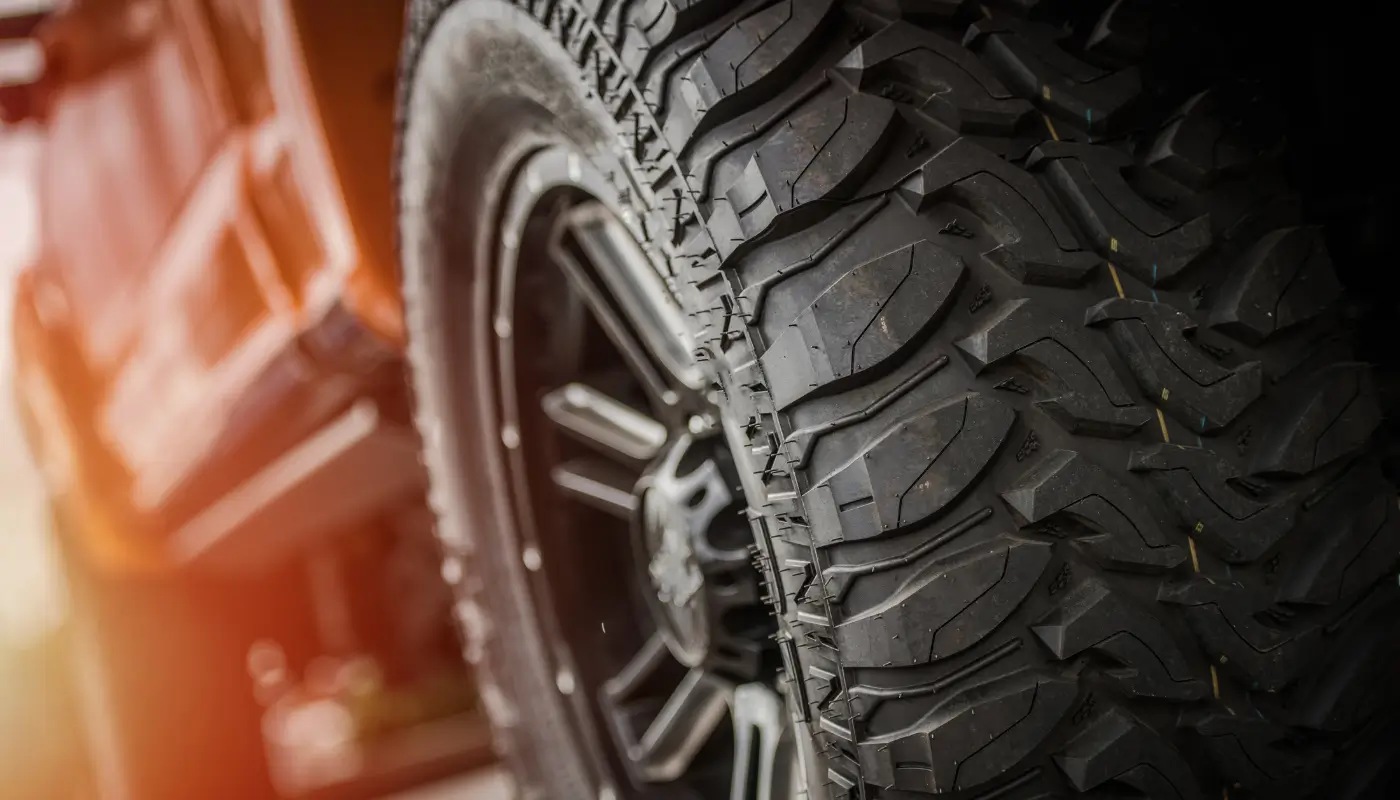
Needs differ according to tire type and road type, and so do tires. Higher-severity tires (with deeper grooves), for example, are used off-road on rough terrain.
Lower-severity tires, which are lighter, are excellent for long highway trips. After all, they play an important role in vehicle performance when used on the right surface.
Using a lower-severity tire on a dirt road, for example, may destroy it before the trip is even over.
See how useful it can be to know tire types and their purposes?
Not carrying out tire rotation
Tire rotation and wear are directly connected.
That connection is this: rotation ensures even wear across all the vehicle's tires.
This vehicle maintenance practice is described in each model's owner's manual, indicating the correct rotation method for each machine.
Durability, better fleet performance, savings, safety and more efficient fuel consumption are some of the benefits of this task.
Forgetting the spare tire
Even though it is not installed on the truck, it is still a tire and may be needed at any time. The spare tire should therefore always be in usable condition.
Inflating the spare tire to 5 to 10 psi above the others is recommended to compensate for natural pressure loss while unused.
How can you avoid these mistakes and get the most from fleet tires?
Avoiding tire management mistakes and making the most of tire useful life requires an approach based on planning, continuous oversight and recommended practices.
To start, it is essential to choose tires according to the characteristics of fleet operations and vehicles, considering factors such as load type, routes traveled and the severity of operating conditions.
This ensures each tire is prepared to meet specific job demands, avoiding unnecessary wear.
Once in use, keeping track of pressure is essential, adjusting it according to manufacturer recommendations or data obtained through the fleet management system.
Practices such as regular rotation, alignment and balancing should also be integral to regular maintenance, preventing irregular wear and suspension problems that can compromise both tires and vehicle safety.
Another crucial point is collecting and analyzing tire performance data. Using management technologies, managers can keep track of factors such as tread depth, mileage and fuel consumption associated with tire condition.
This data not only helps identify problems early but also guides decisions about retreading or replacement.
To avoid mistakes and ensure maximum efficiency, engaging drivers and the maintenance team is also essential.
Drivers who are well informed about the impacts of speeding, overloading and low pressure, for example, become allies in tire preservation.
By identifying and correcting common mistakes, you ensure even better results!
Ready to take a step forward in managing your fleet's tires? Schedule a demonstration and discover how our solution can make a difference!
Frequently asked questions
My tires are lasting less than they should — what should I investigate first?
What is the difference between driving below and above the specified tire pressure?
How can you reliably keep track of fleet tire wear?
How can you choose the right tire type for the surface the fleet uses?
Do I need to worry about the spare tire if it is not even running?
How often should I carry out alignment and balancing on the fleet?
// newsletter
Fleet management content, straight to your inbox
Articles on tires, maintenance and fleet operations. No spam.