
Tire tread depth: what is the minimum?
 Luiz Felipe 8 min read

In fleet management, controlling tire tread depth is very important. To do that, you need to understand what this measurement indicates, which measuring methods to use and how to turn the reading into a maintenance decision.
In addition, organizing the data collected in your fleet is essential. That is why you should have a process to control tread depth, record this information and analyze it later, in order to understand tire durability, anticipate casing losses, plan retreading and follow up on pressure adjustments when they are needed.
You can even use this data to compare applications and find out which tire makes the most sense for each operation of your trucking company, always considering route, load, maintenance and usage history.
Let's explain everything in more detail. Keep reading:
- What tire tread depth is;
- What tire grooves are;
- Why tread depth matters;
- What issues can arise if tread depth is not controlled;
- What tire tread depth data is used for;
- How to collect this information from tires;
- What the ideal tread depth is.
What is tire tread depth?
Tire tread depth is a measurement, usually taken in millimeters, that indicates the amount of depth still left in the tread grooves at the time of measurement.
When followed over time, it provides three key pieces of information for tire management:
- Whether the tire is still fit to run according to the fleet's legal and operational criteria.
- Whether tire wear is happening evenly or unevenly.
- The average tire durability in the fleet.
This measurement should not be analyzed on its own. It gains value when compared with pressure, tire position, route type, retreading history and the fleet's periodic inspections.
What are tire grooves?
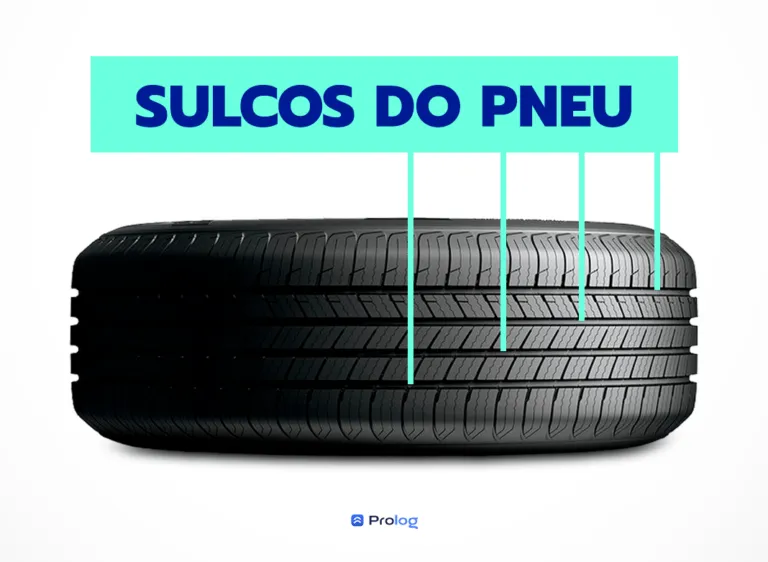
Tire grooves.
Tire grooves are the patterns on the tread, the central part of the tire that is in contact with the road. They have a certain depth, according to the model's design and the tire's main purpose.
For example, tires developed for long-distance travel on interstate highways can have a different pattern from tires whose main application will be running in urban centers.
This means that grooves help the tire handle road conditions and are meant to let air, water and dirt pass through. In this way, they contribute to tire grip on the road and help prevent problems such as hydroplaning.
Why does tread depth matter?
It is considered important because it helps indicate whether the tire is still in proper condition for use. If the tire has a depth compatible with its application and above the defined limits, the fleet has more confidence to decide whether it stays in operation or goes to retreading, replacement or disposal.
On the other hand, when depth drops too much, the risk is no longer just about performance. The tire can reach the legal limit, lose its operational fitness for the route, compromise the casing and reduce the chance of retreading. That is why tread depth should be followed together with pressure, load, alignment, damage and maintenance history.
Why is it important to measure and follow up on tread depth?
Because we need to prevent uneven tire wear, when one part of the rubber wears more than another, and also keep the tire from going bald.
There is natural wear in the grooves that is unavoidable. The issue is when factors start to appear that cause excessive wear or other types of wear, such as on the side of the tire or feather-edge wear (feathering).
In these cases, the reduction in tire tread depth happens in a way that can cause irreparable damage to the assets, especially when the fleet only notices the problem near the end of the tire's useful life.
Under Brazilian law, the remaining tread depth cannot be below 1.6 mm.
In addition, the regulation itself provides for visual checks using wear indicators, which sit at the bottom of the tread pattern. All these points reinforce how necessary it is to keep close control over tread depth loss.
What issues can arise if tread depth is not controlled?
Mainly excessive or uneven tire wear. But remember that tire wear can come with other problems, such as:
- Brake system problems;
- Structural damage to the suspension;
- Increased heating in components of the assembly;
- Tire casing fatigue;
- Longer vehicle braking distance;
- Loss of performance and productivity on the route.
The key point is not to treat tread depth as the single cause of all costs. A tire can show accelerated tread loss due to incorrect pressure, misalignment, load, route, impacts or damage. That is why the measurement should open an investigation, not replace a complete maintenance analysis.
What is tread depth data used for?
To understand more about the fleet's tires and decide which options to buy, keep, retread or avoid.
One of the pieces of information you can extract from tread depth control is which tire is more economical and/or delivers better performance in the application it actually runs in.
Likewise, it helps you know the right date to replace or remove the tire, avoid retread rejection and reduce early casing loss.
You can even identify the need for vehicle alignment based on the type of wear seen on the tire.
The main goal of collecting and analyzing tread depth data is to find out what you need to know about the fleet's tires and reduce costs with better decisions. After all, you make smarter purchases and manage vehicle and tire maintenance more effectively.
How to collect this information for each tire?
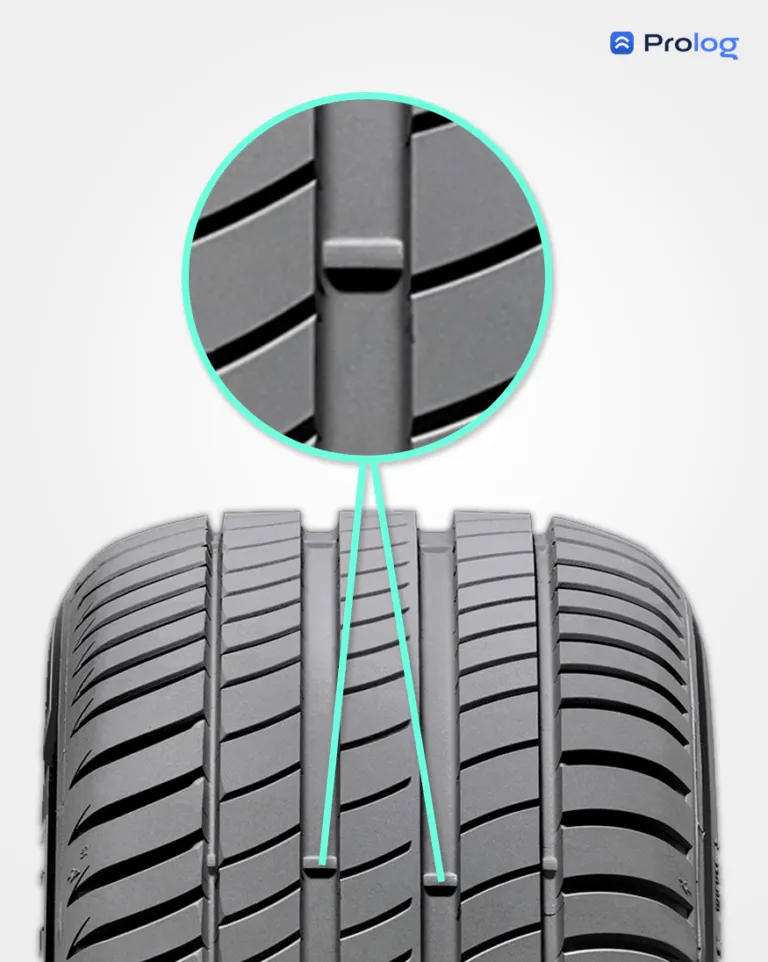
Check the TWI and tread depth to know whether the tires are in good condition.
We can measure tire tread depth with an analog caliper, an electronic tread probe or by checking the tire's TWI. Each method has different characteristics, and you need to assess which alternative best fits your operation's routine.
In addition, you have probably heard some "tricks" for measuring depth without specific tools; the most famous is the 1-real coin trick. But be aware that none of these shortcuts replaces a reliable inspection process.
What happens in these cases is that you are hurt by the lack of information and by the early loss of tires. After all, when the casing is in good condition, the tire can be retreaded and have its life extended.
Another consequence is higher fleet costs, both for tires and for vehicle maintenance. This information confirms it: do not use measuring tricks as the basis of your management.
What is the best method?
It depends on the routine you already have and the results you want to achieve.
When you choose a manual tool, such as the analog caliper, all the information collected must be written down on paper and transferred to a tire control spreadsheet or to a management system.
In addition, the inspection date must be recorded. That way, you have greater control over this data and over tire performance over time.
With manual control, you can even build tire tread depth tables, with information that helps determine the tire replacement forecast.
With an electronic tread probe, the person in charge of the inspection measures the tire more quickly and with fewer data-entry steps, because the reading can be entered directly into the system.
With the Prolog solution, which combines the electronic tread probe and the tire management system, the inspection records the measurement taken by the person in charge and helps centralize the tire's history.
In this way, the system organizes the data recorded in inspections and supports reports on calibration, retreading, replacement, disposal and other tire maintenance controls.
As you can see in the image below, the control dashboard is quite complete and clear:
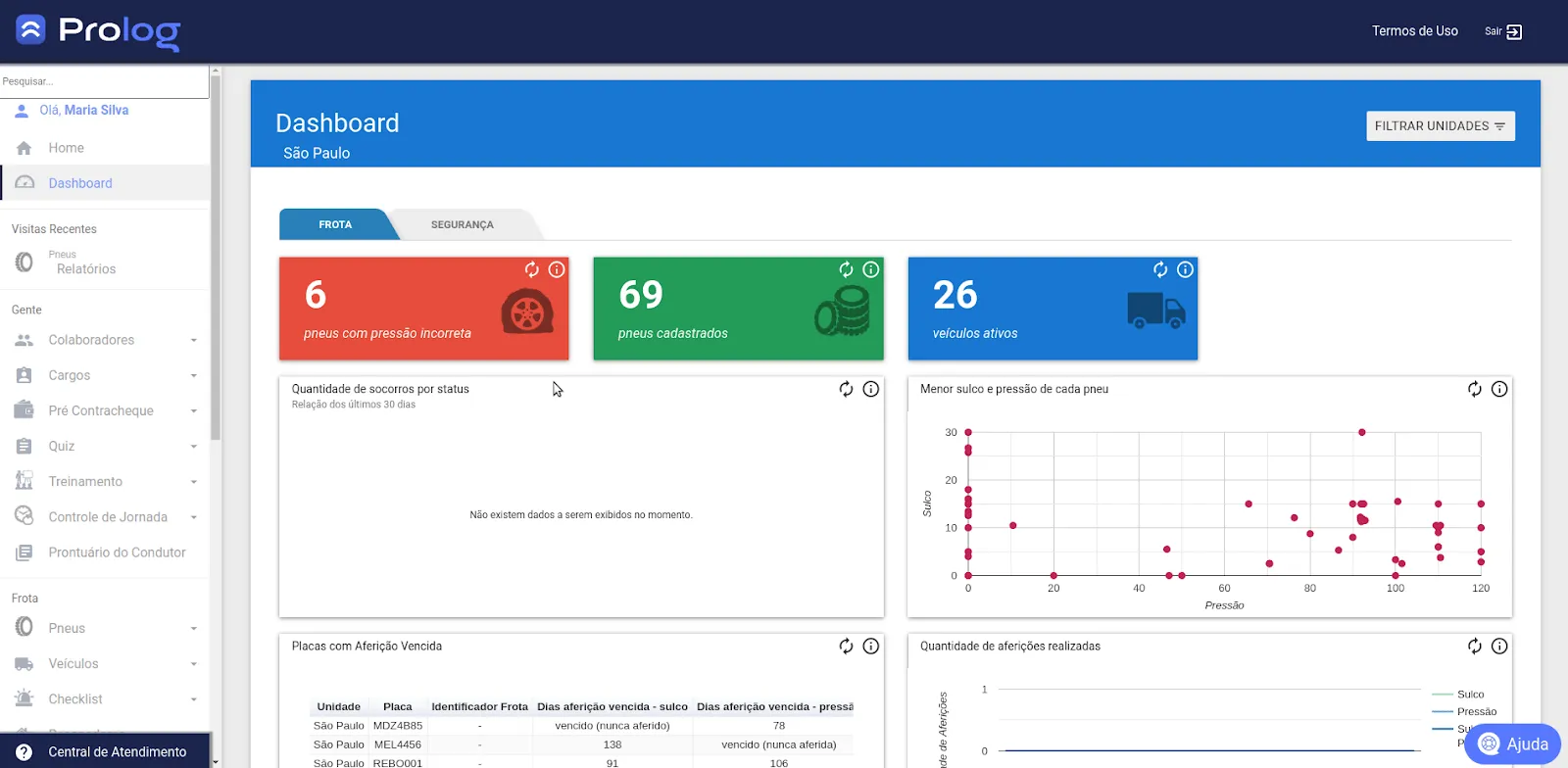
Tire management system dashboard.
What is the ideal tread depth?
Truck tires have tread depths that vary according to the model, the application and the tread pattern. That is why it is hard to confirm a single ideal measurement for every case.
What can be clearly separated is the legal limit and the fleet's operational policy. Under Brazilian law, a tire should not run with a remaining tread depth below 1.6 mm. A fleet, however, can set a more conservative internal threshold to remove tires earlier, protect the casing and increase the chance of retreading.
In commercial tire management, the 3 mm reference is often used as a more prudent minimum operational measurement than waiting for the legal limit. Even so, it should be applied according to tire type, route, position, wear history and retreading strategy.
How to control tire tread depth loss?
In addition to controlling it with the right tools, whether manual or digital, you should have a tire management routine.
This is an area that has been gaining prominence in Brazilian fleets since 2016, when the Prolog system was created, and managers began to understand that it has a major impact on transportation savings and efficiency.
We can list all tire-related care as part of this management. However, among the activities that stand out the most are pressure control, periodic inspections, damage follow-up and tire tread depth control.
This way, you can identify whether tires are losing depth too quickly or are within expectations. Likewise, you know when to remove the tire from the vehicle for retreading, replacement or disposal assessment, keeping the decision from happening too late.
Learn even more about this type of control and its benefits with the guide to our solution, which is completely free to download.
Frequently asked questions
What is tire tread depth?
What is the minimum acceptable tread depth for a tire?
What can you learn by following up on tread depth?
Can you measure tread depth with a 1-real coin?
What issues arise when tread depth is not controlled?
What is the difference between measuring with a caliper and with an electronic tread probe?
// newsletter
Fleet management content, straight to your inbox
Articles on tires, maintenance and fleet operations. No spam.


