Tire technician, truck driver and fleet manager pay
 Jean Zart 3 min read

How much does it cost today to build and maintain the team that supports a road freight transport operation? From tractor-trailer drivers to fleet managers, including tire technicians, mechanics and logistics assistants, payroll is one of any carrier's largest fixed costs, and knowing market averages is the starting point for realistic budget planning.
Based on the latest CAGED/MTE data from Brazil's employment register and labor ministry (last 12 months, 44-hour weekly contracts under CLT, Brazil's labor legislation, base pay without extras), we compiled average salaries for the main roles in a freight transport operation in Brazil.
Tractor-trailer driver
Average pay is around R$2,625 per month, with a range from R$2,554 to R$3,830 depending on the region and company size. Broken down by experience level, pay starts at approximately R$2,043 for early-career professionals, rises to R$2,725 at intermediate level and reaches R$3,521 for the most experienced.
Remember that these amounts do not include extras such as hazard pay, daily allowances and overtime, which usually make up part of the driver's total compensation.
Tire technician
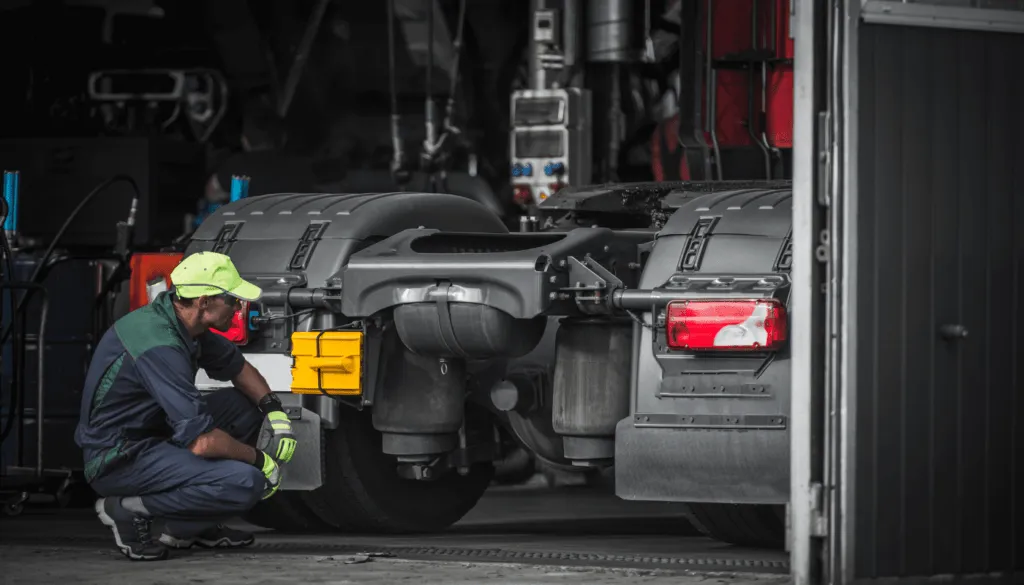
A highly important professional in the industry, the tire technician receives pay that varies with experience: around R$2,073 at entry level, R$2,766 at intermediate level and R$3,577 for more qualified professionals. In São Paulo, the category's minimum pay in 2025 was R$2,151. For carriers with an in-house tire workshop, this is a critical operational role, and difficulty finding skilled professionals has put pressure on pay in several regions.
Car and truck mechanic (diesel)
The national average is around R$2,838 per month, although specific road transport vacancies usually offer amounts close to R$2,700. Like tire technicians, this role faces a shortage of skilled labor, especially professionals experienced in heavy-vehicle maintenance and onboard electronic systems.
Transport logistics assistant
A role that acts as the operational arm of management, with salaries reflecting increasing responsibility: approximately R$2,776 at entry level, R$3,719 at intermediate level and R$4,804 for senior professionals. The wide range shows how the role can vary from more administrative duties to positions directly responsible for coordinating operations.
Road transport loading and unloading supervisor
With average pay around R$3,350, the range extends from R$3,258 to R$6,407 at the highest levels. It is one of the roles with the greatest recent growth in hiring volume, with an increase of more than 20% in hires, indicating that operations are demanding more leadership on the logistics floor.
Fleet manager
The role with the greatest operational responsibility on the list has average pay between R$5,978 and R$6,333, with a minimum around R$5,815 and a maximum that can exceed R$14,000 in large operations.
By level: approximately R$6,292 at entry level, R$8,480 at intermediate level and R$10,972 for the most experienced. The wide range reflects the diversity of operations, since a fleet manager with 30 vehicles has different duties from someone managing 300.
These data offer a general market reference, but it is important to consider that amounts vary according to the state, company size, cargo type and operational complexity. Regions with a greater concentration of carriers and more competition for professionals tend to pay above the national average.
For those seeking an even more detailed overview, Instituto Paulista do Transporte de Carga (IPTC), the São Paulo freight transport institute, made a nationwide Roles and Salaries Dashboard available in November 2025, covering more than 1,700 occupations in the industry. It is a useful reference both for salary benchmarking (market comparison) and for planning team structure.
Mapping the industry's average salaries helps size team costs correctly, identify where the company pays above or below the market and make better-informed decisions about hiring, retention and operational structure. This is essential given the road freight transport landscape, which has faced a shortage of qualified drivers and technicians for years.
Want to keep receiving analyses and relevant data for your fleet management? Subscribe to our newsletter and receive content like this directly by email.
Frequently asked questions
How much does a tractor-trailer driver earn?
What is the average pay for a fleet manager?
What do maintenance roles such as tire technicians and mechanics cost?
Where do these figures come from and what do they leave out?
Where can I find a more detailed pay overview for the industry?
Why keep track of the industry's average salaries?
// newsletter
Fleet management content, straight to your inbox
Articles on tires, maintenance and fleet operations. No spam.