
Total cost of mobility in your fleet
 Jade Zart 5 min read
Total cost of mobility (TCM) is a fleet management concept that offers a clear view of where and how resources are being used, and where savings can be made.
It represents the sum of costs associated with transport and logistics, far beyond fuel and vehicle maintenance. As in total cost analyses, the factors considered may vary according to the operation type, acquisition model and how the company keeps track of spending.
Knowing and understanding this indicator can be very useful for fleet managers to achieve their cost reduction goals in fleet operations. These are the main points:
- What is total cost of mobility?
- Why do you need to know total cost of mobility?
- What makes up total cost of mobility?
- How does total cost of mobility affect transport operations?
- How do you calculate total cost of mobility?
- How do you manage transport costs?
What is total cost of mobility?
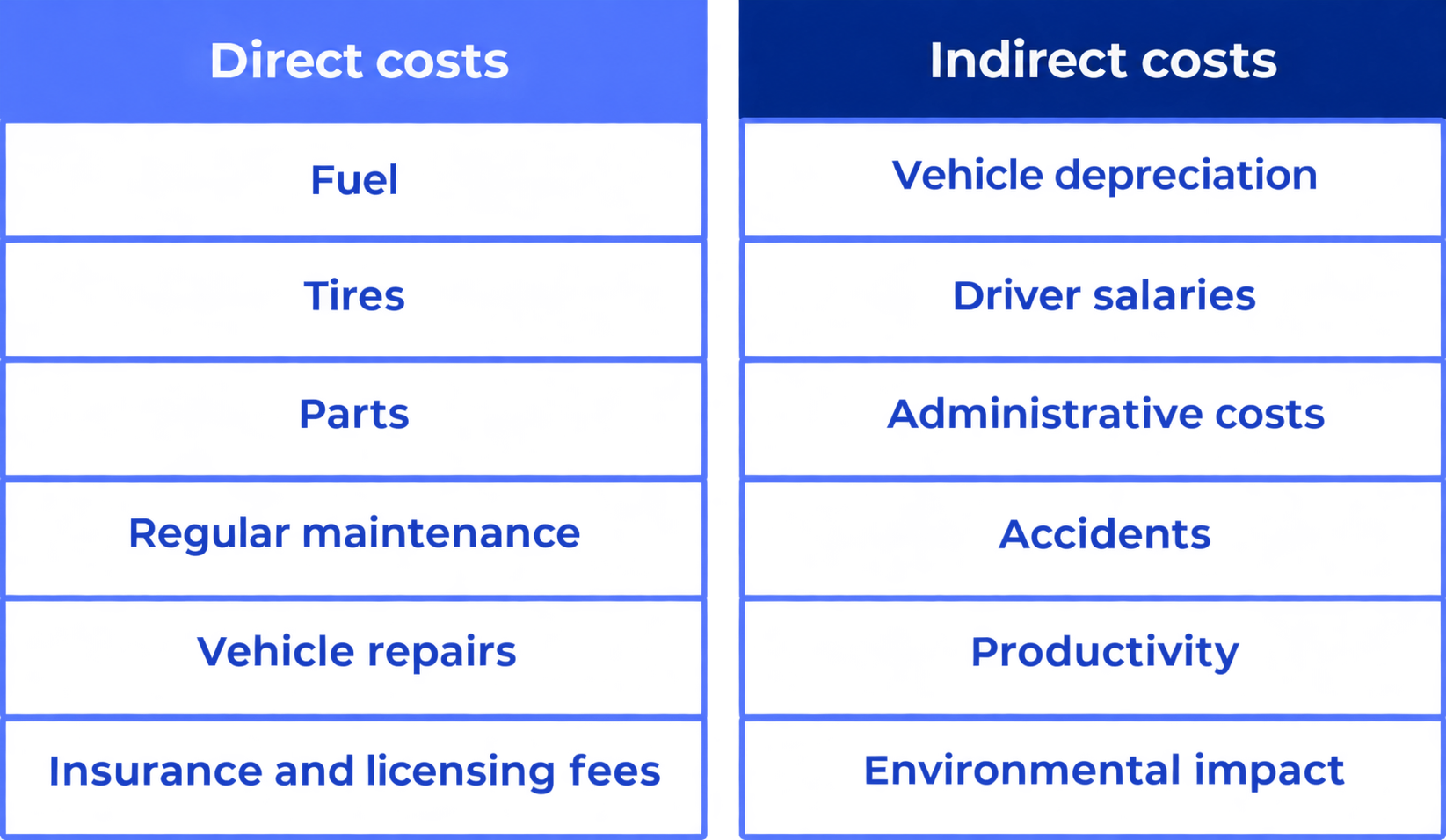
Total cost of mobility is a broad fleet management term covering all spending related to a company's transport and logistics. It includes expenses such as fuel, vehicle maintenance, insurance, fees, taxes, licensing and other amounts needed to keep the operation running.
TCM also considers costs that are not always evident in day-to-day activities, such as vehicle depreciation, driver salaries, the management team and transport-related administrative expenses. Therefore, rather than permanently labeling an expense direct or indirect, what matters is defining a clear criterion and applying it consistently in the calculation.
Why do you need to know total cost of mobility?
Knowing total cost of mobility offers a comprehensive understanding of all costs involved in transport operations.
Understanding this cost helps identify areas where spending can be optimized and operational efficiency increased.
In addition, a detailed analysis of total cost of mobility allows better budget planning, informed choices about vehicle and technology investments, assessment of whether an expense delivers sufficient value to the operation, and strategies to achieve greater savings and profitability in transport operations.
What makes up total cost of mobility?
Direct costs
Direct costs in fleet mobility include expenses the company can objectively relate to the vehicle, transport activity or period analyzed.
This may cover fuel costs, regular maintenance, vehicle repairs, insurance fees, licensing and other spending linked to fleet operations. Classification depends on the criterion adopted: if the focus is traceability by vehicle, insurance and depreciation can be kept track of as asset costs; if the focus is variation with use, fuel and some maintenance tend to be more evident.
These expenses are generally easier to trace and quantify when directly associated with daily fleet operating activities. Even so, managers should avoid mixing criteria because this distorts comparisons between vehicles, cost centers and periods.
Indirect costs
Indirect costs, in turn, support the operation but are not as evident in a single refueling, maintenance service or repair order.
This may include driver and management team salaries, administrative costs related to fleet management and expenses shared between areas. Depending on the calculation method, less visible costs or costs assigned through allocation may also be included. The central point is that TCM should not ignore indirect or hidden costs just because they are harder to see.
How does total cost of mobility affect transport operations?
Budget impact
High costs can consume a large share of financial resources, affecting cash flow and the company's overall profitability.
Careful management of these costs is essential to maintaining financial health, finding the best opportunities for operating cost reduction and ensuring resources are allocated effectively.
Strategic decision-making
Accurate cost information allows managers to make more informed decisions about fleet investments, adopting new technologies or operational changes.
This helps the company adapt better to market demands and seek growth opportunities. It also helps compare alternatives with a more complete view, considering not only the purchase price or most visible expense, but the cost of operating, maintaining and administering each choice over time.
Operational efficiency
Identifying and reducing unnecessary costs can result in leaner, more efficient operations.
This includes optimizing delivery routes, improving fuel and maintenance management and implementing sustainable practices, resulting in better resource use and reduced environmental impact. When TCM is consistently kept track of, it becomes easier to distinguish real savings from cuts that merely transfer the issue to another operational stage.
How do you calculate total cost of mobility?
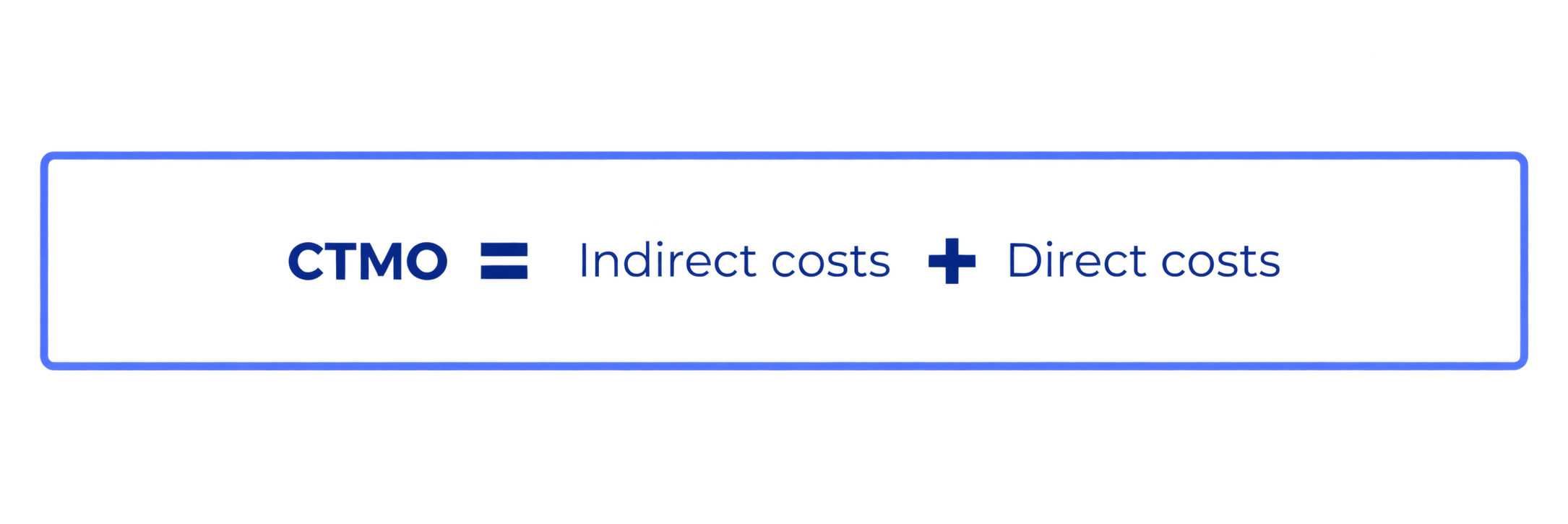
Calculating total cost of mobility involves adding up all spending related to transport and fleet operations, both direct and indirect costs.
Although there are different ways to calculate TCM, a practical approach is to gather acquisition or contracting, operating, maintenance and downtime costs, then consider residual or resale value when that data is part of the analysis.
For an accurate calculation, it is important to continuously track and record these expenses over time. It is also worth documenting the criterion used to classify each expense, so comparisons remain valid when new vehicles, routes, contracts or cost centers are included.
Using fleet management software can facilitate this task, providing detailed reports and analyses that help identify areas where costs are excessive and efficiency can be improved.
How do you manage transport costs?
Transport cost management works by collecting data on spending and investments in the fleet and related areas.
By calculating total cost of mobility, you will already be keeping track of all amounts spent, so to manage these costs you simply need to apply an efficient control and analysis method.
With the data at hand, you can identify some trends, whether toward higher or lower costs, and high-cost areas whose budgets can be reduced without causing operational issues.
It is important to establish clear KPIs to monitor these costs over time so you can plan and budget based on analysis, setting realistic goals and a concrete action plan. The same logic applies to expense classification: define the criterion, keep the record up to date and review the method when the operation changes.
Want to keep deepening your fleet management knowledge and discover effective strategies to optimize your operations? Subscribe to our free newsletter (in Portuguese)!
Frequently asked questions
My fleet costs seem high, but I do not know where they come from. Where should I start?
What is the difference between direct and indirect fleet costs?
How can I calculate the total cost of mobility for my operation?
How can transport costs be controlled after gathering the numbers?
Why look at total cost of mobility rather than just fuel spending?
// newsletter
Fleet management content, straight to your inbox
Articles on tires, maintenance and fleet operations. No spam.


