Truck flat tire: what to do on the road
 Jean Zart 5 min read
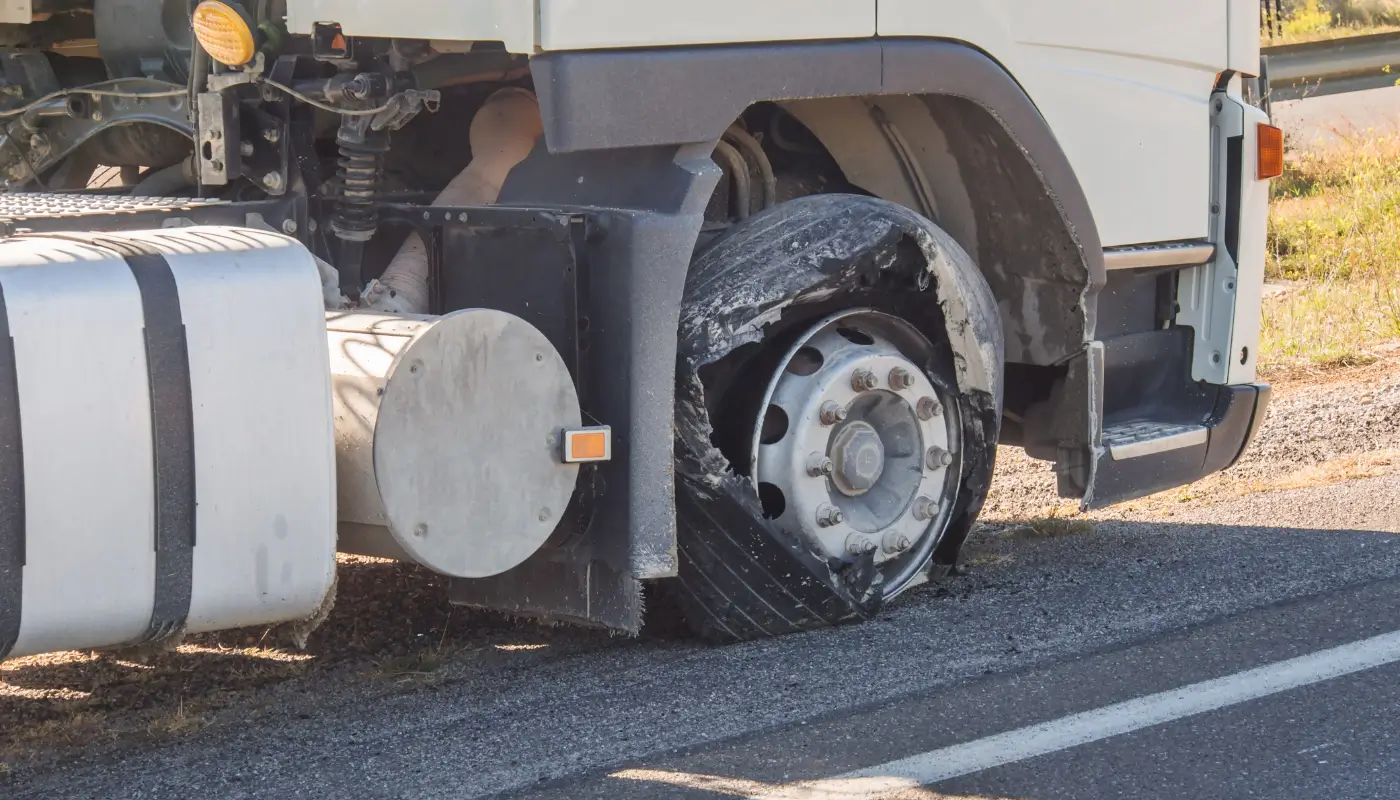
Taking care of truck tires is one of the most important tasks to ensure safety on the road. After all, keeping these assets in good condition prevents accidents and improves vehicle performance.
Even so, no matter how careful you are in your management, unexpected events can happen and your driver may end up needing an emergency change of a flat tire on the road.
Knowing how to handle this situation quickly and safely is essential to minimize risks and continue the trip without major problems.
Below, you will find:
- What to do when a tire goes flat on the road
- Whether you can change a tire on a highway
- How to change a flat truck tire
- What happens if you drive on a flat tire
What should you do when a tire goes flat on the road?
When driving a truck and noticing that one of the tires has gone flat, the first thing to do is stay calm, slow down gradually and follow a few important steps to ensure safety on the road. You should brief your fleet's driver on the appropriate recommendations:
- Look for a safe place off the road, such as a gas station, a tire repair shop or an escape ramp, thus avoiding stopping in the middle of the highway.
- Turn on the hazard lights.
- Use proper warning signals in good working condition.
- Check the flat tire and the mandatory equipment before starting any procedure.
- Call for assistance, if necessary.
Can you change a tire on a highway?
The Brazilian Traffic Code (CTB) does not prohibit changing tires on highways, but it requires the vehicle to be properly marked with warning signals to prevent accidents.
Using the warning triangle, for example, is part of the preparation to alert other drivers, and it must be in good working condition. In addition, it is essential for the driver to turn on the hazard lights and, if possible, use reflective cones to increase the truck's visibility before starting any procedure.
However, the recommendation is always to try to stop in safer places, such as service stations or tire repair shops, to do the change with greater peace of mind.
How do you change a flat truck tire?
If you need to change the truck's tire on the road, follow this step-by-step guide to make sure the change is done correctly:
- Park the truck in a safe area and apply the parking brake.
- Turn on the hazard lights and set out cones or warning triangles to alert other drivers.
- Gather the necessary tools: safety gloves, lug wrench, wheel chocks, hydraulic jack, spare tire.
- Place the chocks on the wheels opposite the flat tire.
- Use the lug wrench to loosen the nuts on the flat tire, but do not remove the nuts completely yet.
- Place the jack at the point indicated in the truck's manual and raise the vehicle until the tire is off the ground.
- Remove the nuts completely and then pull the tire off the axle.
- Place the spare tire on the axle and first fasten the nuts by hand.
- Lower the truck and, once it is on the ground, use the lug wrench to tighten the nuts in a crisscross pattern.
- Check the spare tire's pressure with a reliable pressure gauge and adjust it according to the manufacturer's recommendation.
- If the spare tire is not meant for prolonged use, drive to the nearest tire repair shop for a full check.
It is important to point out that changing a truck tire on the road can be a challenging task, mainly because of the weight and size of the tires. The process can require a lot of physical effort, as well as technical knowledge to ensure the change is done safely.
A truck tire can weigh more than 50 kg, which increases the risk of injury for the driver when trying to do the change alone, and the lack of suitable equipment, such as a high-capacity hydraulic jack, can make the task even harder.
Although it is important to know how to change a tire, it is highly recommended that, whenever possible, the driver seek professional assistance at a nearby service station or tire repair shop.
What happens if you drive on a flat tire?
Driving on a flat tire is dangerous and can cause serious damage to the vehicle and safety risks. The main consequences include damage to the tire and the wheel, resulting in higher repair or replacement costs.
A flat tire can also compromise the truck's stability, increasing the risk of accidents, especially in curves or at high speed.
If the truck has a dual axle and one of the tires is flat, the overload on the remaining tire can damage the axle and other vehicle components.
What is more, driving on a flat tire can also result in fines and penalties, depending on the situation and on enforcement on the road.
To avoid these situations, the ideal is always to stop as soon as possible in a safe place and do the change or call an assistance service. Do not keep driving on the flat tire: even a short distance can damage the wheel and make the tire unrepairable.
Do not let your operation stop due to a lack of planning. Download our free tire control spreadsheet now (in Portuguese) and have all the information you need to ensure the longevity and performance of your truck's tires.
Frequently asked questions
What should you do when a truck tire goes flat on the road?
Can you change a tire on a highway?
What is the step-by-step process for changing a flat truck tire?
Should the driver change the tire alone?
What happens if you drive on a flat tire?
// newsletter
Fleet management content, straight to your inbox
Articles on tires, maintenance and fleet operations. No spam.