How to control fleet tires: 5 steps and a free spreadsheet
 Jean Zart 10 min read

Have you ever stopped to think that tires are one of the biggest costs of the operation but, at the same time, one of the most neglected assets in day-to-day work? That's right. It is no exaggeration: tires can reach up to 20% of the operating costs of a transportation company — and when control fails, this impact goes straight to cash flow.
And the question many managers ask themselves is exactly this: how to control fleet tires in a practical way, without wasting time and with real results? The good news is that, with a few simple steps and the right tools, it is possible to leave reactive mode behind and truly transform the management of your tires.
In this post, you will learn:
- Why control the fleet's tires?
- How to control your fleet's tires well in 5 steps
- How to reduce tire costs in your fleet?
- Advantages of using management systems to control the fleet's tires
To make things even easier, the Prolog team prepared a free tire control spreadsheet, designed to help you put all these tips into practice and quickly identify where the opportunities for improvement are. It is the first step for you to understand how to control fleet tires efficiently and start reducing your operation's costs.
But here's a tip: it is essential to read this post to the end to understand how to make the most of the spreadsheet and ensure real results for your fleet. Deal?
Why control the fleet's tires?
If you still don't know how to control fleet tires, you can bet: this lack of management will weigh — and heavily — on your transportation company's budget! After all, we are talking about an item with a high acquisition cost that also directly impacts fuel consumption and vehicle availability.
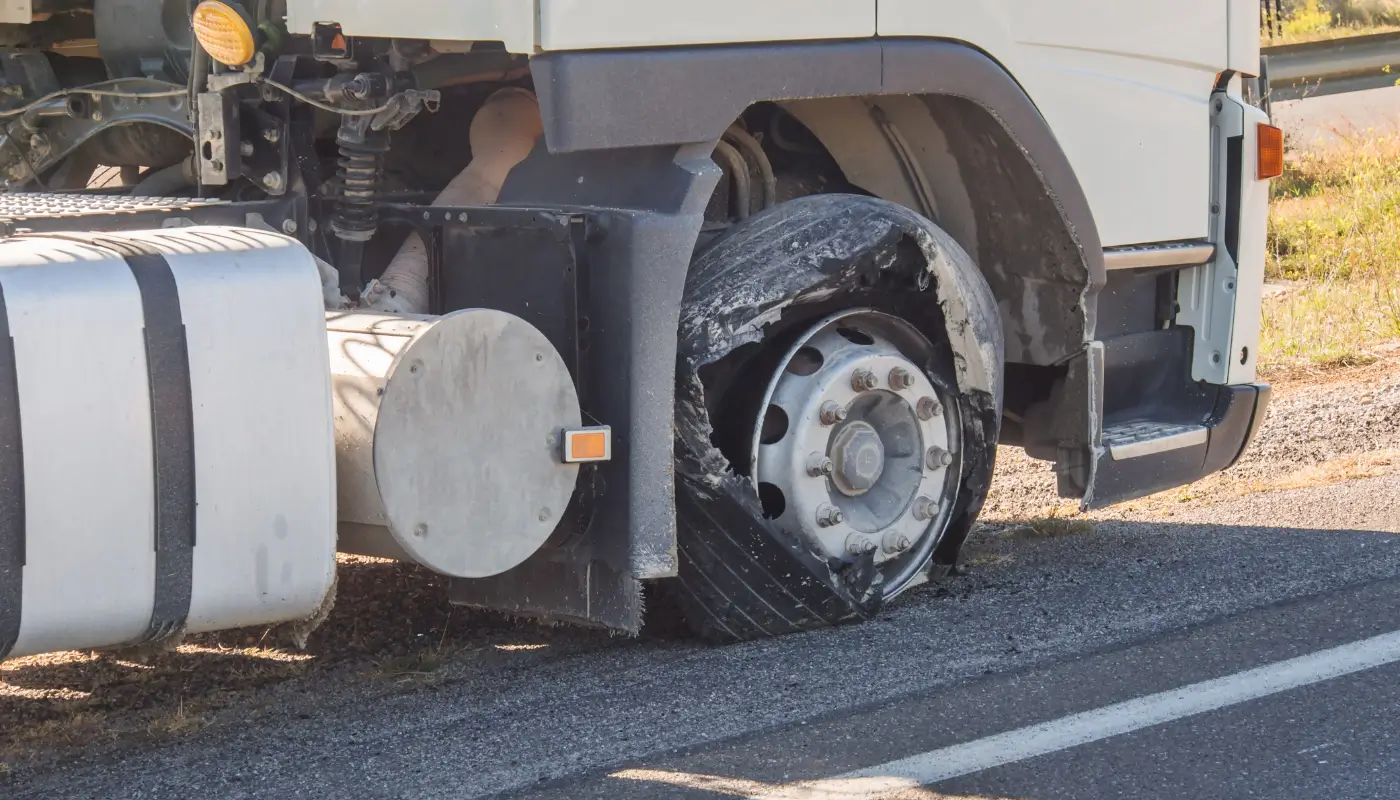
But the challenge is not only financial. Without proper control, the risk of running on worn tires or with incorrect calibration increases — and this opens the door to other issues: different types of wear, blowouts on the road, fines at roadside inspections and even accidents that could have been avoided.
The importance of tire management lies in breaking this cycle. When you keep close track of the condition of each tire, you can act preventively: scheduling replacements at the right time, avoiding premature disposal and ensuring that your fleet always stays within safety standards.
In addition, there is a point many people forget: efficient tire management contributes directly to the sustainability of the operation. After all, well-maintained tires run for longer and generate less waste, helping reduce the fleet's environmental impact.
In short? Controlling the fleet's tires means more savings, more safety and more operational efficiency. And as you will see in the next section, this doesn't have to be complicated — with a good process, you can put all of this into practice in an organized way that is easy to keep track of.
How to control your fleet's tires well in 5 steps?
Now that you understand the importance of good tire management, it is time to get down to work. There is no need to complicate things: with a well-structured process and a few support tools, tire control becomes a natural part of the fleet's routine.
Here is a practical step-by-step guide for you to start or improve tire control in your operation:
1. Map the entire fleet
Before knowing how to control fleet tires, you need to be clear about what you are controlling. Map all the vehicles in the fleet and record the information for each tire: make, model, sizes, acquisition dates, positions on the vehicles and usage history.
Here, fire-number branding makes all the difference. It works as the tire's “ID number”, ensuring the asset's traceability and allowing you to keep track of its entire path, from installation to disposal.
2. Inspect frequently
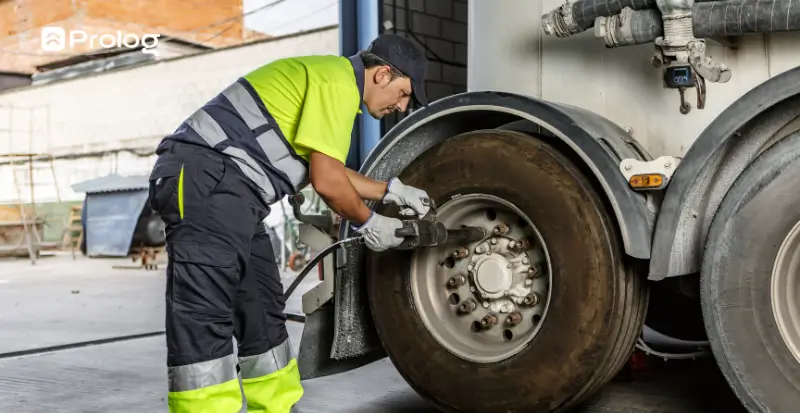
Regular inspections are the foundation of any efficient control. Always check the pressure, tread wear, the condition of the valves and possible structural damage. This practice prevents unpleasant surprises and makes it possible to detect issues before they turn into high costs.
With the technology of the Prolog Inspection Kit, for example, the team can record complete inspections in less than 1 minute, and the information from the inspection carried out by a person is organized in the system — which makes the process fast, reliable and integrated with fleet management.
3. Record all replacements and maintenance
Tire replacements, rotations, retreadings and repairs always need to be recorded. This history helps understand how tires behave in your operation, plan future interventions and even negotiate better terms with suppliers and retreaders.
To make this recording easier and avoid data loss, it is essential to have a tire control system – which you will see in more detail in step number 5.
4. Keep track of performance indicators
Recording information is pointless if you don't analyze the results. Keep track of indicators such as CPK (cost per kilometer), average useful life, number of retreadings and disposal rate.
CPK shows how much the operation spends on tires for each kilometer driven and takes into account costs such as purchase, maintenance and refurbishment. That is why it helps compare makes, models and maintenance strategies more clearly.
This data will help you understand which tire models or makes offer the best financial performance in your operation, where the biggest costs are and how to adjust your strategy.
5. Use tools that automate the process
Do you notice that steps number 3 and 4 are only truly efficient if you have technology on your side? That is because a tire control system centralizes a good part of these tasks, reduces data entry errors and ensures you always have clear reports at hand to make fast, well-founded decisions.
With the Prolog dashboard, for example, you can understand how to control fleet tires much more efficiently, analyzing wear, life cycle, cost per tire, retreading, mechanic productivity and much more. This makes it much easier to keep the operation under control and avoids unnecessary losses.
How to reduce tire costs in your fleet?
At the end of the day, every fleet manager trying to understand how to control fleet tires has a very clear goal: reducing costs without compromising the safety or efficiency of the operation. And all of this is entirely possible!
With a few well-chosen practices and attention to detail, you can extend the useful life of tires, spend less on fuel and even negotiate better with suppliers. Here are practical strategies to put this into action:
Invest in good retreading management
According to Bandag, retreading specialists, the cost of a retreaded tire usually falls between 30% and 50% of the price of an equivalent new tire. In other words, instead of disposing of it prematurely, you can reuse the casing and reduce costs while maintaining the fleet's safety.
But pay attention: the efficiency of retreading depends on the tire's history and prior maintenance. If it ran with the correct calibration and went through rotations and regular inspections, the chance of a successful retreading increases greatly. With the right control, you know exactly when to send it to the retreader — and avoid waste.
Use data to negotiate better with suppliers
With a solid history, you can bring strong arguments to the negotiating table. If the data shows that a certain tire make performs better in your operation, or that a supplier offers better value for money in retreading, use that to your advantage.
Besides negotiating prices, you can also seek special warranty terms or bonuses based on tire volume and performance.
Spot deviations quickly with dashboards
Having a dashboard that shows, based on the operation's records, the tires that require correction, high levels of wear or the productivity of the maintenance team is a huge advantage.
With the Prolog tire management dashboard, you organize this data in one place and act before the issue grows. Preventing abnormal wear in time can mean hundreds of reais saved per tire.
Train the team to act preventively
It is not only the manager who needs to focus on cost reduction — the entire team must be aligned. Drivers, mechanics and inspectors should be instructed on the importance of proper driving, correct calibration and careful inspection.
When everyone understands that small actions directly affect the company's bottom line, the change in behavior comes naturally.
Advantages of using management systems for tire control
Once you understand how to control a fleet's tires and how to reduce the costs of this asset, it is time to take the next step and let technology work for you. Using a management system specialized in tires is not just about “modernizing” the process — it is about saving time, reducing errors and making faster and more accurate decisions.
Here are some practical advantages of adopting a digital solution in your operation:
Complete visibility of tire health
A good system offers dashboards and clear reports on the status of each tire: wear, cost per kilometer, retreadings performed, life cycle and much more. This broad view lets you quickly identify which tires need attention and which are fit to run.
In practice, this is what Marbela, an Ambev distributor in Rio de Janeiro, achieved by implementing Prolog's tire management solution. The company reduced tire disposal by 47.8%, simply by better controlling wear and pressure at each inspection.
Cost planning and predictability
Knowing when tires will need maintenance or replacement helps spread costs over time and avoids surprises in the budget. With a management system, you can anticipate expenses and build a more accurate financial reserve to keep the fleet always running safely.
Want an example? Cobeb, a Prolog customer, saw the direct impact of tire management on reducing the operation's costs: a 2% reduction in fuel consumption and 50% fewer retreading rejections. In other words, less waste and more use out of each tire.
Greater team productivity
By digitizing inspection and recording processes, your team gains time to focus on what really matters. Manual inspections that used to take several minutes can be done in seconds with technology, such as the Prolog Inspection Kit.
This means less rework and more efficiency in the operation's day-to-day work.
Integration with other fleet systems
Systems such as Prolog's allow API integration with other software you already use, such as ERPs and maintenance platforms. This creates a smoother operation, with connected information and a single view of your fleet.
Having an integrated data ecosystem increases the reliability of analyses and makes the management routine much easier.
Smarter, data-driven decisions
One of the biggest advantages of using a system is practicing data-driven tire management (video in Portuguese). With clear and reliable data, the manager can act preventively, correct deviations quickly and, of course, save money.
And if you have made it this far, you already know that controlling tires efficiently is not only a matter of savings, but also of safety and smart fleet management. Now it is your turn to take the first step toward organizing your operation.
To make things even easier, the Prolog team prepared a free tire control spreadsheet, which will help you put all these tips into practice and quickly see where the opportunities for improvement are.
Download your free tire control spreadsheet here (in Portuguese) and start applying today the best practices for controlling fleet tires efficiently.
Frequently asked questions
How much do tires weigh on a transportation company's costs?
What are the steps to control the fleet's tires?
What is fire-number branding on a tire for?
Which indicators should be tracked in tire management?
Does retreading pay off financially?
What results have fleets achieved with a tire management system?
// newsletter
Fleet management content, straight to your inbox
Articles on tires, maintenance and fleet operations. No spam.