
Brazil truckers' strike 2026: causes and rules
 Jean Zart 6 min read
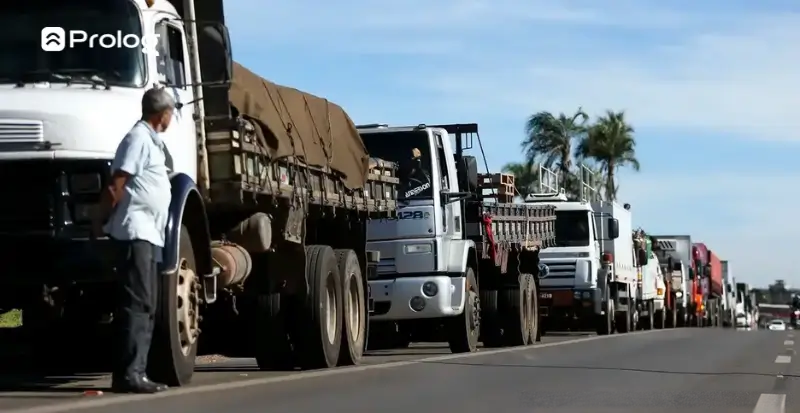
Image: Marcelo Camargo/Agência Brasil
The threat of a truckers' strike that had been organized since mid-March 2026 in Brazil was suspended after an assembly held in Santos (São Paulo state) on March 19.
The stoppage had not been launched by that date, but truckers maintained a state of alert and gave the federal government a 7-day deadline to make progress in negotiations. The original text recorded a meeting scheduled with Minister Guilherme Boulos on March 25 and a new assembly set for the 26th; the dossier available for this update does not confirm the outcome of these meetings.
What led to the strike threat
The trigger was the rise in diesel prices. Since the end of February, the price of the fuel had accumulated an 18.86% increase, driven by the conflict between the United States, Israel and Iran and by the closure of the Strait of Hormuz, the route through which about 20% of the world's crude oil flows.
The national average for diesel had reached R$6.80 per liter, with peaks above R$8 in states of Brazil's Center-West region.
Diesel accounts for about 40% of the cost of road freight. When fuel rises like this, the impact is direct, especially for independent truckers, who absorb the increase when the minimum freight rate floor is not respected by the hiring carriers. Law No. 13.703/2018 established Brazil's National Policy on Minimum Road Freight Rates and provides that minimum freight rates should reflect the total operating costs of transport.
In addition to the rise in diesel prices, truckers demanded effective enforcement of compliance with the minimum freight rate floor, a cut by the states in ICMS (a Brazilian state tax) on diesel and a toll exemption for empty vehicles. The perception that the benefits announced by the government were not reaching the pumps intensified the mobilization.
Timeline of events
February 28. Start of the escalation in diesel prices, in step with the surge in oil on the international market after the conflict in the Middle East worsened.
March 12. The federal government eliminates PIS/Cofins (federal taxes) on diesel (Decree No. 12.875/2026) and issues Provisional Measure (MP) No. 1.340/2026, creating a subsidy of R$0.32 per liter for producers and importers. A total reduction of R$0.64 per liter at the pump is expected. Estimated cost of the measure: R$30 billion through the end of 2026.
March 13. Petrobras announces an increase of R$0.38 per liter in diesel for distributors, effective the following day. On the same day, ANTT (Brazil's National Land Transportation Agency) updates the minimum freight rate table with increases of up to 7%.
March 16. Assembly in Santos. Sindicam and Abrava approve the start of a strike movement. Leaders from the states of SP, PR, SC, GO and RS signal they will join.
March 17. CNTTL publishes a statement supporting the strike and backtracks on the same day, stating that it would wait for the outcome of new meetings.
March 18. Transport Minister Renan Filho announces a package of electronic enforcement of the freight rate floor. An assembly of trucker organizations in Santos ends without consensus.
March 19. Decisive assembly in Santos: the strike alert remains in place, but truckers keep working, giving the government a 7-day deadline to meet their demands. On the same day, the government publishes MP No. 1.343/2026, which turns enforcement measures into a rule of immediate application throughout the country, focusing on the mandatory CIOT (Transport Operation Identification Code), and Decree No. 12.883/2026, which set guidelines for a diesel reference price with an addition of R$0.32 per liter. In the state of SC, the Federal Court prohibits blockades on federal highways BR-101 and BR-470, with fines of R$10,000 for individuals and R$100,000 for legal entities.
August 5. Law No. 15.485/2026 amended Law No. 13.703/2018 and established that every paid road freight transport operation must be registered in advance and formalized through the CIOT. The rule reinforces the formalization of hiring and ties in with the goal of preventing operations below the minimum rate floor.
Current situation and next steps
As of the March update, the recorded scenario was as follows:
The strike was suspended, but the state of alert remained. Abrava had suspended the stoppage until the next round of negotiations. Sindicam considered that conditions were not right for a strike at that moment, but the leaders maintained that the situation could change depending on the progress of talks with the government.
The next scheduled milestones were the truckers' meeting with Minister Guilherme Boulos on March 25 and the new assembly on March 26. Since the dossier for this update does not include a source confirming the outcome of these meetings, the text does not treat that outcome as confirmed.
The measures announced by the government at that time included eliminating PIS/Cofins on diesel, the R$0.32 per liter subsidy for producers and importers, the MP that tightened enforcement of the freight rate floor with mandatory registration through the CIOT, guidelines for a diesel reference price and a Federal Police (PF) investigation into abusive price increases at gas stations. Later, Law No. 15.485/2026 amended Law No. 13.703/2018 and consolidated the requirement for prior registration and formalization through the CIOT for every paid road freight transport operation.
It is a broad package, but the assessment of its practical effects, especially on reducing prices at the pump and on truckers' perception, depends on specific later sources. Without that confirmation in the dossier, the safe update is to record the regulatory change already confirmed and avoid stating that the mobilization was definitively ended or resumed.
How this impacts your fleet management
Even without confirmation, in the dossier, that the strike was later launched, the scenario affects freight transport operations in concrete ways.
The cost of diesel weighs directly on the fleet's operating costs, regardless of whether there is a stoppage or not. For operations that depend on independent truckers, the CIOT requirement and the enforcement of the minimum freight rate floor change the hiring dynamics. Law No. 15.485/2026 provides that every paid road freight transport operation must be registered in advance and formalized through the CIOT, and ANTT states that contracts that do not comply with the minimum rate floor will not have the code issued. This may translate into higher costs for carriers that until then were paying rates below the table.
If a stoppage is launched, the risk is shortages, delivery delays and pressure on commitments to shippers. The closest reference is the 2018 strike, which lasted 10 days and caused widespread shortages throughout the country.
For fleet managers, the moment calls for attention on three fronts: keeping track of how negotiations and hiring rules evolve, reviewing diesel savings scenarios in light of the new price reality and having a contingency plan in case a stoppage materializes.
Keep up with the news and current events that affect your fleet management: subscribe to Prolog's newsletter for free (in Portuguese).
Frequently asked questions
Did the 2026 truckers' strike in Brazil happen?
Why did Brazilian truckers threaten to strike in 2026?
What changed in the freight rules after the strike threat?
How much of the cost of road freight does diesel account for?
How does the strike threat affect fleet management?
// newsletter
Fleet management content, straight to your inbox
Articles on tires, maintenance and fleet operations. No spam.
Read also
S10 diesel rises 7.7% amid Iran war: freight impact
Iran conflict and Hormuz closure pushed Brent past US$ 120; Brazil's S10 diesel rose 7.7% in a week to R$ 6.70. Diesel is about 35% of freight costs.
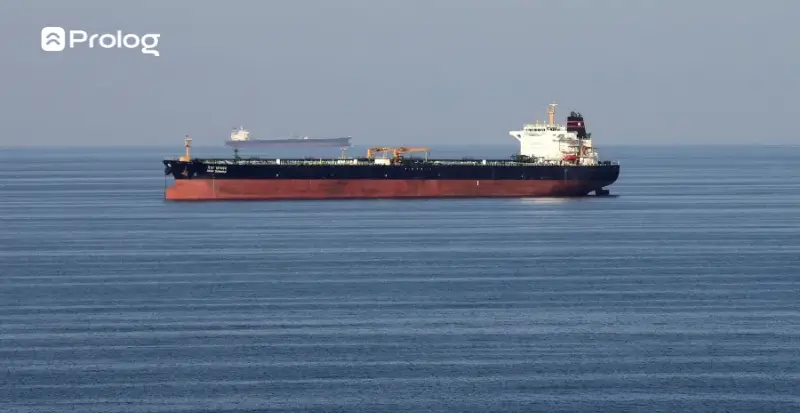
Image: Hamad I Mohammed/Reuters - 12/21/2018
Jean Zart  News
 News