White smoke with a burning smell: what it could be
 Luiz Felipe 5 min read
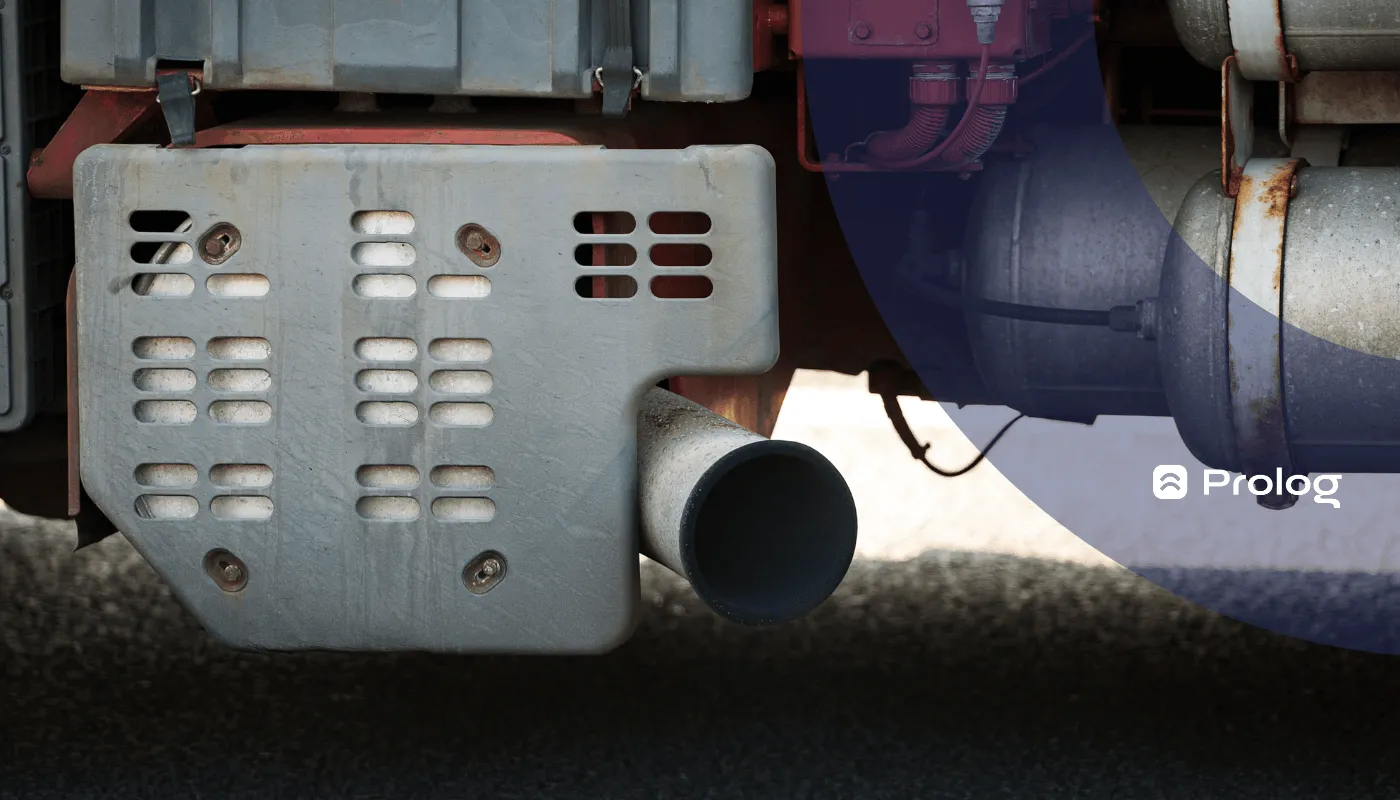
White smoke with a burning smell can indicate different types of issues, and today you will learn how to identify them.
Normally, an engine that runs as expected and performs well does not give off any kind of visible smoke through the exhaust. However, if it is emitting white, blue or black smoke, that is a sign it needs a more detailed inspection.
Although neither you nor your fleet's driver can resolve the issue on your own, you should know what it indicates and what actions are possible to resolve the situation. That is what we bring you today, read on.
Want to see this in your fleet? Talk to a Prolog specialist
What does white smoke with a burning smell mean?
If white smoke with a burning smell appears while the engine is warm, it can indicate that the fluid in the radiator is being burned. The reason is that the water passing through the cylinder head gasket reaches the combustion chamber and comes out of the exhaust as smoke.
It usually happens when an engine gasket is burned, ruptured or damaged. This can both affect the engine and contaminate the spark plugs or the air-fuel mixture.
One way to identify this issue is by watching the radiator reservoir level. That is because, when it happens, the level drops quickly.
And there is more:
White smoke can be related to the brakes. Although it is not common, it happens when the master cylinder is damaged. That is where the fluid can leak into the brake booster, being drawn in and burned by the engine.
This produces white smoke with a burning smell.
On the other hand, white smoke without a burning smell is harmless. It only appears on very cold days, because it is formed by vapor produced by condensed air, and it disappears quickly once the engine warms up.
At any other time, the vehicle needs to be taken in for maintenance.
Want to see this in your fleet? Talk to a Prolog specialist
How to fix white smoke with a burning smell?
The best way to prevent this exhaust smoke is with a good vehicle inspection, at a much lower cost than fixes and repairs.
In fleet management, maintenance must be frequent. Otherwise, it generates expenses above the expected average and hurts your business.
Some points to watch in a general service are:
- Brakes;
- Oil;
- Cooling system;
- Air filter;
- Fuel filter;
- Tires;
- Spark plugs.
Other items, such as interior and exterior lighting, engine belts, fuses, battery, suspension system and leaks in general, cannot be left out of the complete vehicle maintenance checklist.
How to keep white smoke with a burning smell from coming back?
Preventive maintenance is the key to keeping this issue from coming back — and to preventing others from occurring. So, when you notice smoke from the exhaust, do not put it off and take action immediately.
Besides improving how the fleet runs, you can avoid spending on fines in your operation.
Without proper maintenance, you can get a fine for poor vehicle upkeep, plus another for excessive smoke — in this case, it would be an environmental fine, which can reach an amount of up to R$1,600 in Brazil.
What is more, preventive maintenance plans contribute to the vehicle's health.
Check out the video where we talk about white smoke with a burning smell:
(video in Portuguese)
What are the other types of smoke and their causes?
Blue smoke
Considered the most serious, blue smoke indicates that engine oil is being burned in the combustion chamber, which can seize the engine due to lack of lubrication.
This color can appear because of excess oil or an oil leak into the combustion chamber, but other causes should also be investigated:
- Worn piston rings;
- Malfunctioning turbochargers;
- Blocked engine ventilation;
- Worn valve seals;
- Defective gasket between the engine block and the cylinder head.
Black smoke
Black smoke coming out of the exhaust is the strongest indication that the engine is consuming more fuel than it should. In this case, the so-called “rich mixture”, or excess fuel, ends up being burned as the exhaust heats up, giving off a strong smell.
The ideal, when this situation occurs, is to have the carburetor or the electronic fuel injection system checked, reducing fuel waste.
Want to see this in your fleet? Talk to a Prolog specialist
To avoid any kind of unusual smoke in your vehicle, here is what to know:
How to build a preventive maintenance plan?
Start by gathering the main information about your fleet's vehicles so you can include it as items in the inspection.
You can group it into categories such as:
- Vehicle model;
- Mechanical system checklist;
- Electrical system checklist;
- By mileage driven;
- And so on.
It is also worth identifying which checklist model works best in your operation's routine.
Next, check how often each checklist should be done and build schedules so the team always knows the right day to carry out each inspection.
In addition, create a routine and a control method to follow up on checklist completions, vehicle health and the most common occurrences of identified issues.
It is also a good idea to establish which performance metrics and indicators you want to follow up on, generating valuable data for making more informed decisions in your management.
You can get even more tips on maintenance and vehicle issues first-hand, as well as exchange experiences with other managers, by joining our WhatsApp group: https://bit.ly/WppGestaodeFrotas2
Want to see this in your fleet? Talk to a Prolog specialist
Frequently asked questions
What does white smoke from the exhaust with a burning smell mean?
Can white smoke from the exhaust be related to the brakes?
Is white smoke without a burning smell an issue?
What do blue smoke and black smoke from the exhaust indicate?
How do you keep white smoke with a burning smell from coming back?
// newsletter
Fleet management content, straight to your inbox
Articles on tires, maintenance and fleet operations. No spam.