Forklift checklist: 8 items you can't leave out
 Luiz Felipe 5 min read
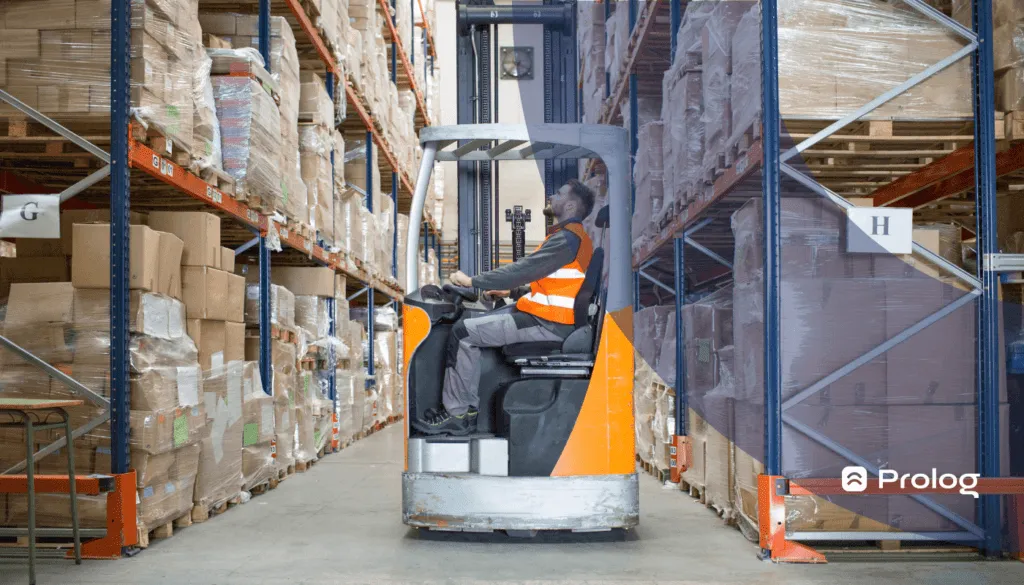
Like any fleet vehicle, forklifts need to go through the preventive maintenance process. Even more so because they are vehicles that handle heavy weights every day and move around close to people, loads and structures. That is why you need a good forklift checklist!
This way, there is a guarantee that no item will be neglected and all employees will be safer when handling the machines. The list also helps separate what is a visual check, what is a functional test and what must be corrected before the operation is cleared.
Now see what can't be left out of your forklift checklist. As a starting template, organize the list into these eight blocks: operator's license, function identification, headlights and lights, battery or gas cylinder, engine and fluids, controls and commands, brakes and wheels, plus safety equipment.
The frequency of the checklist should follow the operation's internal safety and maintenance rules. In practice, the routine can combine a visual check before starting the machine with an operational check of the main commands and safety items.
Driver's license
A basic item on any checklist, regardless of the vehicle being driven. However, to drive a forklift, just any CNH (the Brazilian driver's license) won't do. The driver must have a specific license for this type of load transport.
In Brazil, category B of the CNH is usually a requirement for students taking this special license, but it is not mandatory under NR 11, the Brazilian regulatory standard responsible for protective measures for the transport, storage and handling of loads.
Function identification
As for function identification, it should be checked per vehicle, since each one is designed for a specific purpose, which must be followed. If it is used for other purposes, the vehicle can be damaged and cause accidents.
In short, verify whether the function determined by the manager matches the vehicle's functionality. This point prevents a forklift from being used for a task that is incompatible with its capacity, attachment or operating environment.
Headlights
Although they are not as important as in a “normal” vehicle, the headlights and lighting components (such as the rotating beacon and the brake/reverse lights) must be checked. When it comes to safety, all these lights play a crucial role in communicating with other drivers and people.
On the checklist, record whether the headlights and warning lights are working. If the brake, reverse or warning light doesn't come on, the team nearby loses an important signal about what the machine is doing.
Want to see this in your fleet? Talk to a Prolog specialist
Battery (or gas cylinder)
Depending on the forklift model being inspected, it may have a battery (electric forklift) or a gas cylinder (gas-powered forklift). Either way, these areas must be inspected equally.
On the cylinder, look for leaks and check the condition of the hose. If you identify any issue, the vehicle must be held out of service until the correction is made.
In the case of the battery, you need to make sure it is fully charged and check its general condition, such as the presence of oxidation. It is also worth checking for exposed wires and whether the plug connections are loose, worn or dirty.
Engine & Fluid levels
Some details to pay attention to on the engine are the presence of oxidation, fluid leaks (water or oil) and their levels.
The inspector should also notice whether all the wires are properly connected or whether there are loose wires. The visual check before starting the forklift helps identify damp stains, drips and other signs of leaks.
It seems like such a simple act, but it will be essential for extending the vehicle's useful life, reducing corrective maintenance costs and even avoiding its premature depreciation.
Controls and commands
A forklift depends on its controls and commands to perform well. That is why you should check whether all the commands are responding correctly, such as the steering and the fork controls.
It is important that the entire vehicle and its commands are working properly for the forklift to be considered fit for use. Test whether the controls move without sticking and whether they return to the neutral position when released.
Brakes and wheels
Absolutely no vehicle can have failing brakes; it is an unnecessary risk, especially if the forklift is carrying a heavy load at the moment of the failure. So one task you should always keep under control is when to replace the brake pads.
In the same way, the wheels and tires are what ensure the machine works well and that loads are moved without accidents. Always check whether the tires are properly inflated and whether they show irregular or excessive wear (and what may be causing the problems, if they are badly damaged).
On the brakes, the pedal must hold pressure and the forklift must stop smoothly. On the wheels and tires, look for wear, damage and proper pressure when the tire is pneumatic.
Safety equipment
Every forklift driver has some basic equipment to increase their safety when operating the machine. These need to be on the inspection list!
In addition to the vehicle's own items that are already inspected, such as the safety lights, brakes and seat belt, equipment such as the helmet and fire extinguisher must be checked. The fire extinguisher must be present, secured to the forklift and charged.
To make your life easier with all these inspection items, a digital checklist is an advantage in productivity and efficiency. With Prolog, checklists are completed on any phone with the app, and work orders are generated automatically when a nonconformity is reported. Learn more!
Frequently asked questions
Which items can't be left out of a forklift checklist?
What license is required to operate a forklift?
How often should the forklift checklist be done?
What should be checked on a forklift's battery or gas cylinder?
What should be inspected on a forklift's engine, brakes and wheels?
Why check a forklift's function identification?
// newsletter
Fleet management content, straight to your inbox
Articles on tires, maintenance and fleet operations. No spam.