How many PSI in a forklift tire: pressure chart in PSI
 Luiz Felipe 3 min read
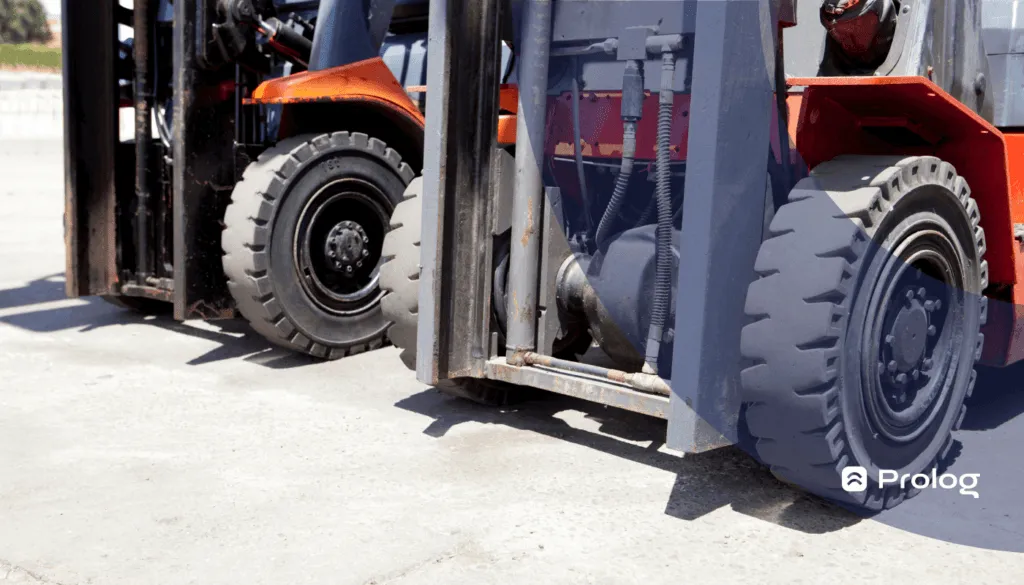
Forklift tires are quite different from other types of tires. That is why they have their own calibration chart.
Before actually showing it (though nothing stops you from scrolling down to check it before reading the rest of the post), let's talk a bit about how this task works for forklifts.
Here we go:
How does forklift tire calibration work?
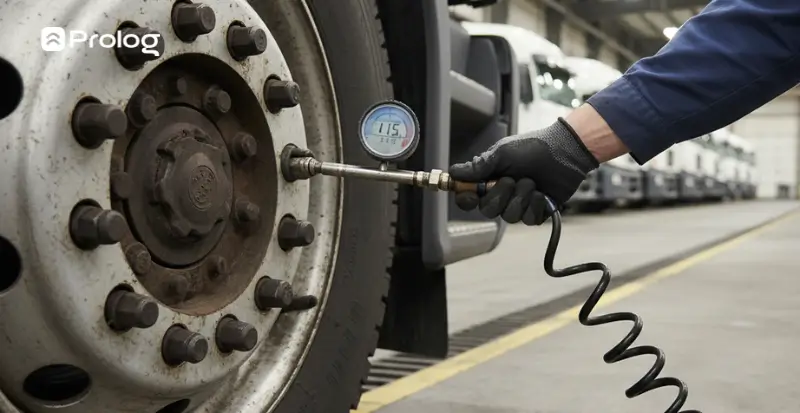
These tires should be calibrated every week (or sooner, if any change in the tire is noticed).
Tires must be cold for calibration to be effective. Calibrating hot tires creates the risk of them going flat more quickly. Inspection should also be carried out with some frequency to prevent premature loss of the tires — whether from wear or some other issue.
Calibration is done in PSI or BAR.
If you start having problems with excessive and abnormal wear, look at the tire calibration routine, since they may be below or above the recommended pressure.
Forklift tire pressure chart
The chart below considers the tire size and the pressure in PSI only.
| SIZE | PRESSURE IN PSI | SIZE | PRESSURE IN PSI |
| 5.00-8 | 145 | 27×10-12 | 102 |
| 18×7-8 | 145 | 7.00-15 | 134 |
| 6.00-9 | 145 | 7.50-15 | 134 |
| 21×8-9 | 130 | 28×9-15 (8.15-15) | 145 |
| 6.50-10 | 112 | 8.25-15 | 116 |
| 23×9-10 | 145 | 250-15 | 145 |
| 7.00-12 | 131 | 300-15 | 135 |
Different types of forklift tires
There are different types of forklift tires, each with its own characteristics and ideal calibration pressure. Among the common types are pneumatic, solid and polyurethane. You can also talk to the manufacturers or suppliers of each tire to learn the recommended maintenance guidelines and pressure.
In short, the tire types are:
Pneumatic
Suited to more difficult surfaces, with uneven ground. They are easy-to-maintain tires and are quite common, since they withstand ground impacts well. When the tire is filled with air, the pressure needs to be checked in the inspection routine.
Solid
The least used type. The explanation: they are made of hard rubber and do not cushion impacts. Use on uneven surfaces should always be avoided, but they can be used both indoors and outdoors.
Polyurethane
For indoor environments and electric forklifts: this is your choice. They are designed to work as the forklift's wheel, practically replacing it.
Liquid polyurethane is injected and, within 24 to 48 hours, the material becomes solid. In general, it can work by pneumatic, inner-tube or hydraulic means.
Cushion
Like the super-elastic tire, it is a solid tire. It should be used in paved operations with smooth floors (indoors only). Although its use is limited, it is a choice that can be cost-effective, since its durability and resistance are high.
Super-elastic
For even ground, such as asphalt or burnished concrete, they are great — you even have the option of buying them in white. In other words, they are the ideal choice for the pharmaceutical, chemical and food industries.
They have the same shape and sizes as the pneumatic tire, also fitting the same wheels. Another similarity is the low maintenance cost.
However, when it comes to calibration, the rules do not apply. That is because this type of forklift tire has no inner tube and does not need to be calibrated.
What you need to know about forklift tires
If you work in a forklift operation and, even more so, manage the tires of these machines, you need to know everything about the tires. For that, we have a guide post. But, to give you an overview of the information right away:
- Choose the right type of tire;
- Know exactly when to replace and/or discard a forklift tire;
- Analyze the data collected in tire inspection and the forklift tire pressure chart to know the ideal pressure for each model;
- Understand the retreading process for the tires of this vehicle type;
- Learn the causes of wear on these tires;
- Perform preventive maintenance on the vehicle frequently (vehicle care also affects the tires).
Frequently asked questions
How many PSI does a forklift tire take?
How often should a forklift tire be calibrated?
Does every forklift tire need to be calibrated?
What are the types of forklift tires?
What should you do if a forklift tire wears out too fast?
// newsletter
Fleet management content, straight to your inbox
Articles on tires, maintenance and fleet operations. No spam.