
How and why to monitor fleet asset health
 Jade Zart 4 min read

Monitoring fleet asset health is essential to maintain proper functioning and productivity in transport operations. These assets are the vehicles used, but we can also consider tires and other parts or equipment “assets.”
Ensuring vehicle durability, identifying reasons for failures and losses, and understanding alternatives to reduce costs in certain areas are some general benefits of asset maintenance.
So, for companies with fleets, control over these items is essential. Learn more:
- What asset health is;
- Why monitor it;
- How to monitor asset health;
- Tools needed;
- Asset health analyses.
What is asset health?
Asset health represents their state and condition: if they are functioning properly, they are healthy; otherwise, they may have failures or errors, or need to be diagnosed and “treated.”
In general, monitoring asset health means keeping track of how they lose performance over time and why, making it possible to diagnose and apply the most appropriate solutions at the right time.
Why monitor asset health?
Monitoring asset health helps increase their useful life and prevent premature losses, and facilitates diagnosis and remediation when necessary.
This is because keeping track of vehicle operating conditions makes it possible to identify failures at an early stage, or even before they emerge if you choose more advanced predictive maintenance technologies.
In fact, this is one of the goals of that type of maintenance. That is why managers who need early detection of vehicle problems give it considerable attention.
On one hand, vehicles have features that issue alerts when problems appear, giving the manager enough time to send the asset to the workshop. However, reaching these levels can reduce the vehicle’s useful life, mainly because of the constant replacement of vehicle parts and components.
In addition, visual, superficial fleet inspections alone do not pick up every sign of a problem that may be happening or about to happen. These signs are detected using technologies such as engine vibration and temperature analysis, which emerged with predictive maintenance.
How can you monitor asset health?
By implementing a routine of checks and oversight using technologies designed for that purpose. If you do not yet have enough resources to apply predictive maintenance, the other maintenance management tools are the best way to monitor asset health.
For example, an electronic checklist is practical and quick both to create and to fill out. It also prevents important items from being forgotten during maintenance and maintains a maintenance history by controlling work orders opened and closed through the system.
What matters most is using all the information obtained during vehicle assessment to create increasingly reliable maintenance plans.
Some monitoring tools:
Predictive technologies
Using sensor technology that measures key vehicle aspects, such as vibrations, temperatures and vehicle levels, is a reliable way to achieve the most positive results in your management.
Although these resources are more costly to implement, their long-term value is guaranteed.
Maintenance management spreadsheet or system
Combining the technologies used, or even data collected through manual tools, with a maintenance management spreadsheet or system is one way to speed up your fleet management routine.
It becomes easier to manage work orders and generate reports and charts for decisions about fleet vehicles.
Maintenance history
Assessing the maintenance history of the fleet and each vehicle individually helps you understand some important data, such as the assets’ average durability, the main problems during their useful life, the reasons and solutions adopted in each case, and so on.
You can use this information to introduce new technologies or tools, provide driver training and even analyze newly acquired vehicles more closely.
PF curve
This curve shows a vehicle’s potential for failure over time until it reaches inactivity. It is used to monitor asset health and predict the best moments to apply preventive and corrective maintenance.
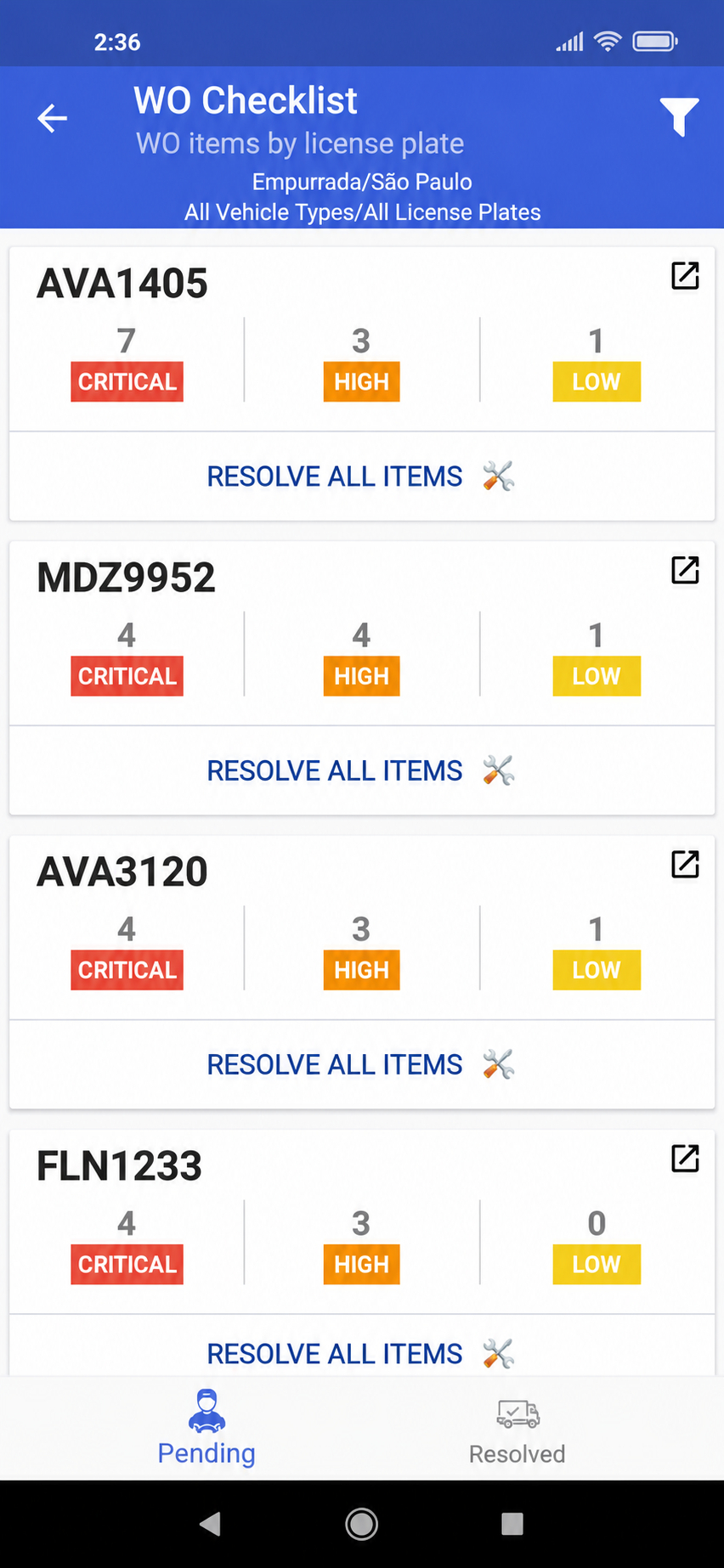
Checklist traffic light
The checklist traffic light is a feature of the electronic checklist platform that brings together the latest data for all license plates in the fleet and displays a list of vehicles, identifying whether they are “healthy.”
For mechanics and the manager, it makes it easier to monitor asset health and identify when vehicles are in critical condition.
Asset health analyses
By collecting data daily and understanding why a problem occurs and affects asset health, the most appropriate measures can be implemented. With the growth in data-driven management taking place in fleets, these analyses are an indispensable part.
Some conclusions you can reach by monitoring asset health include:
- Vehicles offering the best value for the operation;
- Main maintenance costs;
- Most frequent maintenance in the fleet;
- License plates using the most fuel.
To explore fleet maintenance management further and discover other alternatives for monitoring asset health, also read about maintenance management.
Frequently asked questions
My vehicles break down even though they undergo inspections. What is being missed?
How can I keep track of asset health without investing in predictive maintenance right now?
What is the PF curve and what is it used for in maintenance management?
What can you discover by looking at the fleet’s maintenance history?
How can I tell which vehicles in the fleet are in critical condition on an ordinary day?
// newsletter
Fleet management content, straight to your inbox
Articles on tires, maintenance and fleet operations. No spam.


