On-site fuel pump: when it makes sense for a fleet
 Jean Zart 6 min read
Deciding to implement an on-site fuel pump can bring important operational advantages, such as greater control over consumption and the possibility of long-term savings.
For companies with large fleets in constant operation, refueling control and fuel cost management are strategic issues.
However, in Brazil this decision also involves meeting legal, environmental and safety requirements, as well as conducting a detailed cost-benefit analysis before installing the tank and pump.
Take a look below:
- What does an on-site fuel pump do for a fleet?
- When should a fleet use an on-site fuel pump, and is it worthwhile for controlling refueling and costs?
- What are the environmental requirements for installing an on-site fuel pump at a company?
- What types of on-site pumps exist?
- What are the costs versus savings of installing an on-site fuel tank at a company?
- How can you keep track of refueling at an on-site pump?
What does an on-site fuel pump do for a fleet?
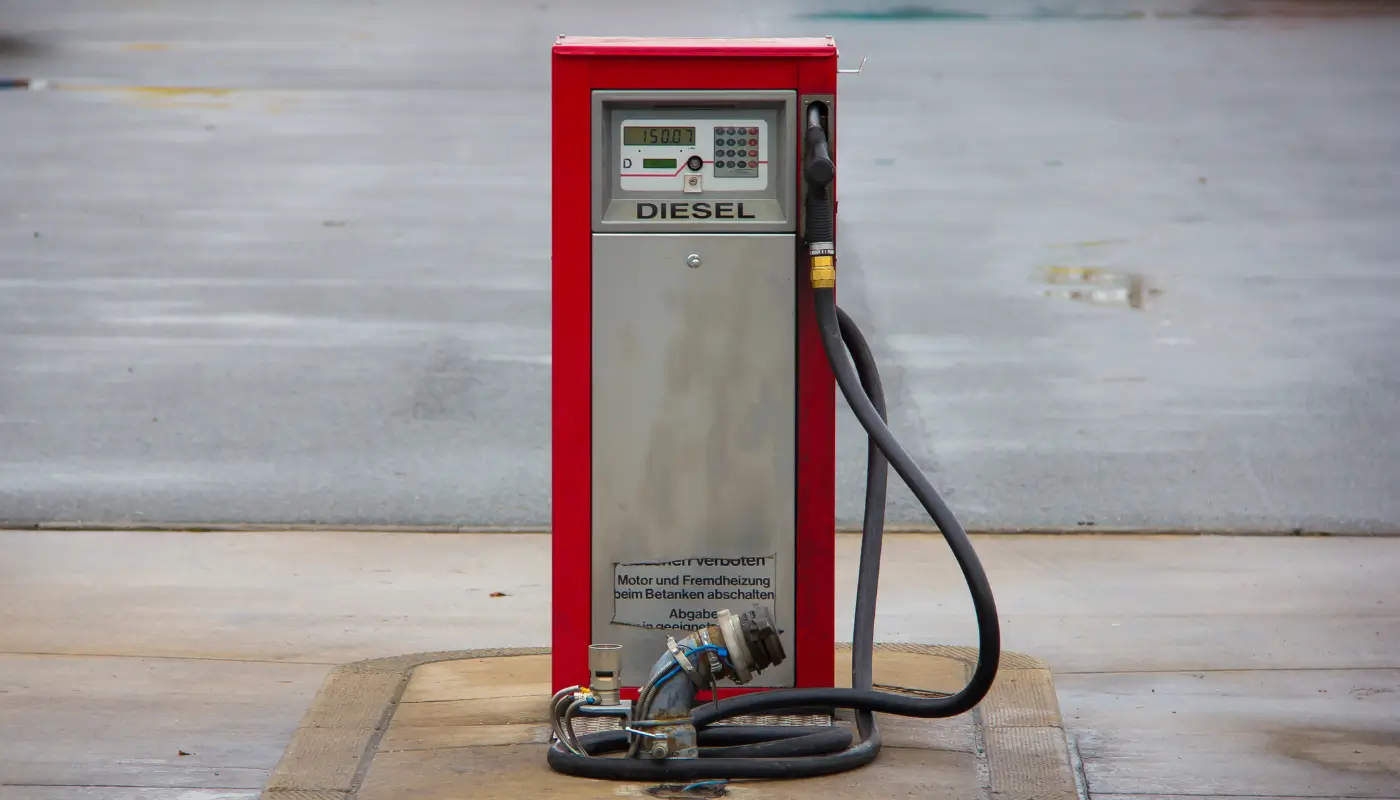
An on-site fuel pump is equipment used to refuel vehicles directly within company premises, without having to use external fuel stations for every operation.
It connects to an on-site fuel tank, where fuel is stored under controlled conditions. This system offers the company greater autonomy and makes managing fleet consumption easier.
Operation is relatively simple: the pump draws the fuel stored in the tank and directs it to the vehicle through a hose, just as at a conventional station.
The difference (and advantage) of this system is that it allows direct refueling control, recording the fuel volume used by each vehicle, which contributes to preventing fraud, comparing consumption and increasing cost control efficiency.
When should a fleet use an on-site fuel pump, and is it worthwhile for controlling refueling and costs?
Installing an on-site pump is recommended mainly for companies operating medium or large fleets, such as transport companies, bus companies or industrial fleets. From the perspective of refueling and cost control, benefits include:
- Tighter control
Surveillance cameras, access control and refueling records at on-site pumps make fraud such as fuel theft harder, something that can be difficult to monitor at external stations.
- Operational efficiency
Companies with an on-site pump avoid time lost traveling to and queuing at fuel stations, allowing the fleet to spend more time in operation. This is especially advantageous for public transport or delivery companies, where time is a particularly relevant factor.
- Fuel purchasing negotiations
Companies that buy fuel directly from suppliers can negotiate better terms, such as volume discounts or payment terms better suited to their circumstances, which may generate savings.
In Brazil, good management can result in a difference of up to R$0.70 per liter compared with regular fuel station prices, but this benefit should be treated as financial savings, rather than an automatic reduction in the physical volume consumed.
- Trust and responsibility among employees
Closer refueling control may generate greater trust in the team and encourage driver responsibility, since the company keeps close track of their consumption and can analyze it alongside each vehicle's history.
What are the environmental requirements for installing an on-site fuel pump at a company?
In Brazil, installing an on-site fuel pump requires the company to follow environmental standards and obtain licenses and authorizations applicable to its case. The regularization process may involve several stages depending on company location, tank size, fuel type and operating method.
Therefore, before installing the tank and pump, the company must confirm which agencies need to authorize or license the activity in Brazil. When automotive fuel is sold, authorization from ANP (Brazil's National Agency of Petroleum, Natural Gas and Biofuels) must also be considered, because sales require federal authorization.
Some of the most common checks in Brazil include:
- ANP requirements when sales or operations are subject to federal authorization
- An applicable environmental license, such as Licença Prévia (LP, Brazil's preliminary environmental license) or a requirement from the competent environmental agency
- AVCB (Auto de Vistoria do Corpo de Bombeiros, Brazil's Fire Department Inspection Certificate)
- Municipal Operating Permit
What types of on-site pumps exist?
There are two main types of on-site fuel pumps that can be installed at companies. The most common are fixed pumps, suitable for companies with high refueling volumes.
They are installed permanently in a strategic location and connected to an underground or aboveground tank.
The other option is mobile pumps, ideal for companies needing greater flexibility. These pumps can be mounted on trucks or mobile platforms, allowing fuel to be taken to vehicles in more remote areas or temporary operations.
The choice between fixed and mobile pumps depends on the fleet profile, refueling volume, safety requirements and need for operational flexibility.
What are the costs versus savings of installing an on-site fuel tank at a company?
Installing an on-site fuel pump can represent a significant initial investment, but long-term savings can justify the expense when the fleet has recurring consumption and sufficient volume.
The investment to install an on-site pump and fuel tank may vary depending on tank size, safety requirements, environmental adaptations and necessary licenses. On average, this amount tends to be viable for companies starting at 30 to 50 fleet vehicles.
Companies with an on-site pump can reduce operating costs and negotiate better purchase prices directly with suppliers. However, this benefit should be calculated in reais and commercial terms, without confusing financial savings with a guaranteed reduction in liters consumed.
Long-term savings offset the initial investment in many cases. However, it is important to calculate costs in detail and compare them with the fleet's monthly fuel consumption to determine whether this solution is truly viable for your company.
How can you keep track of refueling at an on-site pump?
To keep track of refueling at an on-site fuel pump, it is fundamental to adopt a detailed, continuous oversight system.
This means recording each refueling, linking it to the specific vehicle, driver, date, time and volume of fuel used. This allows managers to compile complete reports on fuel consumption.
Constant review of these reports allows fleet managers to identify consumption patterns and adjust operations as needed.
In this way, it is possible to avoid waste, improve route planning and check whether vehicles are operating efficiently.
In addition, when fuel consumption anomalies are detected, it is possible to investigate causes in depth, such as mechanical problems, incorrectly entered refueling or inappropriate driver behavior, and correct them before they negatively affect fleet operating costs.
Installing an on-site fuel pump can be an excellent strategy to increase refueling control and generate savings for the company.
If you want to learn more about saving fuel and improving your fleet management, download our “Fuel Economy” e-book (in Portuguese) and discover best practices for maximizing your results.
Frequently asked questions
How many vehicles make installing an on-site pump worthwhile?
Which licenses are required to install a pump at a company?
What is the difference between fixed and mobile pumps?
Does having your own pump reduce fuel theft?
How can you keep track of refueling at an on-site pump?
How much can be saved by buying fuel directly from the supplier?
// newsletter
Fleet management content, straight to your inbox
Articles on tires, maintenance and fleet operations. No spam.