
TMS, tires and routes: technology in freight transport
 Luiz Felipe 7 min read

Technology in freight transport has gained ground in fleets and operations of all sizes, promising to reduce manual work and bring predictability to decisions that once depended on memory, paper and spreadsheets.
Returns, however, do not come from the software itself. They depend on which problem the tool solves, how much of the routine actually goes through it and whether someone reads what it produces — three conditions that apply to every solution listed here.
Managers increasingly rely on technological resources to speed up daily work and meet fleet demands, also aiming for long-term operational growth.
In a country like Brazil, where a large number of trucks are involved in freight transport, choosing these solutions well matters to company objectives and market competitiveness.
Different types of technology apply to specific situations: some handle the commercial and documentary flow of cargo, others the asset's life cycle, and others depend on equipment installed in the vehicle and are supplied by companies specializing in this type of service. Learn a little more about some of the main transport solutions below:
- Transport management system [TMS];
- Telemetry and fleet monitoring;
- Cargo tracking;
- Tire management system;
- Maintenance management system and electronic checklist;
- AI route planning system;
- Data and system integration;
- Prolog App solutions.
Transport Management System [TMS]
A Transport Management System, better known by the acronym TMS, is a system focused on cargo distribution activities, covering basic transport management tasks.
In other words, this type of system provides an overview of the operation while centralizing the information needed for processes such as the company's financial control, tracking collection and delivery routes and issuing waybills and cargo manifests.
A TMS is therefore a technology in freight transport that can be used at different stages, from fleet planning to business profitability analysis.
It is worth knowing where it usually stops. A TMS sees cargo, customer and document; what it rarely covers in depth is the asset's life cycle — which position a tire is running in on the vehicle, which work order remained open, which item failed the last inspection. This is why many operations use a TMS and specialized tools at the same time rather than choosing between them.
Telemetry and fleet monitoring
Before telemetry solutions, vehicle monitoring was already done, but through more limited technologies that essentially identified location along the route.
Telemetry systems, sold by companies specializing in onboard equipment, work with a device installed in the vehicle and gather information on transport and driver behavior on the road, in addition to position.
Companies that contract this type of service keep track of this information and can take action while the trip is underway as atypical behavior or potential problems are identified. Some of these solutions also trigger alerts configured by the customer, used by risk management companies in cases of suspected cargo theft.
It is useful to place this category in relation to the others on this list. Telemetry and tire, checklist and maintenance controls answer different questions: the former looks at the vehicle in motion; the others look at the asset's condition and what has already been done to it. They are complementary layers, and choosing one does not remove the need for the other.
Relying on technology in freight transport helps the operation evolve and keep up with the market. The benefit, however, comes from choosing the right tool for the right problem: onboard equipment and a monthly service are justified when someone reads what they generate and turns it into decisions.
Cargo tracking
On the road, cargo tracking depends on equipment installed in the vehicle, bringing the subject close to telemetry: in many contracts, the same device and supplier handle both. However, when products are still in the warehouse and inventory, they also need identification so they can be found more easily — and that calls for a different technology.
One model for this is Radio Frequency Identification (RFID).
This technology is an automatic identification method using radio signals. It works almost like a barcode: through the RFID tag, a transmitting base reads information, interprets it and transmits it to the system.
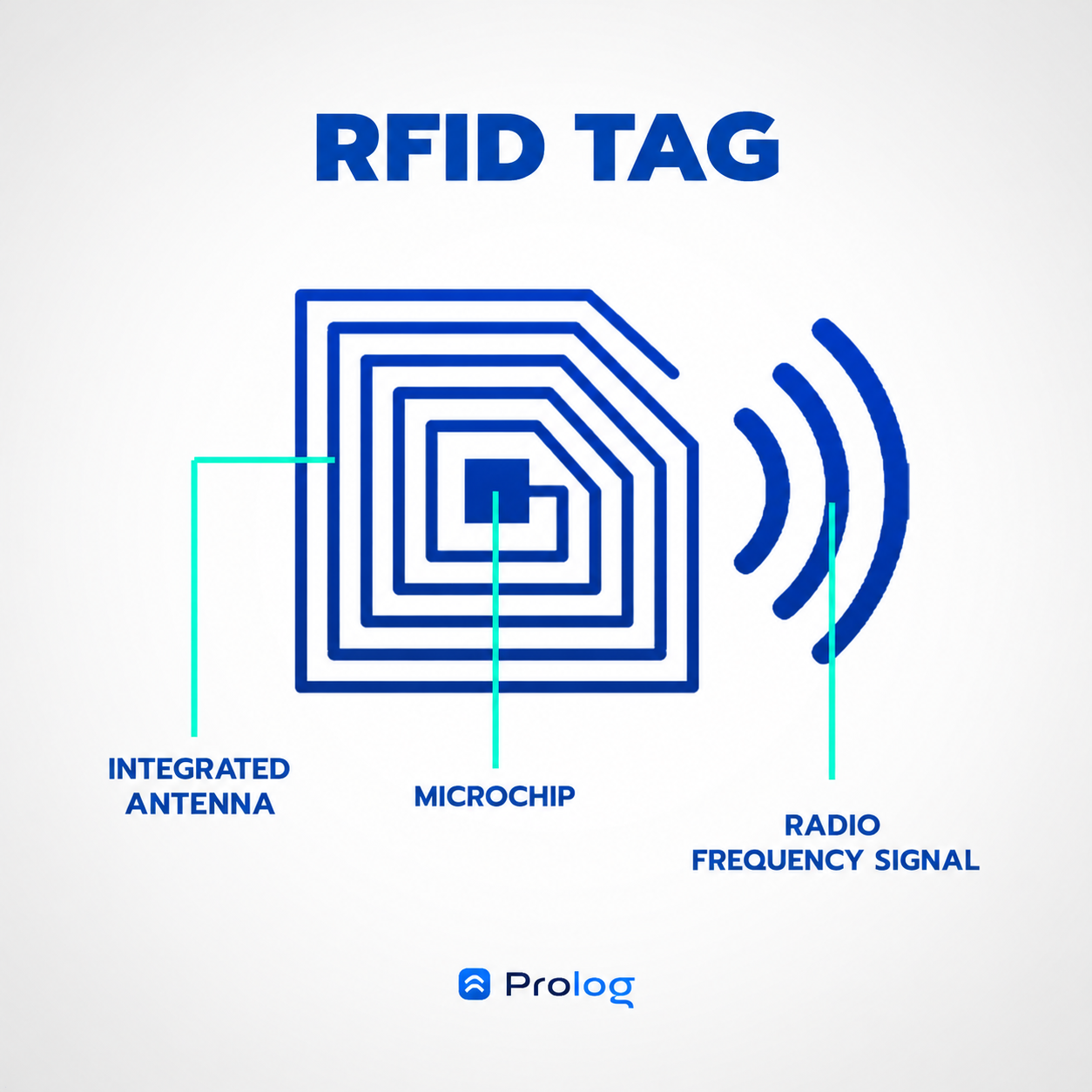
The tags therefore make cargo easier to identify when loading vehicles.
It is also a method for identifying fleet inventory parts, storing information on replacements, use and repairs made to the same part or fleet vehicle.
Tire management system
Although the systems mentioned previously cover some of these activities, using specialized solutions is advantageous. When systems aim to address general company management, the different areas of fleet management receive only superficial control.
You therefore have few features for each area, such as tires, maintenance or fuel.
When it comes to tires, accurately keeping track of calibration and asset wear is a fundamental activity. A technology specializing in tire management therefore brings various benefits to the company.
It is useful to be precise about the software's role, because that is what separates expectations from results. It does not measure tires: the person who goes to the yard with the pressure gauge and tread depth gauge does that. What the system does is store each inspection, link the record to that specific tire and the vehicle it is on, and show when pressure or wear falls outside expectations.
This history is where the gains normally associated with this type of tool come from — greater durability per casing, fuel economy linked to correct calibration, greater safety for the company and its employees, and better use of fleet time and resources. All of them, however, depend on inspections taking place at the agreed frequency: without records, the system has nothing to show.
Maintenance management system and electronic checklist
Fleet maintenance is another area involving many processes, an entire operation in itself. It includes tasks such as fleet inspection, vehicle repairs and preventive services, among others.
Data generated in the maintenance routine is also valuable for making more efficient decisions. This is especially true of maintenance costs, because the manager has all the information and descriptions of each expense centralized and organized in one place.
And more: automatically organized into reports.
Here again, data originates from a human record — the work order opened, the part replaced, the time recorded by the mechanic. A maintenance management system keeps this record from being lost in a notebook or spreadsheet and allows it to be compared across vehicles, workshops and periods.
Most maintenance management systems also integrate with the electronic checklist, another tool that brings productivity and agility to vehicle inspection routines — and is often where a defect is recorded before becoming a breakdown on the road.
Route planning through artificial intelligence
Routes can be created in different ways, with both free and paid tools available. This task sometimes does not receive all the attention it should, allowing vehicles to arrive late for a delivery because information about roadworks is missing.
This is just one example of all the consequences that a lack of well-structured route planning can bring.
Some route planning systems use artificial intelligence (AI) techniques. By comparing each planned route with the one traveled, the tool identifies failures and improvements that can be made.
The great advantage of this type of tool is that it tends to become more accurate as it receives data. The other side is rarely mentioned: the suggestion is only as good as the data entered. If waiting time at the customer, urban traffic restrictions and actual departure time are not recorded, the route considered optimal remains the route that never happens.
Data and system integration
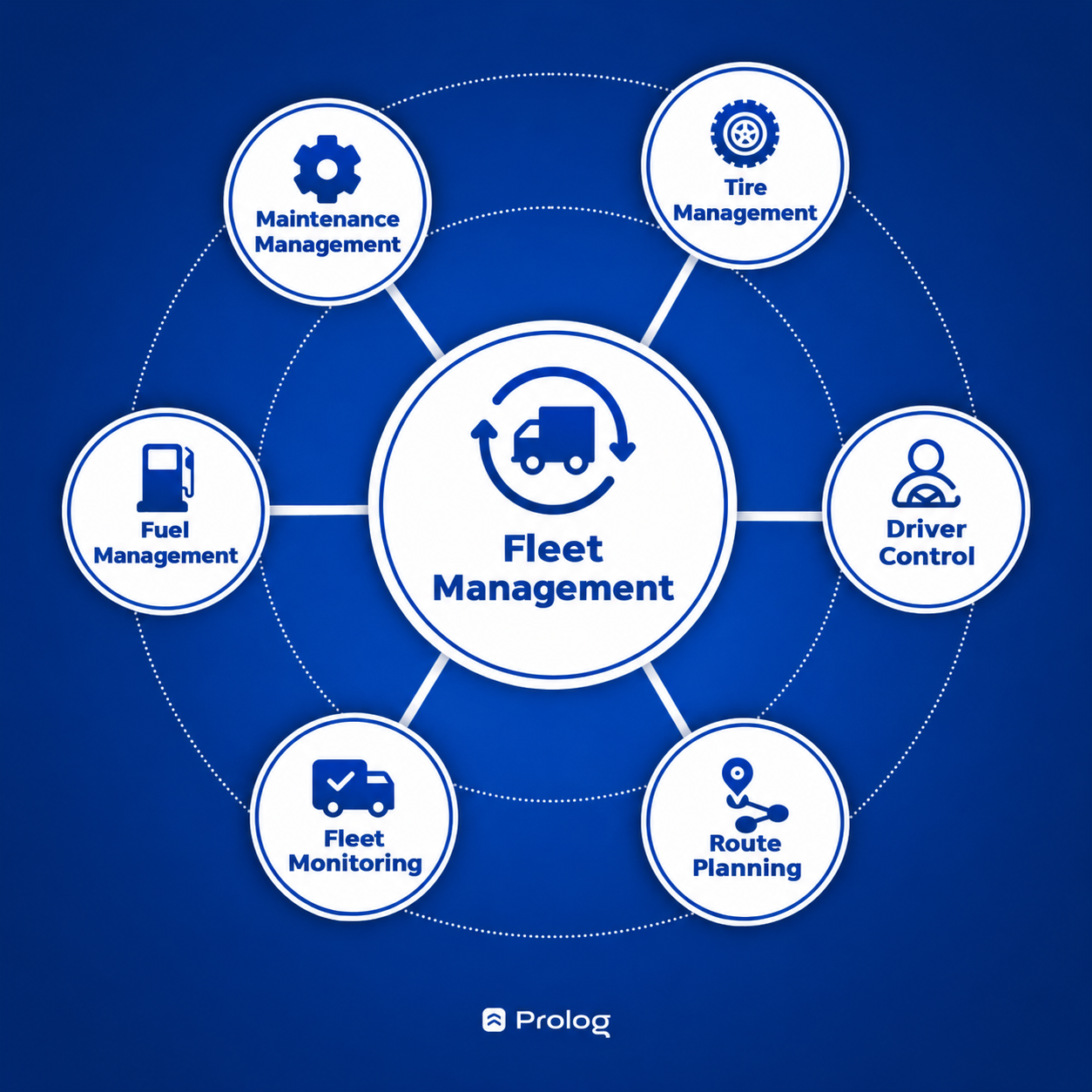
Enterprise Resource Planning, or ERP, is a system responsible for managing and integrating a company's various areas.
Features such as customer and supplier registration and billing and payment data are native to it. Others, such as fleet tire and maintenance control, can be integrated via API.
By using an ERP, the fleet manager can complete and expand their view of the fleet more strategically, adding only what really makes sense for the operation.
In practice, integration is a project, not a button: it requires defining which fields pass between systems, how often and which system is the source of truth when the two disagree. It is worth agreeing on this before contracting, not after the first report comes out differently on each screen.
Prolog App solutions
Prolog is a logtech, with technological solutions developed exclusively for fleet management and transport operations.
There are three products: the tire management system, the electronic checklist and maintenance management.
All three work with data recorded by people in the operation: the inspection performed in the yard, the checklist completed before the trip, the service record in the workshop. Reports and dashboards come from these records — each number originates in an inspection or a record, and is updated with each new record submitted.
Explore all their benefits and features in a conversation with one of our specialists: book your free demonstration.
Frequently asked questions
What is a TMS and what is it for?
Does a TMS replace a tire or maintenance system?
Does a tire management system measure the tire on its own?
What does route planning with artificial intelligence require to work?
What should you agree on before integrating fleet systems?
// newsletter
Fleet management content, straight to your inbox
Articles on tires, maintenance and fleet operations. No spam.


