Tire costs: what goes into the fleet's calculation
 Luiz Felipe 6 min read
Tire costs can represent between 10% and 20% of a fleet's expenses, second only to fuel and vehicle maintenance costs.
Acquisition, reconditioning and other activities related to the fleet's tires count as costs you should consider. This calculation, made to understand how much of the operation's total budget is allocated to tires, helps establish parameters to define objectives and cost reduction goals.
To understand it better, see below:
What are tire costs?
Acquisition
Acquiring tires for fleets is the main and largest amount spent when we talk about tires. Each vehicle has, at least, between 4 and 12 or more of these assets in its makeup.
A quick calculation is enough to understand that they are numerous in transport operations and that any variation in the purchase price impacts the budget.
The cost of a truck tire changes according to size, application, make, model and purchase conditions. That is why it is worth keeping track of the price paid in each acquisition and analyzing this data together with the tire's performance over its useful life.
Management
Tires, counting from their date of manufacture, have a shelf life of 5 years. However, in many cases, they do not last all that time due to the failure to carry out tire management processes.
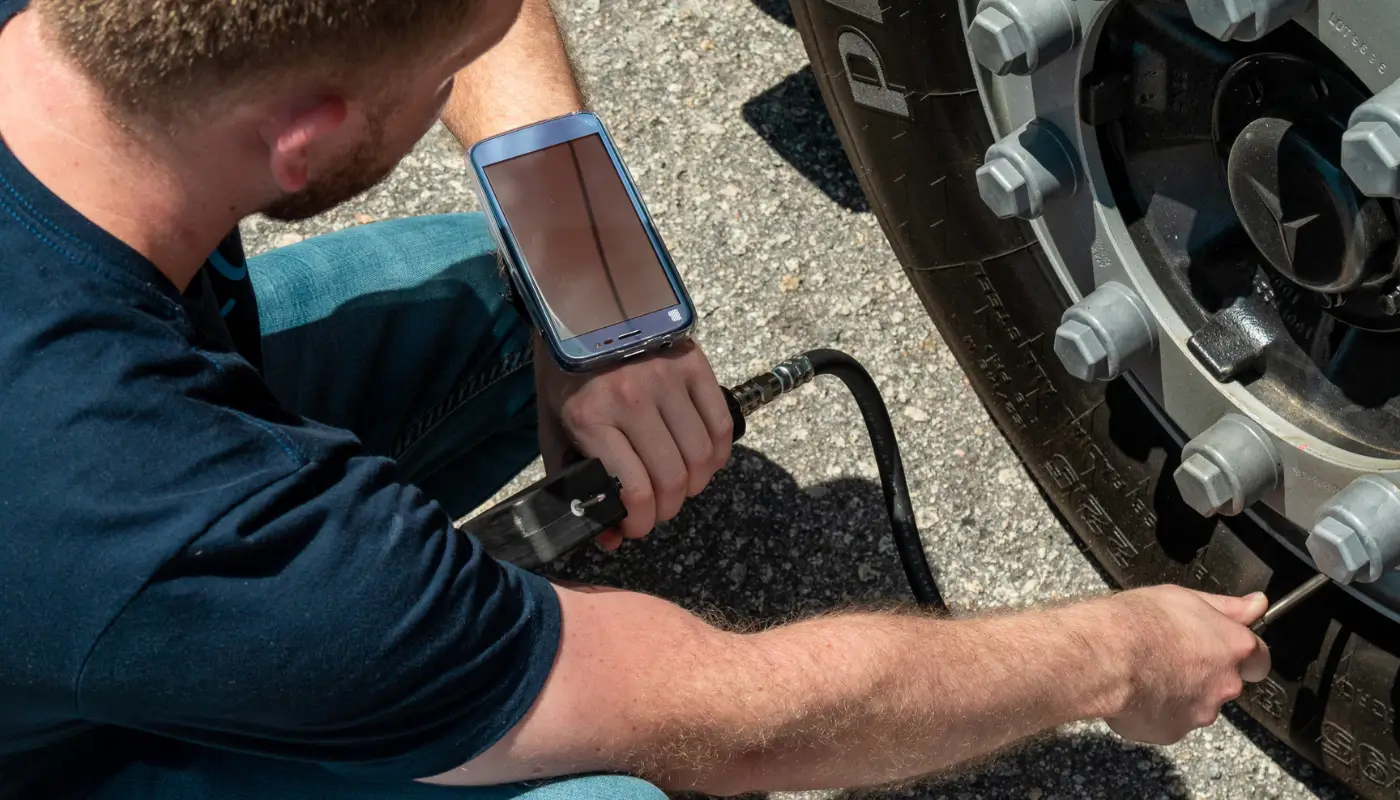
Activities such as tire washing, pressure and tread depth inspection, and carrying out maintenance services, such as tire rotation, are all processes that help increase tire durability and make it possible to retread the tire.
Pressure, tread depth, tire rotation and alignment are among the main points of ongoing maintenance. When this care becomes part of the routine, the fleet reduces losses from irregular wear and can make better use of the asset before replacing or reconditioning it.
That way, its entire useful life is used and you stop losing tires too early, which, incidentally, is one of the reasons tire acquisition costs become so high.
Although there is a cost attached, it will be a much more affordable amount than constantly buying new tires. After all, once you reduce losses, you can also spend less on buying these parts.
Want to see this in your fleet? Talk to a Prolog specialist
Reconditioning
Reconditioning, such as retreading or remolding, is also one of the tire costs the fleet has. It is difficult to set a price for these types of services because they vary widely depending on the region of the country you are in.
But one thing is certain: when the casing is in good condition and the service is suitable for the case, reconditioning tends to cost much less than buying a new tire and helps extend its useful life.
Maintenance
Tire maintenance services include the tread inspection stage to identify repairs and fixes, as well as the service itself.
This routine also includes records of pressure, wear, mileage and services performed. This data helps understand whether the tire is delivering the expected yield or whether there is a loss pattern that needs to be investigated.
Disposal
Disposal is not usually one of the main tire costs, but it should be included in your calculation as well, so that you have a complete view of the amounts related to tires and can plan budgets and spending more accurately.
Related costs
Other costs that may be linked to the fleet's tires are amounts spent on refueling the vehicles and also on their maintenance services.
This is because tires are related to fuel consumption and to the condition of the vehicles. If they are poorly inflated, for example, consumption and the impacts on the vehicle's structure increase.
So, if these other costs increase, it may mean that your tires are being managed inadequately and need more attention.
How do you calculate tire costs?
To calculate tire costs there is no other way: you must carry out the collection, control and analysis of data on these fleet assets.
Among the data needed to understand tire costs, look for the following for each tire individually:
- Acquisition value;
- Record of mileage driven;
- Cost of reconditioning;
- Number of retreads;
- Mileage driven after maintenance and reconditioning services.
It is the information about the tires themselves that will give you the answers you are looking for about what amounts are being spent and whether they are within an established and acceptable budget or whether they are excessive and in need of drastic reductions.
The main calculation you need is the cost per kilometer per tire, also known as the CPK calculation. It measures the cost of each kilometer driven by a specific tire and helps compare makes and models used in the fleet's vehicles.
In practice, CPK seeks to answer how much it costs to cover a certain distance with each tire in the operation. To do this, add the tire's purchase price to repairs and retreading services, relate this total to the mileage driven and compare the results within the same application.
Factors such as vehicle weight, tire pressure and size also influence the final cost per kilometer. That is why the calculation is more useful when the fleet keeps standardized records and avoids comparing tires that work under very different conditions.
How can you save on tire costs?
Manage them properly
Understanding tires as fleet assets is fundamental, since they must be managed from acquisition to disposal. In addition, understanding and keeping track of their entire life cycle is fundamental to keep their value as high as possible and ensure — and even extend — their durability.
That is why tire management is an indispensable area in your fleet. Through it, tire care routines will be implemented that bring the expected benefits and even others, such as:
- Greater tire durability;
- Lower maintenance and acquisition costs;
- Less early disposal of tires;
- Lower fuel consumption;
- Fewer cases of corrective maintenance;
- More safety on the road.
These gains depend on consistency. The fleet needs to record data, keep track of deviations and act when inspections or services point to problems, instead of treating tires merely as replaceable parts.
Rely on technology
There are countless technologies for fleets, and they have a big advantage: they serve the specific stages of fleet management. There are systems dedicated to maintenance management, to refueling and, of course, also to tire management.
Our electronic tread probe and management system have features dedicated to tire management: they make it possible to record the pressure measured in each inspection, keep track of wear and mileage and organize the operation's records. The solution serves more than 1,500 operations in Brazil and abroad. See everything about our solution in this free downloadable material (in Portuguese).
Frequently asked questions
What are a fleet's tire costs?
How much do tires represent in fleet expenses?
How do you calculate tire costs?
How much does a truck tire cost?
How can you save on tire costs?
// newsletter
Fleet management content, straight to your inbox
Articles on tires, maintenance and fleet operations. No spam.