Tire management system or ERP module: which to use?
 Luiz Felipe 5 min read
Choosing between a tire management system and an integrated ERP module is a decision that will make a difference in your fleet's results.
Although both solutions can optimize the fleet's tire management, the features and the level of control they provide are different.
Generally, the management system is more complete and analyzes tires in depth, while the ERP module is more basic and provides control at a surface level.
Below, learn more:
- What does an ERP system do?
- What are the modules of an ERP system?
- What does a tire management system do?
- What are the features of a tire management system?
- How does the tire module in an ERP work?
- What is the difference between a tire management system and an ERP?
- Tire management system or integrated ERP module?
What does an ERP system do?
An ERP is a planner and manager of the company's resources. It is a system designed to integrate and automate business processes, providing a consolidated, real-time view of the company's daily activities.
One of the main benefits of an ERP is its ability to centralize data from different departments, eliminating disorganized or duplicated information and making communication and workflow between areas easier.
This allows managers to carry out data-driven management and make more informed, strategic decisions.
What are the modules of an ERP system?
The modules of an ERP system are grouped into three main types:
Operational modules – Handle companies' day-to-day work and include:
- Inventory management;
- Purchasing and orders;
- Production control;
- Sales and distribution;
- Vehicle checklist;
- Tire relocation.
Tactical modules – Focused on medium-term planning and optimization activities, including:
- Human resources management;
- Financial planning;
- Project management.
Strategic modules – Support high-level decision-making and the formulation of long-term strategies. They are:
- Data analysis and business intelligence;
- Enterprise resource planning;
- Customer relationship management (CRM).
These modules are developed to meet the specific needs of each area of the company, with sets of features that vary according to the company's activity and segment.
What does a tire management system do?
A tire management system is a specialized tool that controls every aspect related to tires in the fleet's transport operations, from their acquisition to their proper disposal.
This tool offers complete management that includes keeping track of tire pressure and wear, scheduling maintenance and replacements, and analyzing usage performance.
In addition, the system records the history of each tire, keeps track of the associated costs, automatically calculates the CPK of each tire, and can generate valuable insights for the manager on tire performance under different operating conditions.
What are the features of a tire management system?
The features of tire management software include:
- Registration of tires, vehicles and employees;
- Tire relocation, to control the tires installed and the position they occupy on the vehicles;
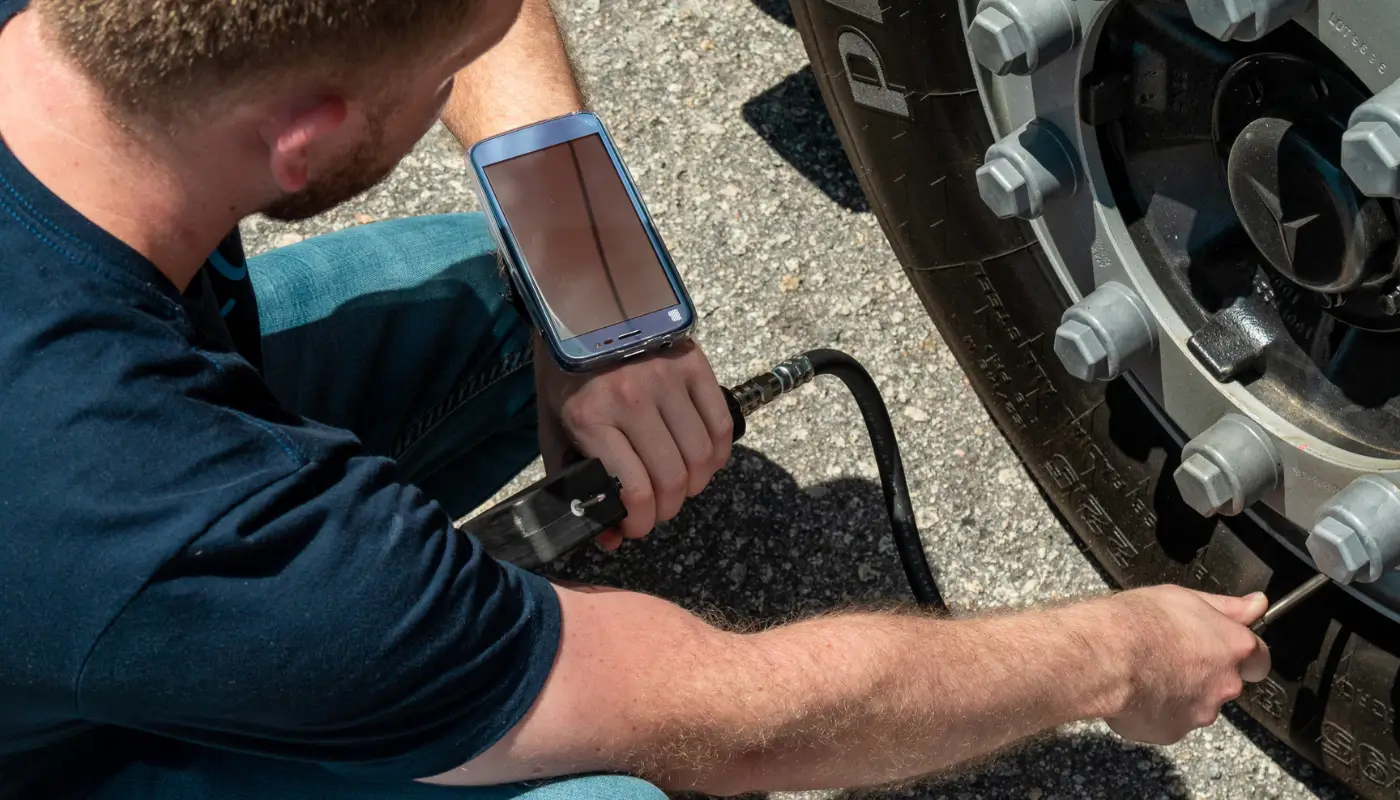
- Collection of tire inspection data, covering both pressure and tread depth;
- Wear control and identification of the ideal time for retreading;
- Control of retreaded tires by ID;
- Automated reports and charts;
- Automated dashboard, updated in real time as records are entered;
- Opening of work orders in real time;
- Attaching photos to the WO (work order) or to the disposal;
- Calculation of cost per kilometer (CPK) for each tire.
How does the ERP tire module work?
Normally, the integrated tire management module in ERPs focuses on basic features related to tire relocation.
This means it is possible to keep track of where tires are located and update where they are installed (or whether they have been removed from service).
This function also helps control inventory and the tire inventory, helping to forecast new tire purchases.
The tire module in an ERP may also offer features to record maintenance and inspection history, providing an overview of tire condition and performance over time.
What is the difference between a tire management system and an ERP?
The main difference between a tire management system and an ERP lies in the specificity of the features each one offers.
A tire management system keeps close, in-depth track of tire wear, in addition to enabling control of tire maintenance and keeping track of the history and performance of each tire.
An ERP, on the other hand, is a solution aimed at managing business activities that can be adapted to fleets and transport operations.
In general, the tire module in an ERP can provide valuable information for basic tire management, helping fleet managers keep control over the costs and replacements of these assets.
However, it will be difficult to reach the same level of detail and specificity that a dedicated tire management system can offer.
Tire management system or integrated ERP module: which is best for your fleet?
To know whether a tire management system or an integrated ERP module is the best alternative for your fleet, you first need to understand your operation's needs and how relevant tire management is to it.
If there are not many tire-related problems in the fleet and costs are under control, a tire module that manages relocations may be enough.
However, if there is a high incidence of tire loss, especially if it happens prematurely, that is a strong sign to invest in a specialized system. Other indicators for adopting a specialized system include:
- The fleet has more than 30 vehicles;
- You have already had to deal with fines for bald tires;
- Tire replacements are happening very frequently;
- Tires are facing a high rate of retreading rejections.
If you are evaluating options for your fleet's tire management and want a solution aligned with your operational needs, discover our tire management system.
With advanced, customizable features, our system is ideal for fleets seeking more detailed and efficient control over their tires. Book a free demo now.
Frequently asked questions
What is the difference between a tire management system and the ERP tire module?
What does an ERP system do?
What are the features of a tire management system?
When is the ERP tire module enough?
What signs indicate that the fleet needs a specialized system?
// newsletter
Fleet management content, straight to your inbox
Articles on tires, maintenance and fleet operations. No spam.