Truck and bus tire types: uses and differences
 Jean Zart 3 min read
Anyone who works in transport knows there are many tire types. For trucks and buses, recognizing the most commonly mentioned models and their uses helps you make better choices for each operation. Could you name them?
Well, if you still have questions about the subject, that is no problem. Today we will share some information to help you better understand how this component is used and find the ideal tire for your fleet's vehicles.
It is important to remember that the tire is the only part of a truck that comes into contact with the ground. Besides supporting the entire weight of the vehicle and cargo, it faces a variety of poor terrain and weather changes, constantly overheating and cooling.
So, driving with the perfect component improves delivery performance, extends tire useful life, saves on heavy-vehicle maintenance and makes driving much safer.
Learn about:
- Tire types
- The most common tires in transport operations
- How to identify the best type for your fleet
Tire types
(video in Portuguese)
There are many tire types, a great many! But let us focus only on models for trucks and buses, all right?
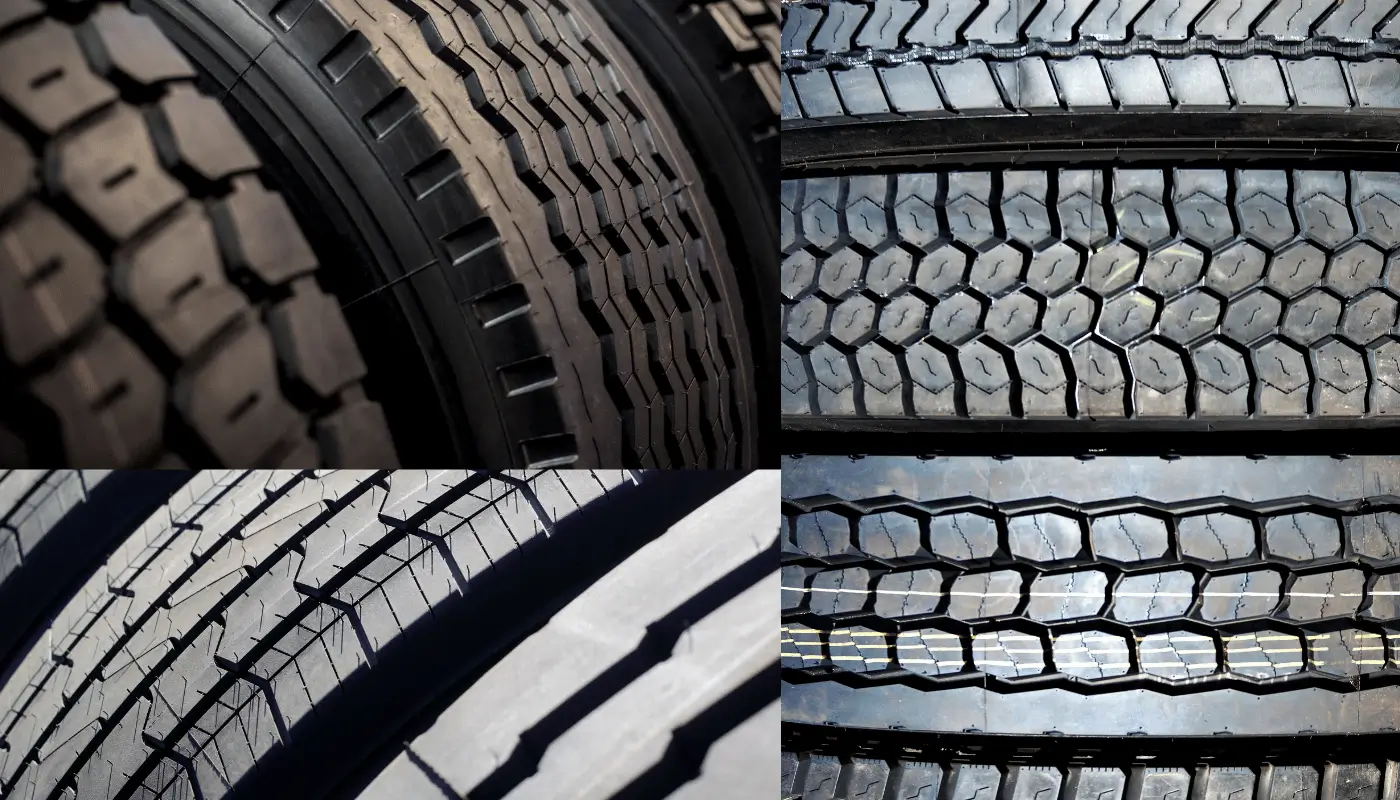
Within that scope, this post covers 4 commonly mentioned applications: highway, urban, mixed-service and light-vehicle tires.
The first is specifically for highways, intended to withstand medium and long distances. The second is for vehicles driven more within a particular region, such as buses traveling around the city.
Mixed-service tires can cover both asphalt and dirt roads, while light-vehicle tires are recommended for small trucks, vans and minibuses.
Their main differences lie in the tread types, which range from symmetrical to asymmetrical and directional, making the tire work in a particular way on each type of terrain.
Of the four applications presented, three appear more often in transport operations. See below:
Want to improve your fleet's tire management? Talk to a Prolog specialist
The most common tire types: highway, urban and mixed-service
Highway, urban and mixed-service: these are truck and bus tire types widely used in transport operations in Brazil. This is because they meet different terrain, route and service requirements for a heavy vehicle.
Highway tires are radial tires developed for use on steering, free-rolling and moderate-traction axles. In other words, they are ideal for medium- and long-distance travel on paved highways.
Some variations in tire construction and rubber tread design can offer high retreadability and better performance in fuel consumption and carbon dioxide emissions. They are used on trucks and buses, but there are also specific models for trailers.
Urban tires, meanwhile, are radial, tubeless tires developed for use on steering and moderate-traction axles. They are installed on trucks and buses that work primarily in paved urban areas, that is, regions with limited distances.
Finally, mixed-service tires, also known in Brazil as pistol tires, are radial tires developed for use on steering, free-rolling and moderate-traction axles. They are normally used on trucks and buses that need safety and durability on both paved highways and dirt roads.
Now that you know what each of these models is for, how do you know which tire to use? Here is our answer!
How to identify the best tire type
The only way to know which tire is best for your fleet's trucks is to keep track of tire use every day.
A professional in the field can also help by analyzing the collected data and identifying each vehicle's needs to provide a more accurate answer that supports component longevity and company savings.
Tire management is a great way to better understand truck and bus requirements. Besides making managers' routines easier, tire inspection and control make it much easier to recognize the causes of damage and find more suitable solutions.
Our advice is:
Invest in tire management for your fleet, both with a modern, specialized system and with a professional qualified to supervise and analyze data.
So, want to know how to identify the best type for your road transport operations? Schedule a demonstration of the Prolog Tires system and see how to use it to make smarter tire purchases.
Frequently asked questions
Which truck and bus tire types are listed?
What distinguishes a highway tire from an urban tire?
Are mixed-service tires and pistol tires the same thing?
How can I find the best tire for my fleet?
Why does tire type affect operational results?
// newsletter
Fleet management content, straight to your inbox
Articles on tires, maintenance and fleet operations. No spam.