Correct camber for truck tires
 Luiz Felipe 6 min read
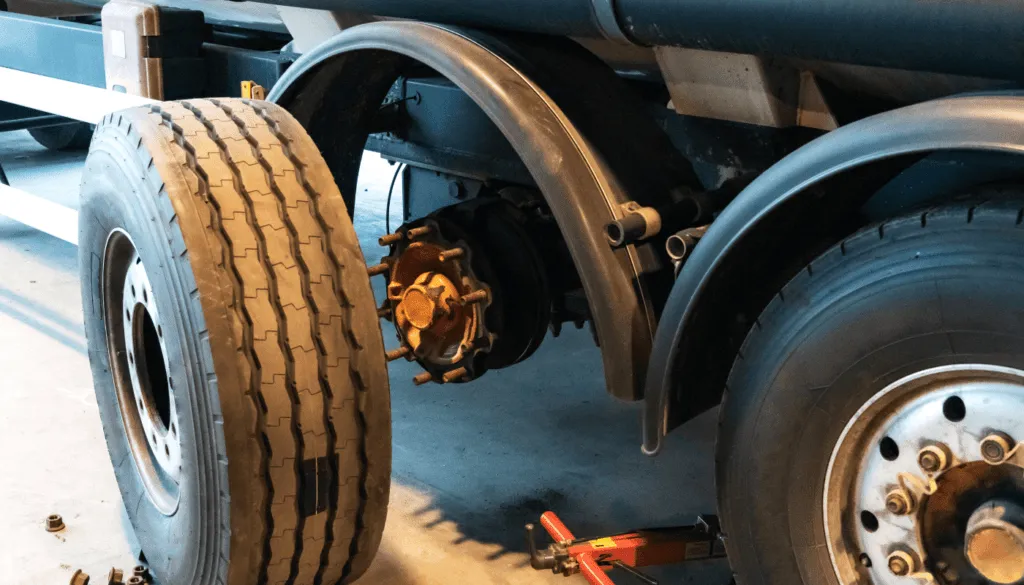
Tire camber is the name given to the degree of tilt of a vehicle's wheel in relation to the ground.
This means that when the wheel angle is not in the correct position for that model, there is a camber problem on the truck.
To understand it better, keep reading:
- What is tire camber?
- When is camber adjustment necessary?
- What is the correct camber?
- What happens if the camber is out of adjustment?
- How do you identify the need for tire camber adjustment?
What is tire camber?
Also known as the “camber angle”, it is the angle of the wheel in relation to the ground and to the geometry intended for the vehicle. This angle should not be treated as a universal measurement: the correct position is the one specified by the manufacturer for that set of suspension, wheels and tires.
Camber can be zero, negative or positive. That is:
- Zero: the wheels are perpendicular to the ground, at a 90º angle, with even contact of the tread. When this is the specified configuration and the assembly is within the standard, no service is needed on the vehicle.
- Negative: means the wheels are “crooked”, with their bottom part tilted further toward the outside of the vehicle. Here, this problem causes more pronounced wear on the inner shoulder of the tire.
- Positive: with positive tire camber, the wheels are farther apart from each other at the top of the tire, closest to the vehicle's structure. In this case, the greatest wear is on the outer shoulder of the tire.
Although it is not a very common problem, it is important to watch out for it, because misadjusted camber can be a sign of bigger problems, among them: a bent control arm, ball joint problems, bushings, etc.
This means that incorrect camber usually indicates a problem in the vehicle's suspension structure or in the wheel geometry. It is also related to alignment, which involves adjusting angles such as camber, toe and caster so that the wheels are in the correct position in relation to the ground and parallel to each other.
What is the difference between balancing and camber?
When a vehicle is balanced, the wheels are adjusted using weights that help all the tires stay at the same level and keep the correct balance during transport.
Camber, although similar in that it also affects tire behavior, involves working on the vehicle's suspension structure to adjust the tire's mounting angles, which makes it a much bigger and more laborious adjustment.
What is the difference between alignment and camber?
In truck alignment, what happens is the adjustment of the wheel angles according to the manufacturer's specification. This process may involve camber, toe and caster, and it also seeks safety, stability and comfort when driving a vehicle.
Tire camber, on the other hand, is one of these angles: it describes the vertical tilt of the wheel in relation to the ground. Therefore, it is not just a steering wheel adjustment, but part of the suspension geometry that influences how the tire rests its tread on the ground.
When is camber adjustment necessary?
In fact, tire camber adjustment is not a service indicated and recommended by professionals and specialists in the field when it appears as an isolated or forced adjustment. This is precisely because it changes the suspension angles and can cause more problems than it solves.
However, if it is found that the angles are incorrect in relation to the vehicle's specification, or if you start to notice pronounced and persistent wear on the tire shoulders, the camber may be out of adjustment.
In that case, the vehicle needs to be taken to a workshop to understand the cause of this angle misadjustment and whether it is worth proceeding with a correction service. After all, a forced camber adjustment may only harm the vehicle even more.
What is the correct camber?
The correct camber is the one that follows the manufacturer's specification for the vehicle. In many cases, the expected visual reference is the wheel straight in relation to the ground, but the main point is that the assembly is within the geometry intended for that model, and not simply that every wheel is always at 90º in any situation.
What happens if the camber is out of adjustment?
If tire camber is out of adjustment, the vehicle suffers several impacts. Among them:
- The tires become worn
The greatest wear occurs on the tire shoulders, because of the angle they are at when the vehicle is moving. Depending on the misadjustment we are talking about, it may indicate wear on the outer or inner shoulder.
As mentioned above, if the camber is positive, the wear happens on the outer part and, if it is negative, on the inner part.
The assets may even have their internal structure damaged, depending on how long the vehicle runs in this condition.
- The vehicle loses stability
This is one of the consequences that most harms a vehicle's road safety. Since the tires are not in the correct position and in full contact with the ground, the chances of the vehicle losing its balance in curves increase considerably.
Especially for larger, loaded trucks, the risk of tipping over while running a route is high.
- There is more vehicle sway and vibration
On ordinary roads in good condition, the vehicle already sways more than it would with the correct angles. The problem is even greater when driving on poor roads, over potholes or cracks in the ground.
In addition to causing discomfort for drivers and damaging the tires, it also increases the possibility of parts coming loose and wearing out in the vehicle's structure as a whole.
- The steering wheel “pulls” to one or both sides
This consequence is similar to what happens when the vehicle needs balancing or alignment service. The side that will be harmed the most is the side toward which the steering wheel ends up being pulled.
Likewise, misadjusted camber makes the vehicle pull harder, the steering wheel becomes heavier and it usually ends up pulling more to one side. Irregular tire wear, a steering wheel that pulls or an off-center steering wheel are signs that deserve checking.
How do you identify the need for tire camber adjustment?
The signs of positive or negative camber are usually noticed by the driver while driving the vehicle, or during inspection, whether carried out by the driver, a fleet mechanic or an outsourced workshop.
But it is important to remember that tire camber adjustment is not a recommended practice, and many manufacturers even build the vehicle in a way that makes this service impossible.
In most cases, this is not a problem, because alignment and balancing services are enough to keep the vehicle balanced, working properly and the tires well maintained. Correct alignment helps avoid irregular tread wear, while pressure, tread depth, rotation and alignment are among the central points of ongoing tire maintenance.
The most important thing is to keep up the fleet's preventive maintenance routine and keep track of tire condition.
This set of actions will keep your vehicle performing at its best, and any problem will be identified before it “blows up” into a more serious situation, such as a tire camber problem.
Make sure to use the right tools for each moment. Check out the control spreadsheets we offer for free download (in Portuguese):
Frequently asked questions
What is the correct camber?
How can you tell that the camber is out of adjustment?
What is the difference between camber, alignment and balancing?
Is it worth adjusting the camber on a truck?
What happens if the truck runs with misadjusted camber?
// newsletter
Fleet management content, straight to your inbox
Articles on tires, maintenance and fleet operations. No spam.