Types of semi-trailers and bodies: from bitrem to rodotrem
 Luiz Felipe 6 min read
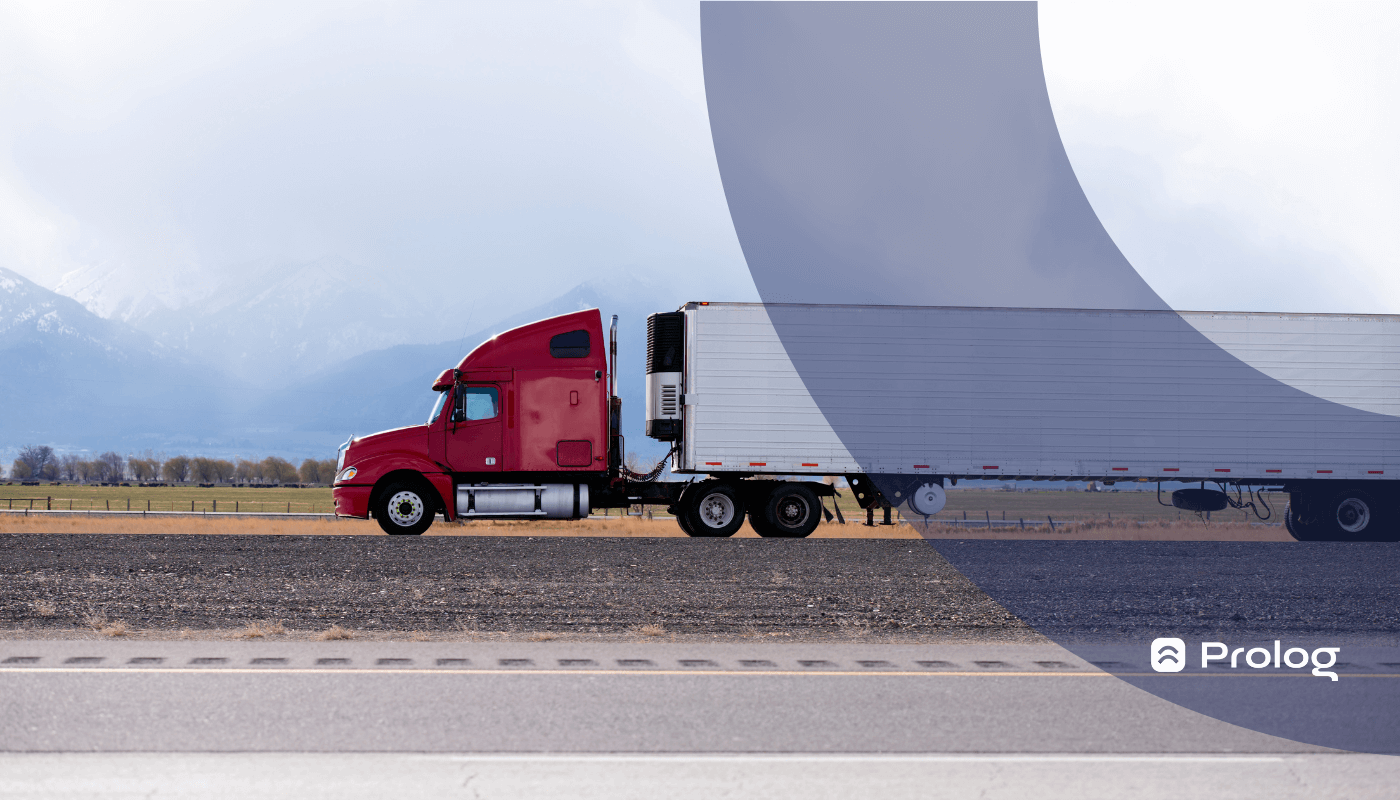
In Brazil, each type of semi-trailer has its own characteristics and should be inspected for different details. Before choosing a checklist or a body for the operation, it is worth understanding how each configuration is made up and what differences show up in the axles.
Before we start, we need to make two quick distinctions:
1 Semi-trailer truck vs. Body:
While the semi-trailer truck is the complete coupled combination, the body is the part used to carry the load, coupled to the traction unit, and it comes in many types and sizes.
2 Semi-trailer truck vs. Truck:
A semi-trailer truck is a coupled vehicle. In other words, it has two parts: the tractor unit, where the engine and cab are, and the body or semi-trailer. A truck, on the other hand, is a single, whole vehicle, without the separation between cab and body that exists in a semi-trailer truck.
Ready? Let's dive in.
Semi-trailer (tractor unit)
The standard semi-trailer has two single axles, and one of them is driven. It is considered an extra-heavy vehicle.
LS (tandem-axle tractor unit)
Very similar to the previous model, but its rear axle is double — which makes it able to carry more weight. It has more wheels to distribute the weight along its length.
2 axles
The 2-axle semi-trailer truck is made up of the tractor unit and a semi-trailer, with two axles on each. It can be up to 18 meters long and carry 33 metric tons.
It usually carries dry goods and distributes perishables and grain.
3 axles
The 3-axle semi-trailer truck, quite similar, has 2 axles on the tractor unit and 3 on the semi-trailer. It can also be 18 meters long, but it carries up to 41.5 metric tons. It is usually used with curtainsider, grain and box van bodies.
One benefit of this model is the increase in vehicle performance from the engine power received by the rear axles.
Bitrem (treminhão)
The bitrem, or treminhão, is made up of the tractor unit and two semi-trailers; this combination can have 7 to 9 axles. The semi-trailers of this model are coupled by a type B coupling — known as a fifth wheel.
Bitrenzão
The bitrenzão has a structure similar to the bitrem; the difference is that it always has 9 axles, split into 3 axles on the tractor unit plus 3 axles on each semi-trailer.
It also has a fifth wheel between each semi-trailer. This increases the load capacity from 57 metric tons, in the bitrem, to 74 metric tons in the bitrenzão.
It is used mainly to transport bulk goods.
Rodotrem
The rodotrem is made up of the tractor unit and two semi-trailers. The first rests on the tractor unit itself and the second is coupled with the help of a dolly.
This vehicle has one particularity: because it has three articulation points and is heavier, in Brazil it needs a Special Traffic Authorization (AET) to travel. The Brazilian Traffic Code (CTB) provides for the inspection of vehicles that need special authorization to travel and for the definition of technical requirements for these vehicles to circulate.
It is usually used for forestry and sugarcane transport.
Main types of truck bodies
- Box van: a closed semi-trailer, used to transport fragile products, among them electronics and medicines.
- Curtainsider: the ideal choice for bulky loads, it has retractable sides closed with tarps, which speed up the process of loading and unloading the cargo.
- Dump body: the equipment has a system that allows one side to rise while the other stays fixed, tipping the load out of the vehicle, usually materials such as sand or crushed stone.
- Frozen-cargo reefer: keeps the temperature at around -15°C to -20°C, ideal for frozen goods.
- Refrigerated body: temperature between 0 and -10°C, used to transport dairy products, fruit and medicines — only on short routes.
- Grain body: grain, as well as organic and mineral fertilizers, steel bars and bagged goods, is transported in this body.
- Car carrier: used, for the most part, to transport passenger cars.
- Tank: transport of liquids such as gasoline, ethanol and diesel.
Other types of truck bodies
- Flatbed: also known as a tow truck, it carries other vehicles, such as cars and motorcycles.
- Silo: transport of materials that need pressure to be unloaded, such as lime and cement.
- Container carrier: it is possible to transport a container with the help of the tractor unit, for a variety of goods.
- Lowboy: with open, sturdy sides, these semi-trailers are used to transport large, whole machines, such as tractors and cars.
- Sugarcane body: carries sugarcane, usually coupled to the rodotrem.
- Garment hanger body: products, such as clothes, distributed on hangers, preventing them from getting wrinkled. Used for express deliveries.
- Livestock body: transport of live animals in a closed body with air vents.
- Munck: has an articulated “arm” and a hydraulic system used for loading and unloading.
- Poliguindaste (skip loader): containers for storing rubble, sand, garbage and other materials are transported by a poliguindaste semi-trailer, which has a crane capable of placing them on and removing them from the vehicle.
- Forestry body: a flat surface and “arms” on the sides, which make it easier to tie down logs for transport.
Checklist customization for vehicle inspection
Actually, a customized checklist is not all that strictly necessary.
You can use the same checklist to inspect different vehicles and bodies as long as it has an initial identifier. For example, a box to tick truck or semi-trailer truck, or a space to describe the type of body coupled to the tractor unit.
However, you will also need a “not applicable” alternative for the items of each checklist. After all, there are differences between each model — for example, not every body has tarps to inspect.
Brazilian traffic legislation also reinforces the importance of checking before driving: before taking the vehicle onto public roads, the driver must check that the equipment is present and in good working order. Since the provisions of Brazil's CTB apply to any vehicle, the checklist routine can cover the fleet's trucks, semi-trailer trucks and different combinations.
That way, it is much simpler to adopt a customizable checklist system — the electronic checklist!
You do not need to edit and print different checklists for each inspection. Just create checklist templates for each vehicle in the fleet and make them available to start a new inspection when needed, without having to spend on paper. In Prolog, you can define which vehicle models the checklist should be applied to.
Therefore, using an app with ready-made questionnaires that are easily accessible to each driver responsible for the task will make a difference in agility and productivity. Prolog checklists are answered on mobile phones with the app and can also be carried out even without an internet connection.
Learn more about building your customized checklist in this complete, free guide on the subject. (in Portuguese)
Frequently asked questions
What is the difference between a semi-trailer truck, a body and a truck?
How much weight can each configuration carry?
Does the rodotrem need authorization to travel?
Which body should be used for frozen or chilled cargo?
Do I need a different checklist for each type of semi-trailer?
// newsletter
Fleet management content, straight to your inbox
Articles on tires, maintenance and fleet operations. No spam.