Prolog and tire hot branding: how to get started
 Jean Zart 5 min read
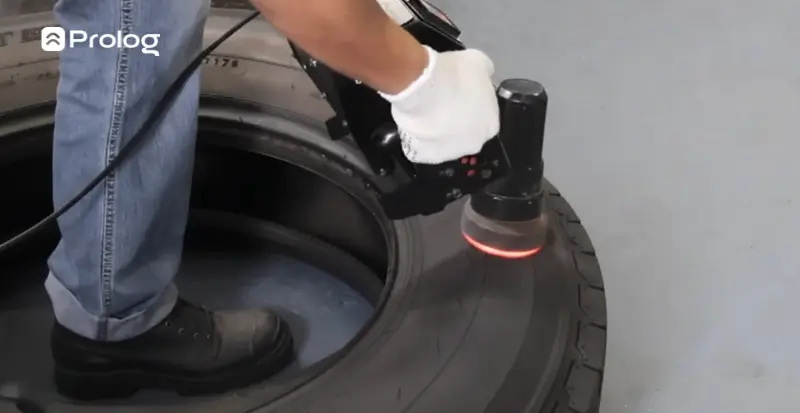
Prolog uses hot branding to identify individual tires, linking the physical tire to its digital record in the system. Without that connection, there is no traceability.
But if your concern is “do I need to mark every tire in the fleet before I start using the system,” the answer is no. Marking takes place gradually, integrated into the tire shop's routine, without having to stop operations.
Explore the following:
- Why Prolog uses hot branding
- Individual identification is part of management, not just the system
- What “fire number” means in practice
- “But marking the entire fleet before starting sounds like a lot of work”
- So, where do I start?
Why Prolog uses hot branding
Prolog keeps a record of each individual tire throughout its useful life: where it is mounted, how many kilometers it has traveled, how often its pressure has been adjusted, when it was retreaded and why it was discarded. For this traceability to work, every tire needs a unique, permanent code, and that is what hot branding ensures.
This tire identification process consists of branding a number on the tire sidewall using a set of heated metal digits. The result is visible, durable identification that is not lost through use, washing or natural tire wear.
It is the most reliable method for heavy vehicle fleets, where tires operate under severe conditions and any label or sticker tends to deteriorate quickly.
This branded number, the fire number (the serial number branded on the tire), is what the tire technician reads during a service, what the system records for each relocation and what allows the manager to consult the complete history of any tire in the fleet.
Individual identification is part of management, not just the system
Hot branding is not a requirement created by Prolog. It is necessary for any tire management approach that aims to go beyond volume control.
Without individual identification, the manager knows the fleet has 500 tires. But they do not know which tires they are: which tire is on which vehicle, in which position, for how long and with how many kilometers. They do not know which lasted longer, which make performed better in the operation, which casing was approved for retreading and which was rejected.
Without this level of traceability, it is not possible to calculate CPK per tire, identify individual waste or make data-based purchasing or disposal decisions. Control is limited to perception and volume, and that cannot sustain management in fleets with dozens or hundreds of vehicles.
Prolog is the system that organizes and processes this data, but the data starts with marking the tire. That is why it is indispensable.
What “fire number” means
The fire number is the unique code branded on every tire in the fleet. It works like the tire's CPF, Brazil's individual taxpayer ID, and is what distinguishes that tire within the entire inventory.
In everyday work, the fire number appears at every stage of the operation:
- At the tire shop, the tire technician identifies the tire by its fire number before any service. Calibration, rotation, repair, mounting and demounting are recorded against that number.
- In the system, each relocation is associated with the fire number. The manager consults the tire's history and finds everything: measured pressures, positions occupied, services performed and accumulated mileage.
- During retreading, the fire number accompanies the casing to the retreader and returns with it. The retreading cycle is recorded in the same history.
- At disposal, the reason for removal is documented against the fire number. The operation knows why each tire left the fleet, and this information informs future purchasing and supplier decisions.
Hot branding is what makes all of this possible.
“But marking the entire fleet before starting sounds like a lot of work”
It sounds like a big job, and if it had to be done all at once, you might well feel anxious. But there is no need to mark every tire (in Portuguese) beforehand or even on the day Prolog is implemented; this process can be gradual.
Implementing Prolog does not require 100% of tires to be marked on activation day. The most common process is to mark and register tires gradually, taking advantage of the times when the tire is already being handled at the tire shop.
In practice, it works like this: when a vehicle enters the tire shop for any service (calibration, rotation, inspection, replacement), tires that are not yet marked receive a fire number and are registered at that time.
The tire technician is already handling the tire, so the additional effort is minimal.
In fleets with regular tire shop visits, this process means most tires are identified and registered within a few weeks, without having to organize a marking drive that brings operations to a halt.
For new tires that enter the fleet after implementation, marking is done before the first mounting and becomes part of the intake process rather than an extra activity.
The initial effort exists, but it is spread across the routine. And with each tire marked and registered, the system gains more data and management gains more visibility.
So, where do I start?
If you are considering adopting Prolog and hot branding was a concern, the path is simpler than it seems:
Our system is configured and activated with the initial registration of vehicles and tire positions. The tire shop team receives training on the marking and registration process. And marking takes place gradually, integrated into routine services.
Within a few weeks, the database is built and the indicators start to reflect the reality of the operation.
Start by talking to one of our specialists and move forward with adopting PrologApp for your road transport fleet.
Frequently asked questions
Do I need to hot-brand every tire before implementing Prolog?
Why does Prolog use tire hot branding?
What is a tire's fire number?
Is hot branding a requirement created by Prolog?
What about new tires that enter the fleet after implementation?
// newsletter
Fleet management content, straight to your inbox
Articles on tires, maintenance and fleet operations. No spam.