Heavy vehicle maintenance: tires, brakes and fluids
 Luiz Felipe 7 min read
Heavy vehicle maintenance underpins the safety and efficiency of a fleet's transport operations.
However, contrary to what many may think, this responsibility does not rest solely with drivers.
It also belongs to managers, who play a central role in organizing maintenance routines, approving services and ensuring the vehicle is available when the operation needs it.
Here is a closer look:
- The importance of heavy vehicle maintenance;
- Essential heavy vehicle maintenance practices;
- Tips for driving heavy vehicles safely.
The importance of heavy vehicle maintenance
The importance of heavy vehicle maintenance is straightforward: maintenance activities keep the vehicle in working condition and support road safety.
Poor heavy vehicle condition increases the risk of accidents such as rollovers, skidding and delayed braking.
Proper maintenance also contributes to operational efficiency, helping prevent unexpected damage that can delay deliveries and increase repair costs—not to mention the time the vehicle is unavailable for operation.
Vehicle durability is another benefit of regular preventive maintenance on this vehicle type, since proper upkeep allows better use of its useful life, saving financial resources and reducing environmental impact.
Before looking at practices, it is worth separating two areas often treated as one: regulatory limits, which apply to any fleet in Brazil, and servicing intervals, which come from each model's manufacturer manual and vary by application and use. A consistent plan respects both and does not confuse manufacturer recommendations with legal requirements.
Want to see this in your fleet? Talk to a Prolog specialist
Heavy vehicle maintenance practices
Tire inspection
Fleet tire inspection is an activity that contributes to extending tire useful life, improving efficiency and fuel consumption, and ensuring safer driving.
This practice includes checking tires' internal air pressure, which shows whether the tire is at the calibration specified for that vehicle and application or needs adjustment. The pressure reference comes from the manufacturer, not a universal number valid for the entire fleet.
Tire tread depth must also be assessed to understand the asset's level of wear and whether it is still fit to keep running.
For this item, there is a limit independent of internal criteria. In Brazil, Resolution CONTRAN No. 913, of March 28, 2022, from the National Traffic Council, which addresses tire use on vehicles, prohibits motor vehicles from operating with tires whose tread wear has reached the indicators or whose remaining tread depth is below 1.6 mm; the same resolution establishes that this remaining depth is determined visually through wear indicators. For management, this makes tread depth measurement an objective criterion for scheduling replacement.
This is also the time to analyze the type of wear and whether there are irregularities that may indicate either vehicle maintenance problems or improper driving practices by drivers.
Brake maintenance
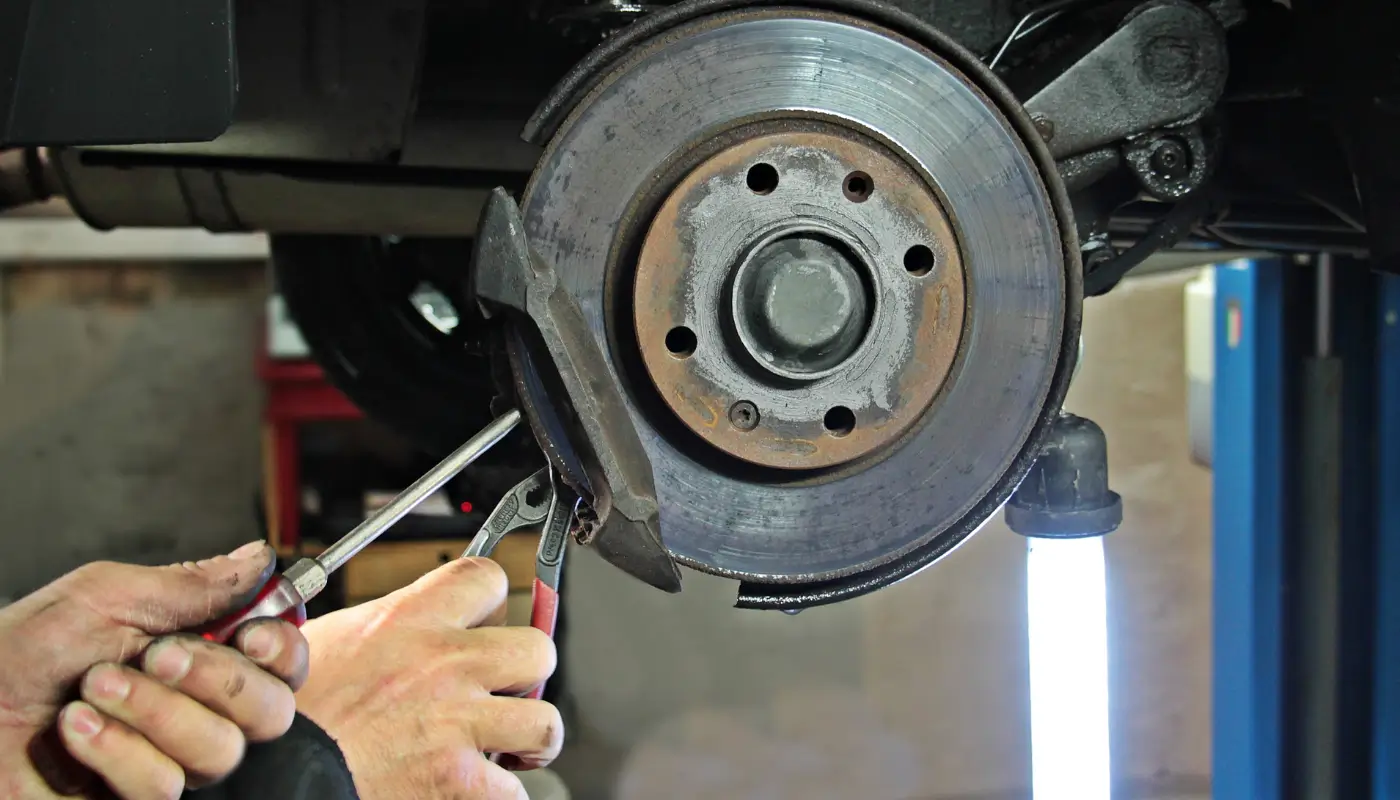
Brakes in heavy vehicles wear over time and with constant use. Worn pads and discs therefore need checking and replacement to ensure adequate braking capacity.
Otherwise, braking time will be affected, with the vehicle taking longer than normal to come to a partial or complete stop, compromising safety and potentially causing accidents.
Fluid checks and lubrication
Heavy vehicles require substantial lubrication to work properly, and maintaining adequate levels helps prevent damage to the engine and transmission.
Besides engine oil, this check includes items such as coolant, transmission oil and the lubrication points specified for the model. The exact list and intervals are in the vehicle manual—there is no single rule that applies to the entire fleet.
Oil changes
Changing the oil helps ensure proper lubrication and removal of impurities that can cause premature wear.
It is worth clarifying the status of this information: the change interval is a manufacturer recommendation, published in each model's manual, rather than an interval set by regulation in Brazil. It varies with the engine, oil type and operating conditions, and severe operations—maximum loads, dust and short trips—tend to shorten it.
Checking suspension, exhaust and fuel systems
Faults in these systems can lead to serious problems, including engine failure and brake malfunctions. Regular inspection is therefore essential to prevent problems.
Noises, looseness and leaks are precisely the signs a driver can report without any tools, making them suitable checklist items. Diagnosis belongs to the workshop, but the record starts in everyday inspection.
Air filter cleaning
Keeping the air filter clean is a simple but effective practice. A clean filter ensures the engine receives clean air and prevents the buildup of dirt and debris, which can negatively affect engine performance.
Cleaning frequency and replacement timing also come from the manufacturer manual and depend on the environment where the fleet operates: dirt roads, construction and mining usually require shorter intervals than paved roads.
Electrical system
The electrical system is vital to any heavy vehicle's operation, and maintaining this system in heavy vehicles is essential to avoid faults. This includes checking the battery, alternator and all electrical components—including lighting, which the driver can check visually before departure—to ensure everything works correctly.
Cooling system
This system cools the engine while it operates, and overheating can cause considerable damage to the assembly.
It is important to check the coolant level and fan system operation to ensure effective cooling. It is also worth looking for leaks in hoses and the radiator: a falling level usually appears before the problem affects engine temperature.
Maintenance practices for driving heavy vehicles safely
Departure checklist
Before taking a vehicle out, drivers should carry out a basic vehicle inspection using a daily checklist to ensure everything is in order.
This includes checking brakes, tires, oil and fluid levels and lighting, among other items that must work even on a short route.
This practice helps identify and resolve problems before reaching the road, significantly reducing the risk of problems during the trip.
The checklist only fulfills this role if what it reports becomes a service. A failed item without an open work order turns the inspection into a record, and the vehicle ends up leaving anyway.
Tire calibration
Tires with incorrect pressure can cause handling problems, increased fuel consumption and premature wear. It is therefore important to perform calibration regularly and before departing on a route, especially over long distances.
Measurement is more useful when taken with a cold tire and compared with the pressure the manufacturer specifies for that vehicle and load condition. Inflating tires by eye, or repeating the number used on another fleet model, is the shortest route to uneven wear.
Maintenance history
Keeping a detailed record of all maintenance activities, including inspections, repairs and parts replacements, helps you understand fleet maintenance processes and identify services performed previously.
This history also serves as a resource that helps identify possible recurring problems or those that were not properly corrected.
As a manager, it is important to check these records regularly to ensure all vehicles comply with the established maintenance plans.
History also separates expected wear from recurring defects: a third replacement of the same component on the same vehicle in a short time is a sign to investigate, and only the record makes this visible.
Route and performance monitoring
Tracking and telemetry systems are available on the market from suppliers specializing in this type of solution, keeping track of vehicle locations, driver behavior and vehicle performance in real time.
Problems therefore tend to be identified faster, creating room for route optimization, fuel savings and greater road safety.
It is worth understanding this resource's limits within maintenance: it describes what happens while the vehicle is moving, but does not replace physical inspection of the items listed above. These are two layers answering different questions—one shows how the vehicle was driven; the other shows its condition.
Return checklist
Like the departure checklist, the return checklist is an important stage in heavy vehicle maintenance practices.
When drivers return from their shifts, they should carry out another complete check to ensure the vehicle's important items have remained in good condition or have not suffered damage and are ready for the next trip.
It is also a way for the manager to identify the driver responsible for damage caused to a specific vehicle.
In addition, it is a practice that helps resolve problems before another operation begins only to find the vehicle unavailable for use.
Applied consistently, these practices change the way work is done: instead of reacting to breakdowns, the manager schedules services—with tires, oil and filters replaced according to each manufacturer's criteria and within the limits established by regulation in Brazil.
And to understand where to start, here is a suggestion: sign up for our Fleet Maintenance Management course and take your first steps in maintaining your fleet (in Portuguese).
Frequently asked questions
What are heavy vehicle maintenance practices?
What is the minimum tire tread depth?
How often should you change the oil in a heavy vehicle?
What should you check in the vehicle’s departure checklist?
Why keep fleet maintenance history?
How can you correctly inflate heavy vehicle tires?
// newsletter
Fleet management content, straight to your inbox
Articles on tires, maintenance and fleet operations. No spam.