How to integrate the tire shop into fleet scheduling
 Diego Paludo 6 min read
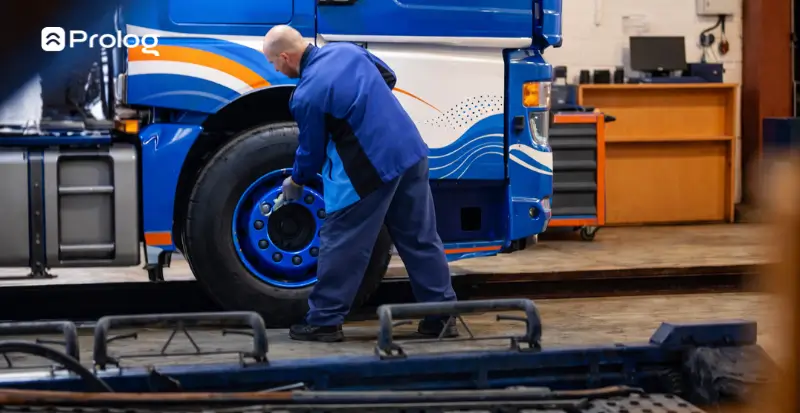
In most carriers with large fleets, the tire shop and mechanical workshop operate under the same roof. Ideally, they complement each other, but problems arise when they do not necessarily operate on the same schedule.
General preventive maintenance has its schedule: servicing by mileage, oil changes, alignment, balancing. The tire shop, in turn, responds to daily demand: punctures, replacements, driver complaints.
Between these two worlds, some tire tasks end up on neither schedule, such as tread depth inspection, calibration control, rotation scheduling and casing assessment for retreading.
These activities need their own frequency, but in many operations they are simply not scheduled anywhere.
The result? Scenarios may range from vehicles stopping for preventive maintenance and returning to their routes without anyone checking the tires, to tire shops handling requests without priority while a vehicle needed urgent attention before leaving for its next route.
Ultimately, it is a question of how the carrier's in-house tire shop is organized and how it connects with the rest of the operation.
Read on:
- Differences between general maintenance and tire maintenance schedules
- Costs involved in the lack of communication between tire shop and workshop
- How to build integration in practice
Differences between general maintenance and tire maintenance schedules
Preventive maintenance for fleet trucks follows mileage or time intervals: every 10,000 km, every 30,000 km, every 6 months.
This schedule includes items focused on the vehicle as a whole, even if some activities relate to tires (such as alignment and balancing).
Tire maintenance follows another approach. Each action has its own timing: calibration needs its own frequency (weekly or every two weeks, depending on the operation), while tread depth inspection has an interval of 15 to 30 days.
Casing assessment for retreading depends on each tire's individual life cycle, rather than the truck's maintenance plan.
In practice, tire tasks coinciding with general maintenance (alignment, balancing) are performed, while those that do not coincide end up with no one responsible for them.
This “gap” between the two schedules generates unplanned tire-related truck stops. The vehicle did not stop because of a lack of maintenance, but because the tire maintenance schedule was not integrated with fleet scheduling.
Costs involved in the lack of communication between tire shop and workshop
Without integration between the fleet's tire shop and workshop, two types of costs appear:
The first is the most visible: the cost of an unplanned stop. A vehicle leaves for its route and returns sooner than expected (or never reaches its destination) because of a tire issue that could have been identified beforehand.
An unplanned stop is expensive not only because of the repair itself, but also because of the freight that does not happen, logistics reorganization and service urgency.
The second is less obvious: the cost of a poorly used planned stop. The vehicle enters the workshop for preventive maintenance, sits idle for hours or days and leaves without the tire shop taking advantage of the window to perform inspection, calibration and/or rotation.
The opportunity to service the tire without an additional stop was wasted and, weeks later, the same vehicle needs to stop again, this time exclusively for the tire shop.
In both cases, the cause is the same: the tire shop did not know the vehicle would be available, or the workshop did not know the tire needed attention. The information existed somewhere (in the system, in the tire technician's head, on the vehicle sheet) but did not reach the person who needed it at the right time.
How to build integration in practice
Integration between the tire shop and fleet scheduling does not happen by installing a system or creating a spreadsheet. It happens when four conditions are met:
Step 1: have a preventive maintenance plan that really works
Before integrating the tire shop with anything, the general preventive maintenance plan needs to exist and work. This means a defined schedule per vehicle, intervals respected, clear responsibilities and records of each service.
If general preventive maintenance is still informal or inconsistent, there is no foundation for integration. The tire shop needs a schedule to connect to, and that schedule is the preventive plan.
It seems basic, but it is the step many operations try to skip. Without well-defined fleet planning, there is no foundation for integration.
Step 2: create a preventive maintenance plan for tires
With the general schedule working, the second step is to structure fleet tire management with its own schedule. It should include:
- calibration frequency (weekly or every two weeks, according to the operation and/or vehicle);
- frequency of tread depth and visual condition inspections;
- rotation scheduling by wear pattern;
- casing assessment and referral for retreading;
- periodic inspection of spare tires and inventory.
This schedule is the tire shop's agenda and needs to coordinate with the fleet's general schedule. This means that when a vehicle enters the workshop's preventive plan, the tire shop knows and schedules its tasks for the same window. The vehicle stops once and leaves with everything resolved.
Step 3: use a system that facilitates information exchange between departments
Manual integration (spreadsheets, boards, conversations between supervisors) works up to a point, but depends on individual discipline and does not scale.
In fleets with dozens of vehicles and daily services, the amount of information that needs to circulate between tire shop and workshop is too large to depend on informal communication.
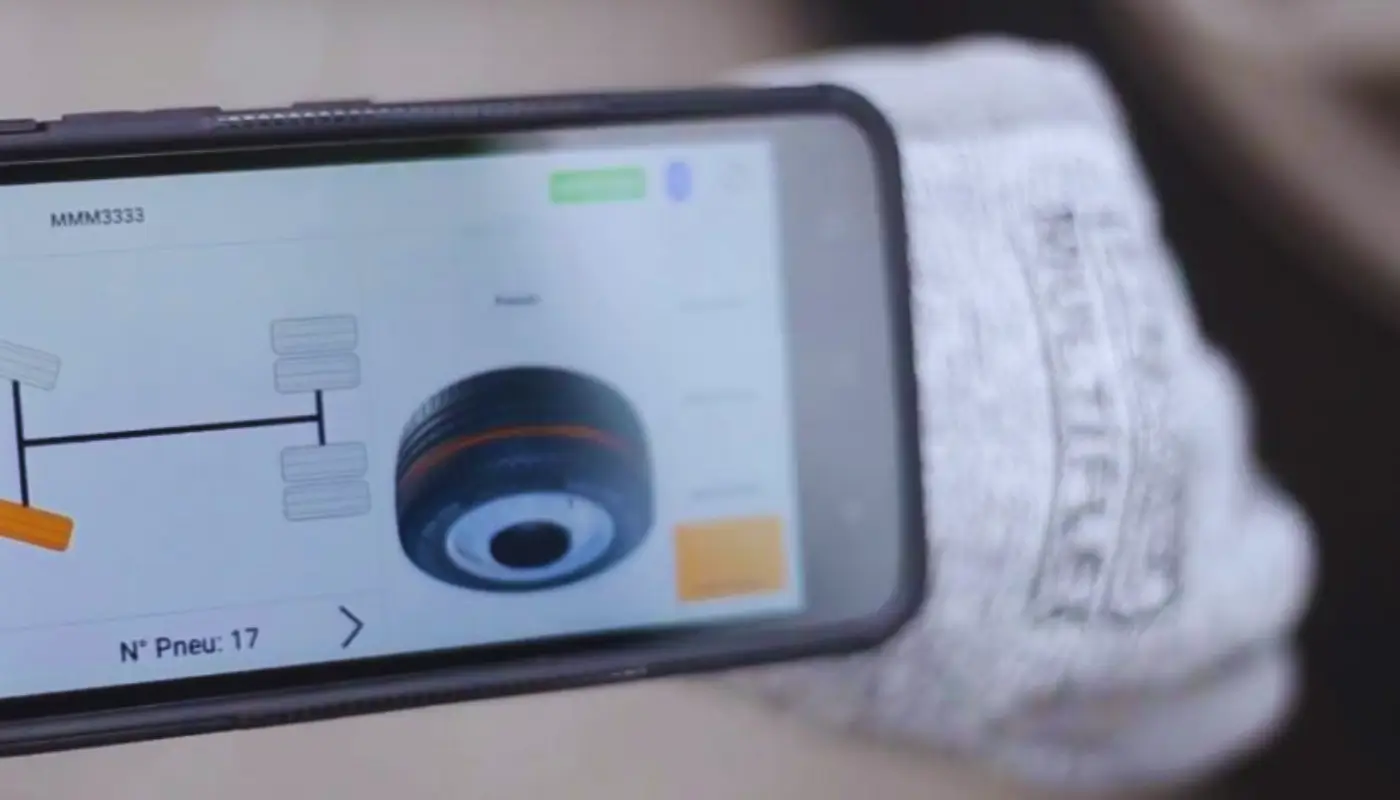
A maintenance management system, for example, centralizing vehicle information and maintenance history, together with a tire system or module recording and storing tire status, pending inspections and both departments' schedules, reduces dependence on people to get information to the right place.
The tire shop sees what the workshop has scheduled, the workshop sees what the tire shop has identified, and the fleet manager sees the whole picture.
This does not mean any system will resolve it. The system needs to fit operational reality: be accessible where the work happens (the tire technician's phone, workshop terminal, etc.), record data without excessive bureaucracy and provide visibility to decision-makers.
Step 4: ensure everyone involved is using the available tools
The best system does not work if the team does not use it. And “not using it” does not mean refusing the tool; it means using it partially, filling it out only when pressed or recording late.
Real adoption depends on three things: the team understanding why (rather than just how), a process simple enough to fit into the routine, and the manager keeping a close eye on it during the first few months.
If the tire technician records the inspection but the mechanic does not check it before releasing the vehicle, integration exists in the system but not in practice. If the workshop schedules preventive maintenance but does not tell the tire shop, the service window is lost.
Integrating the in-house tire shop with the fleet is not a project implemented once. It is a habit that is built and needs oversight until it becomes routine. When it does, results show in fewer stops, better use of maintenance windows and greater fleet availability.
Want your tire shop's agenda and fleet schedule to speak the same language? Book a demonstration with Prolog and see how the Tire Management and Maintenance solutions organize data and integrate your operation's departments.
Frequently asked questions
Why do fleet tire shops and workshops not follow the same schedule?
Which tire tasks often have no one responsible for them in fleets?
What costs arise when tire shops and workshops do not communicate?
How do you integrate the tire shop into fleet scheduling?
What should a preventive maintenance plan for tires include?
Are spreadsheets or boards enough to integrate tire shops and workshops?
// newsletter
Fleet management content, straight to your inbox
Articles on tires, maintenance and fleet operations. No spam.