
A guide to fleet tire calibration
 Luiz Felipe 6 min read

Tire calibration is essential to managing these assets in a fleet. It prevents tire wear, increases road safety and reduces fuel consumption.
These are all objectives fleet managers share. However, not everyone gives tire care and calibration as much attention as they should.
This can happen because there is no tire management routine, or even because a task that seems as simple as inflating tires is forgotten.
What is tire calibration?
Tire calibration is an adjustment made to a vehicle's tires so they run at the pressure recommended for that application, without damaging the rubber or the assets' internal structure. It involves increasing or reducing the tires' internal air pressure.
Pressure is measured in PSI (pounds) and can be adjusted with compressed air, the more common option, or through nitrogen calibration, an alternative used in some operations. Other, less commonly used measurements are BAR and kPa.
Why is tire calibration important?
It is important to prevent tire and vehicle problems, also reducing operating costs overall. Even high fleet fuel consumption costs can be reduced through proper asset calibration, because low-pressure tires increase rolling resistance and make the vehicle consume more fuel per kilometer traveled.
Inflating tires is also important for distributing vehicle weight properly across all tires, preventing any of them from becoming overloaded and more worn or the vehicle from losing its balance on a route. Incorrect pressure can affect handling, stopping distance, braking grip and directional stability.
How can you control tire calibration in a fleet?
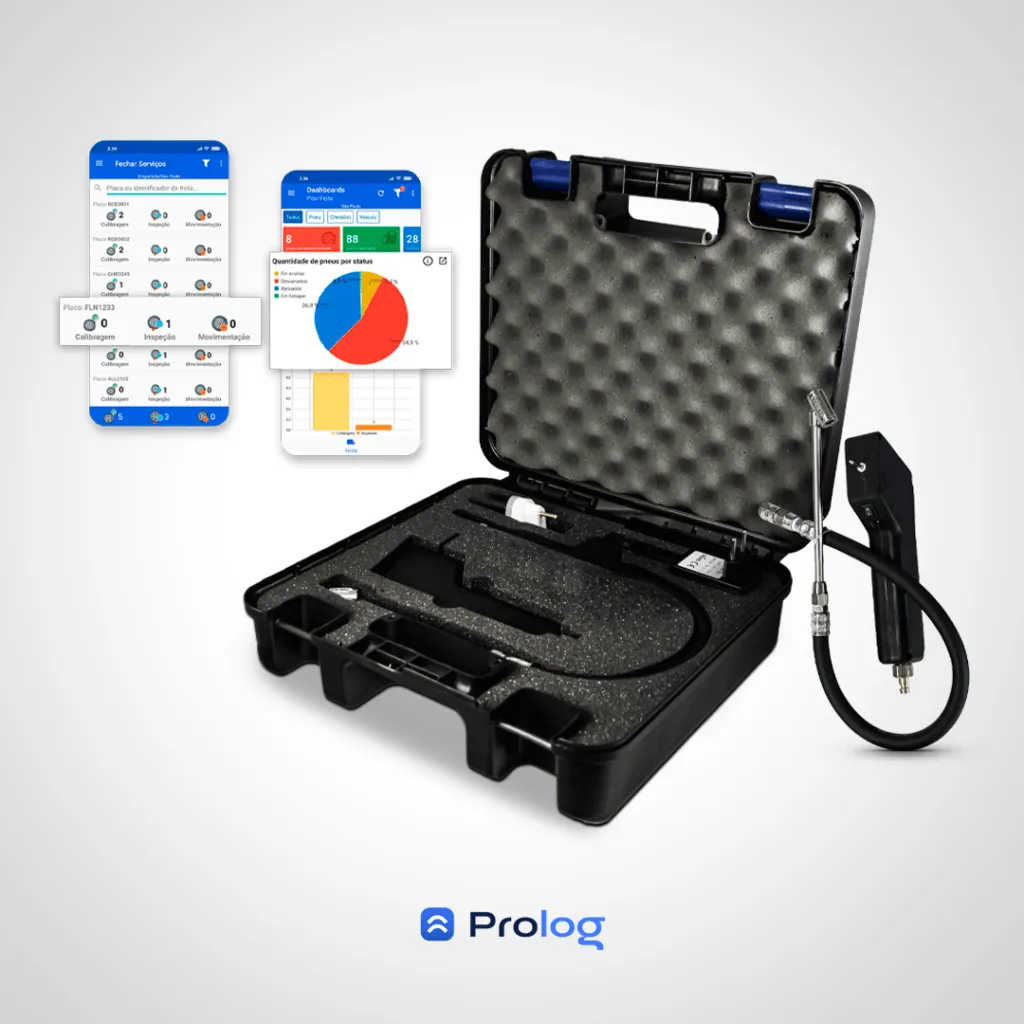
You can control tire calibration using dedicated tools, including both tire pressure gauges and spreadsheets or systems to record the information obtained during checks.
To simply control calibration, you need to take periodic measurements and correct the pressure when it differs from the vehicle manufacturer's specification, also considering load and operating conditions.
However, to find the ideal calibration pressure that increases tire performance and durability, you need to record the data found in each inspection to carry out a complete analysis and draw strategic conclusions.
What is the correct tire calibration?
The answer is simple: it depends on the tire and vehicle. Each model and make, as well as the vehicle type it is fitted to, influences the correct tire pressure.
Generally, each vehicle has a recommended calibration in the owner's manual, on the driver's door jamb or elsewhere on the vehicle, and this should be the main reference for front and rear tires and load conditions.
From there, assess tire wear levels and trip performance. Information such as mileage traveled, fuel consumption, trip time and recorded incidents helps investigate what is happening, but does not replace the pressure recommended by the manufacturer.
As a general rule:
- If you notice greater wear on the tire shoulders, check pressure, load, alignment and other operating conditions before deciding on any adjustment.
- If you notice greater wear in the center of the tread, confirm whether the applied pressure exceeds the recommendation and release air only down to the reference specified for the vehicle and load.
- If you notice no uneven or unusual wear, the pressure is probably appropriate for that tire and fleet vehicle, provided measurement confirms the recommended value.
(video in Portuguese)
Common questions about tire calibration
When should tire calibration be carried out?
You cannot tell when calibration is needed just by looking at a tire. You therefore need to check each asset's pressure according to a schedule. A safe reference is to check pressure at least once a month, every two to four weeks, and always before longer trips or when the vehicle will operate with an additional load.
What are high and low pressure?
Low pressure indicates insufficient air in the tires, leaving them underinflated. The consequences range from increased fuel consumption to damage to vehicle parts and components.
High pressure means calibration above what is needed. Inflating tires beyond the recommendation can also cause problems such as uneven wear, accelerated tread deterioration and greater chances of punctures and cuts on the road.
Who carries out tire calibration?
Drivers carry out this task themselves. However, when carrying out calibration at fuel stations, a station attendant can also be called on to help.
Does the spare tire need to be inflated?
Yes, you need to maintain the correct pressure at all times. It is good to be prepared for unexpected events, and if a tire bursts during a trip, the spare will be ready to take its place.
The recommendation is to include the spare in the same pressure check process as the other tires and follow the pressure specified for it in the manual or vehicle reference. Since it is stored, it can also lose pressure over time.
What harm does incorrect tire calibration cause?
Some consequences of neglecting tire calibration include:
- Faster wear when the tire runs at low pressure;
- Increased fuel consumption when pressure is low;
- Possible damage to the tire, suspension and steering box.
As well as creating losses for management, incorrect calibration also has consequences for drivers and their safety on the road:
- Vehicle imbalance on curves;
- Increased braking distance;
- Driving discomfort.
(video in Portuguese)
How can you make tire calibration more efficient?
Inflate tires when they are cold
Ideally, tires should still be cold for calibration to be efficient. Heat increases the chances of inaccurate pressure readings, making the tire appear more inflated. Take the measurement before driving or after the vehicle has been parked for at least three hours.
If the vehicle has been driven recently, avoid treating a hot measurement as the definitive reference. Wait for the tires to cool, then adjust pressure to the manufacturer's recommended value instead of adding pounds without considering the vehicle's chart and load condition.
Adopt good driving practices
Some behaviors can help maintain appropriate pressure for longer. Excessive acceleration, for example, overheats tires and increases wear. It should therefore be avoided — also to avoid increasing the chances of road accidents.
Harsh braking, taking curves at high speed and driving up onto or down from road shoulders are also actions to avoid.
Follow a tire inspection schedule
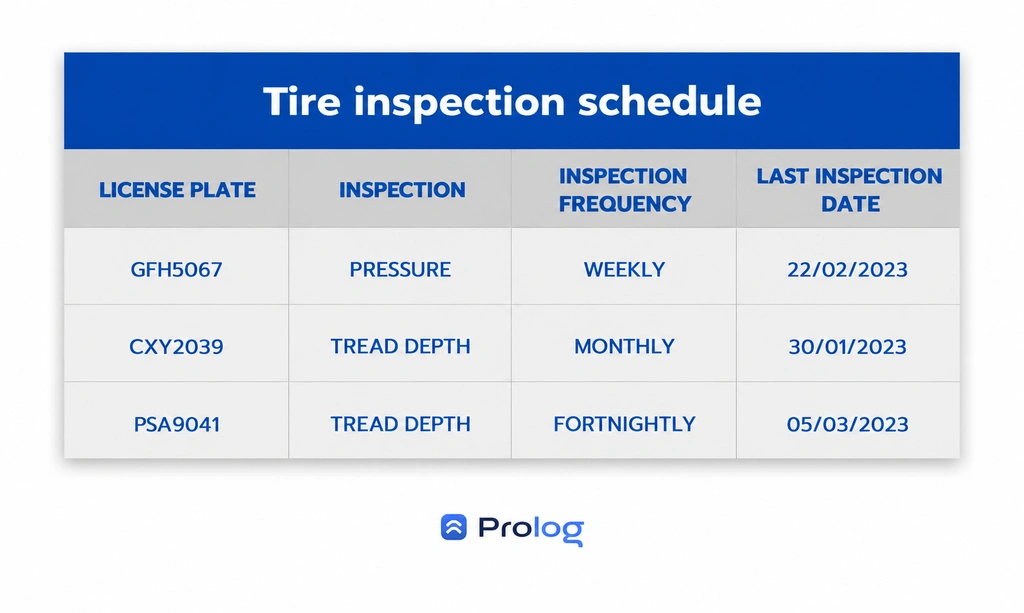
If you manage tires and follow an inspection schedule, calibration will always be up to date. In general, pressure should be checked according to a defined routine, with extra attention before long trips and when there is an additional load.
It is also important for drivers to understand the importance of their roles in fleet management, carrying out tasks as planned and following schedules correctly.
Use a tire management system
Using a tire management system also creates a history of pressure inspections and calibration. This history generates reports for analysis and helps identify the fleet's main tire problems, as well as the most appropriate solutions.
The system also provides automated calculations that help determine which tire makes and models offer better value for money for your transport operation.
Interested? Get to know Brazil's leading tire management system: download the Prolog App Solution guide for free (in Portuguese).
Frequently asked questions
How do I know whether the pressure I use is correct for my tire?
What is the difference between a tire with low pressure and one with high pressure?
What is the cost of incorrect calibration?
Is there a correct way to inflate tires to avoid inaccurate readings?
How often should fleet tires and spare tires be inflated?
A spreadsheet or a system to control fleet calibration?
// newsletter
Fleet management content, straight to your inbox
Articles on tires, maintenance and fleet operations. No spam.


