On-road tires: what they are and how off-road tires differ
 Jade Zart 4 min read
Tires play an essential role in fleets and transport operations, and you need to understand the difference between off-road and on-road tires, as well as their characteristics, to recognize which models are best suited to each route.
Each tire type is developed to fulfill specific functions, also considering the type of ground it will run on and its conditions of use. That is why choosing fleet tires is not such an easy task.
Find out below:
- What off-road tires are, their characteristics and the industries that use them;
- What on-road tires are, their characteristics and the industries that use them;
- The difference between off-road and on-road tires.
What is an off-road tire?
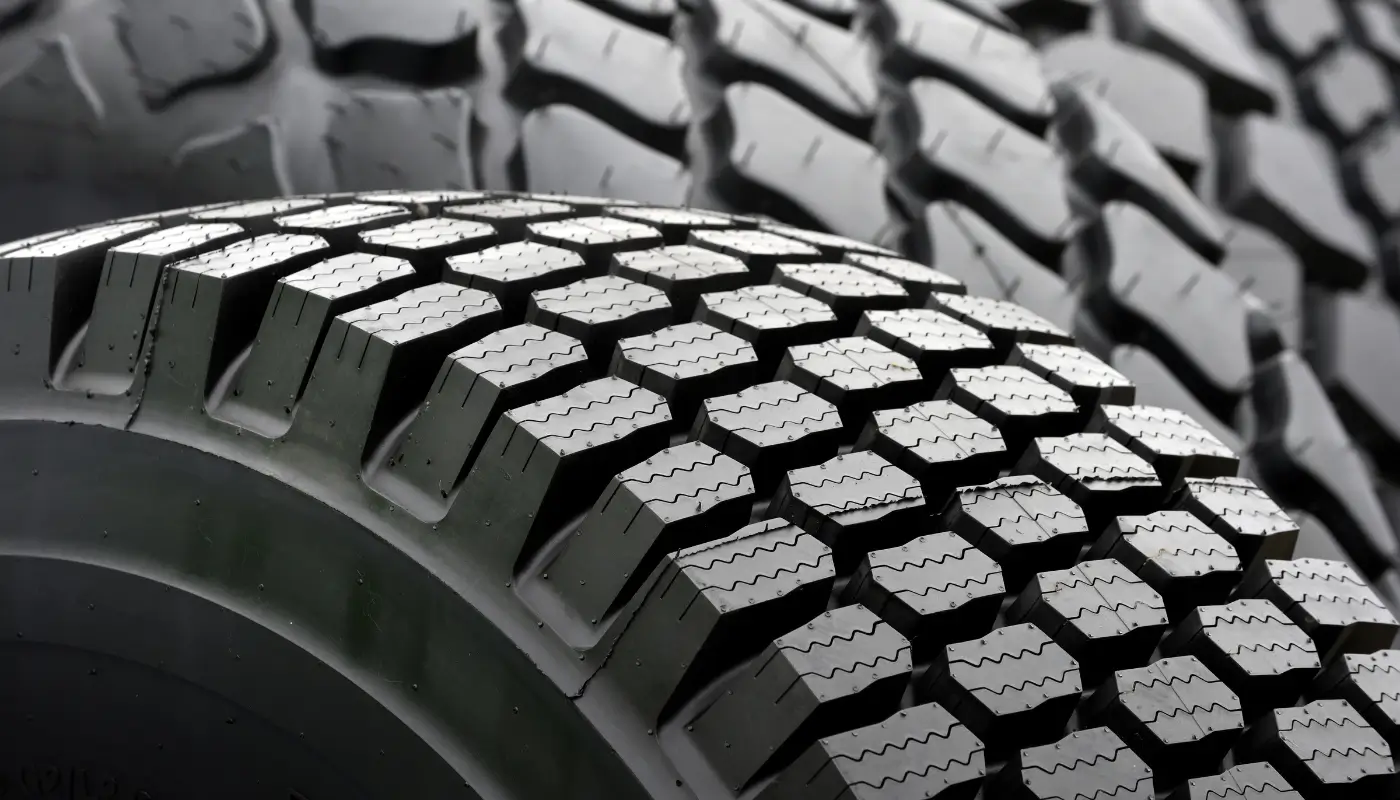
Off-road tires are designed for use on rough and/or unpaved terrain. They are made with more robust, reinforced materials because they must offer greater resistance to damage and grip on uneven ground, generally with a lot of debris.
Although they can also be used on paved roads, they usually have consequences such as higher fuel consumption and more noise when driving.
Want to see this in your fleet? Talk to a Prolog specialist
Off-road tire characteristics
The main characteristic of off-road tires is the depth and width of their grooves. Since grooves are the patterns that generate traction and ensure air and water can pass through and debris can be expelled, these characteristics are essential for the tire to perform well on rough routes.
In addition, the rubber is more reinforced and resistant because rough terrain exposes them to more cuts, punctures and impacts in general than other tire types.
Industries that use off-road tires
Construction, mining and agricultural companies, rescue vehicles and military vehicles are some of the main examples of off-road tire use. This is because these operations travel more frequently over uneven, challenging terrain.
The forestry and energy industries also use off-road tires to reach hard-to-access areas.
What is an on-road tire?
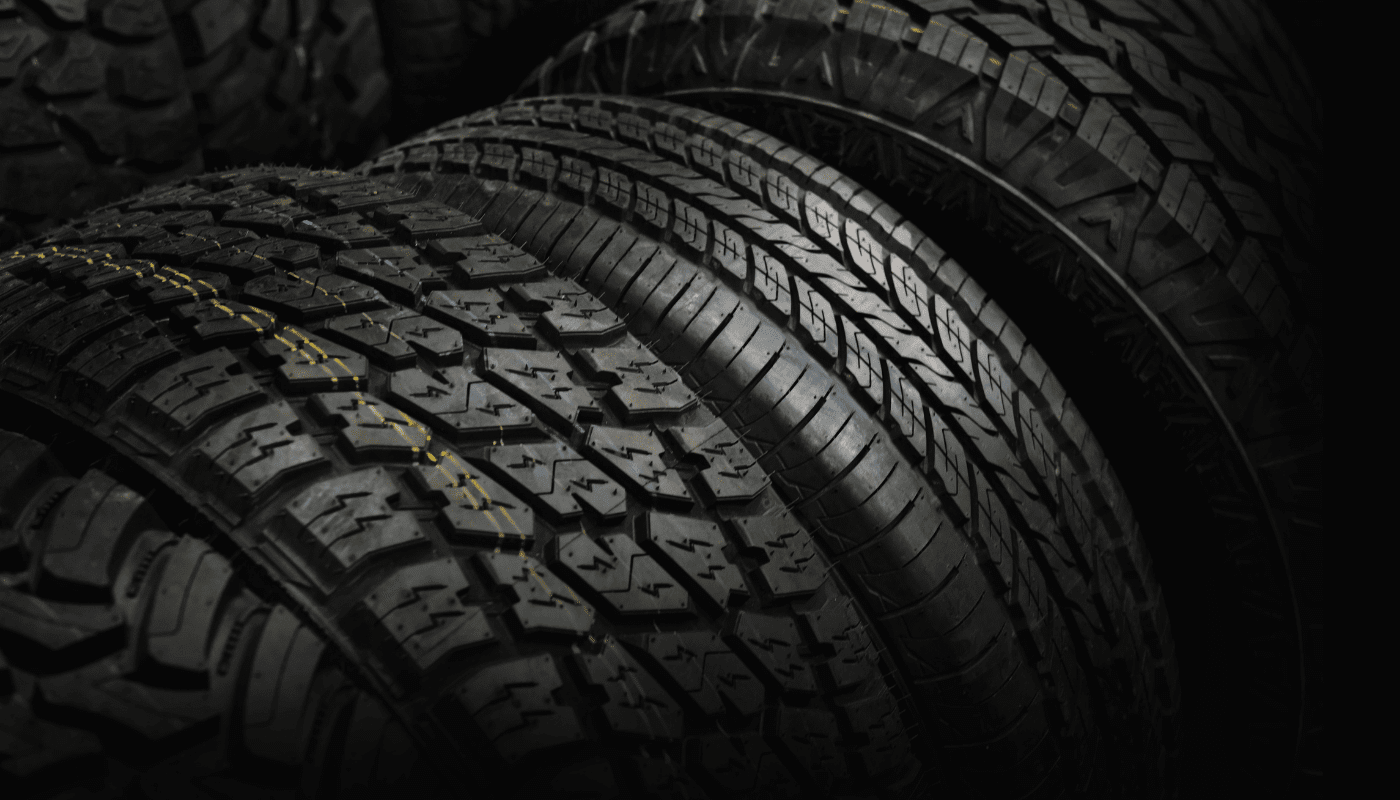
The main difference between off-road and on-road tires is the type of road they are used on. In this case, on-road tires are designed for paved roads and asphalt roads.
They are usually developed for higher speeds, providing good grip on dry or wet surfaces without high rolling resistance. This combination of factors leads to driving comfort.
On-road tire characteristics
These tires have flat tread with smaller, narrower grooves — essential characteristics for reducing driving noise. Their construction also allows regular contact with paved roads and tire grip on the ground.
Industries that use on-road tires
On-road tires are much more common than off-road tires because more vehicles travel on Brazilian roads and highways than on rough terrain.
In general, all road transport vehicle fleets use on-road tire models, including trucks, buses and light vehicles. That is, companies in logistics, passenger transport, freight transport and urban distribution industries.
Difference between off-road and on-road tires
Have you noticed the difference between off-road and on-road tires? There are four main aspects in which they differ. Take a look:
Construction
Off-road tires are harder and reinforced to withstand the conditions they face. On the other hand, on-road tires have lighter, more flexible construction, ensuring suitable performance in general operations.
In both cases, tire construction can vary according to vehicle type and the load carried. This makes it necessary to also understand the different tire types and models within each of these categories (off-road and on-road).
Traction and grip
Tire grooves are the part of the tire that most influences traction and grip.
In this respect, off-road tires have wide, deep grooves that generate greater traction and less wear on the tires. Meanwhile, on-road tires have narrower grooves with different patterns, providing greater grip on asphalt surfaces.
Durability and resistance
In this respect, off-road tires are more resistant to impacts and wear, while on-road tires offer fuel economy and driver comfort.
Durability and resistance should also be assessed considering the tires used in the fleet, since each model has different manufacturing processes and may have higher- or lower-quality composition.
Functions
Functions are clearly a major difference between off-road and on-road tires. Off-road tires work in operations on more difficult terrain, such as construction or mining sites.
On-road tires operate on state highways or urban roads, normally used in road freight or passenger transport operations.
Now that you know more about the difference between off-road and on-road tires, how about understanding your fleet's tire management processes? Download our complete, free guide (in Portuguese).
Frequently asked questions
What is an off-road tire?
What is an on-road tire?
Can I use off-road tires on asphalt?
Which industries use each tire type?
How do the two types differ in practice?
Do off-road tires last longer than on-road tires?
// newsletter
Fleet management content, straight to your inbox
Articles on tires, maintenance and fleet operations. No spam.