Do retreaded tires mean fines in Brazil? What the law says
 Luiz Felipe 4 min read
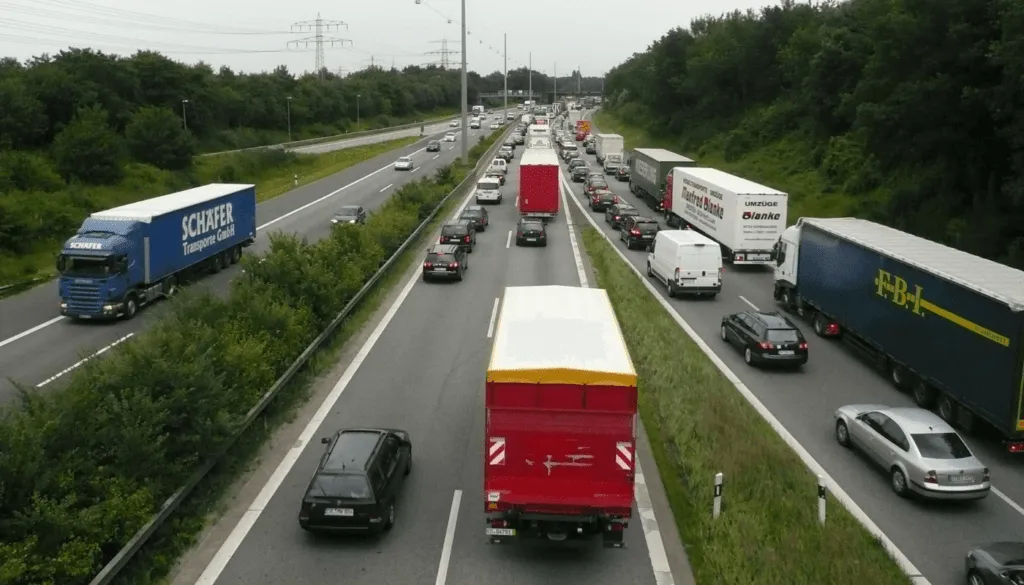
Working in road transport requires knowledge of various traffic laws and regulations, including tire legislation for transport operations.
That is why we have brought together the main and most important tire laws for freight transport and passenger transport that you need to know under Brazil’s Traffic Code and CONTRAN, the National Traffic Council.
See below:
What does tire legislation say?
In Brazil, tire legislation is important to avoid fines, but more importantly, these provisions are designed to ensure maximum safety on your operation’s routes.
This is the main reason all regulations must be understood and followed. Learn more:
Do not drive a poorly maintained vehicle
This is what article 230 of the CTB, the Brazilian Traffic Code, says, also known as the “bald tire fine”. Although it does not concern fleet tire condition alone, this is the most common cause of this infraction.
It is a serious infraction carrying a R$195.23 fine, as well as detention of the vehicle whose safety is compromised.
Refurbished tires are prohibited in certain positions and vehicles
According to Contran Resolutions No. 416/2012 and No. 445/2013 in Brazil, buses and minibuses must not use refurbished tires on the front axle. Tires with irregularities, such as cracks or deformations, are likewise prohibited.
These resolutions also prevent the use of these types of tires on the following vehicles: mopeds, scooters, motorcycles and tricycles.
Refurbished tires must be identified and have the necessary indicators
For other vehicles in Brazil, Resolution No. 558/1980 sets the required rules for using refurbished tires (in Portuguese):
- The tire must be marked with the word “reformado” (refurbished) and the brand of the responsible refurbisher;
- The tire wear indicator, known as “TWI”, must be present.
Vehicles must only run on tires meeting ABNT Standard EB 932
Also in Brazil’s Resolution No. 558/1980, article 1 describes this obligation for drivers and vehicle managers. The same rules of Standard EB 932 – Parts I, II and III of 1978 of ABNT, the Brazilian Association of Technical Standards, apply to both new and retreaded tires.
Minimum tire tread depth is 1.6 mm
This information is in Brazil’s Resolution No. 316 of May 8, 2009, and fleet tires running below this level are subject to a fine — described by the law above, in article 230 of the CTB.
How can you adapt your management to comply with tire legislation?
Knowing the provisions of Brazilian tire legislation is the first step toward adapting your management and avoiding losses. Then, implement tire management processes in your fleet, such as:
Record an identity for each tire
There are several ways to perform tire identification to create its ID; hot branding is the best known. However, laser marking, a pen or an electric marker are also options.
Control the tire life cycle
The stages of the tire life cycle are purchase, marking, storage, use, retreading and disposal. Inventory, use and retreading can even be repeated several times before the tire is discarded, through good care during use.
Tires undergoing regular inspections are more likely to be retreaded more than once and have their durability increased.
In these cases, remember the provisions of Brazilian tire legislation and use refurbished tires correctly, installed in the appropriate positions for each vehicle.
Check tire pressure and adjust calibration as needed
Tires lose pressure over time and with use, so calibration is recommended at least once a week. Vehicles traveling long distances daily can even have their pressure checked and/or adjusted every day.
Correct calibration provides better vehicle stability and balance and prevents uneven, accelerated wear.
Measure tire tread depth to track wear over time
Tread depth allows you to identify how much a tire wears and how quickly it happens. Based on the data collected, you can take measures that help make wear more even and also allow it to occur over a more “natural” period.
Furthermore, identifying fleet tire wear through tread depth is crucial to prevent tires from reaching their minimum limit of 1.6 mm.
Observe the types of wear and arrange the necessary corrections
By collecting tread depth data and identifying irregularities in wear, you can understand the likely causes of the problem and determine the best solutions for each case.
This is also a very important task for complying with Brazilian tire legislation and avoiding the bald tire fine.
Learn about other ways to care for your fleet’s tires in our free resource. Download the Tire Management Guide (in Portuguese).
Frequently asked questions
How much is the fine for bald tires?
Are retreaded tires prohibited?
How do you identify a legally compliant refurbished tire?
What is the minimum permitted tread depth?
How often should tires be inflated to comply with the legislation?
How do you align tire management with the legislation?
// newsletter
Fleet management content, straight to your inbox
Articles on tires, maintenance and fleet operations. No spam.