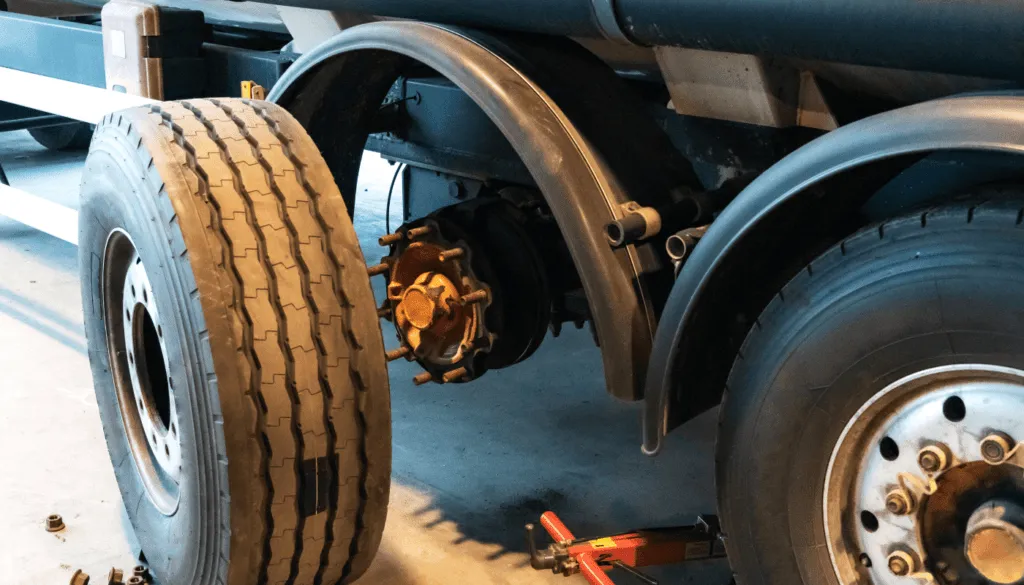
8 tire defects and how to prevent them in your fleet
 Luiz Felipe 4 min read
Knowing what tire defects are is one way to find solutions to prevent them from occurring.
The truth is that, in most cases, issues can be prevented simply by more closely controlling tire inflation pressure and tread depth. From cuts and punctures to tread wear, these are all defects we can prevent by carrying out tire management processes correctly.
Explore the following:
- What tire defects are and how they happen;
- The consequences of driving with tire defects;
- Tips for preventing and controlling tire defects.
What are tire defects and how do they happen?
Bulges
Tire bulges occur because of the force of impacts sustained on the road, mounting issues and, in a few cases, incorrect installation of the tire on vehicles.
Defensive driving is one of the main ways to prevent tire bulges because it avoids high-speed tire impacts.
Cuts
Cuts, like punctures, occur through contact with sharp objects on the road. They can also result from issues in the vehicle's structure, such as poorly fitted and/or protruding parts.
To prevent them, vehicle maintenance must always be kept up to date and routes must be chosen carefully, considering the conditions and risks each route may pose to tires.
Punctures
Punctures happen most often on roads while tires are rolling. Screws, nails and even stones are common items that cause this type of tire defect.
Some more modern tires have “puncture-resistant” technology, an extra layer on the inside of the rubber that “covers” the puncturing object and slows air loss from the tires. This allows the vehicle to travel a few more kilometers without compromising safety, giving it enough time to reach a service station or tire shop.
Wear
Different types of tire wear can occur, such as center wear, one-sided wear or feather-edge wear, each with its own causes.
A lack of balancing, for example, causes the wheel to rotate with less ground contact, producing uneven tread wear.
In general, all types of wear reduce tire useful life, often also making retreading impossible. Wear is one of the most common tire defects, but it is also the simplest to control.
Casing fatigue
Casing fatigue occurs when the tire tread exceeds its wear limit. It is the main issue leading to retreading rejection, reducing tire useful life and increasing your operating costs.
Bald tire
A tire becomes bald when its tread exceeds its wear limit and becomes “smooth,” meaning it has lost all its tread depth.
Since grooves are the part of the tire responsible for allowing air and water to pass through and also providing ground grip, driving on a bald tire becomes a major risk to the fleet.
Split or protrusion
Splits and protrusions occur when driving over speed bumps at high speed. Other raised surfaces, such as road humps or curbs, can also cause these tire defects.
The severity of this issue varies according to the force and angle of the impact, but in any case, repairing the tire is not recommended in these situations. It is therefore essential that the driver has good driving practices to prevent the issue.
Dry rot
Rubber drying out, besides being an issue in itself, leads to another type of defect: a cracked tire.
This can happen for a reason as simple as parking the vehicle on an oil stain, since this product can be corrosive and damage the rubber.
Tire grip is greatly impaired, as is vehicle safety. To prevent this, you need to inspect tires frequently and carry out other tasks involved in managing these assets, such as washing tires to remove harmful residues.
Consequences of driving with tire defects
Driving routes with defective tires brings consequences such as:
Loss of balance and stability
Any vehicle running on a damaged tire loses stability and balance, but especially heavy vehicles used in freight transport. Truck rollovers are not uncommon, and tire defects are one of their causes.
Less safety on the road
Because of the loss of balance or the greater chance of skidding and hydroplaning, as happens with bald tires, vehicles become more susceptible to accidents on the road. Safety for the driver, cargo and third parties is compromised.
More fines
Did you know that the bald tire fine exists in Brazil? Although it is intended to assess the condition of vehicles as a whole, it has become known by that name because tires are the main reason for receiving this fine.
Higher operating costs
If tires are driven with damage, they pose risks and harm other vehicle parts, which also end up needing more maintenance. In addition, worn tires increase fuel consumption.
Tips for preventing and controlling tire defects
Some of the main tips for preventing tire defects are:
- Avoid sudden acceleration and braking;
- Pay attention to road conditions;
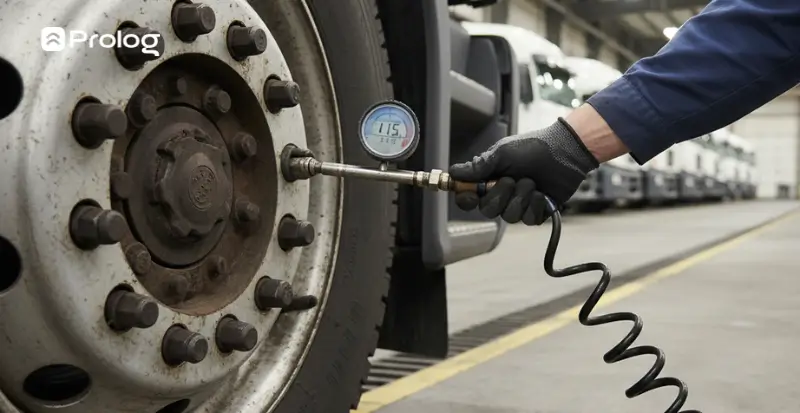
- Perform the correct, ideal calibration for each tire type;
- Carry out tire inspections;
- Have the vehicle balanced and aligned regularly;
- Avoid overloading vehicles.
Tire care is essential to the proper functioning of transportation fleets. For this reason, tire management has grown considerably in recent years as an alternative for fleets to achieve greater savings and safety on their routes.
Discover the tire control spreadsheet as a solution to start gaining better control of your fleet's tires. Download it for free (in Portuguese)!
Frequently asked questions
A bulge has appeared on my truck tire. What caused it?
My tires are being rejected for retreading. What should I investigate?
What is the difference between a bald tire and casing fatigue?
How can you prevent fleet tire defects?
What happens if a fleet drives with defective tires?
Are there tires that can keep going after a puncture?
// newsletter
Fleet management content, straight to your inbox
Articles on tires, maintenance and fleet operations. No spam.