Tire casing: how to prevent fatigue and disposal
 Luiz Felipe 5 min read
The tire casing is the structure that supports the tire and allows it to remain safe during use. When it does not receive proper care, it can lead to the total loss of the wheel. When it comes to a truck fleet, this cost can be very high for the company.
We know that the tire is the only part of a vehicle in constant contact with the road, bearing the weight it carries and taking the damage from roads in poor condition. Punctures, cuts, impacts, cracks, bulges and irregular wear are among the common types of tire damage; that is why, in fleets with a low level of management, losses from casing fatigue are common.
Fortunately, it is possible to keep better control of the tire life cycle with inspection processes, maintenance records and electronic tire inspection. Prolog App helps with this individual control of each tire — wear, retreading, life cycle and cost per tire — without relying on automatic readings from the vehicle. So, let's start with the main question:
What is tire casing fatigue?
Casing fatigue happens when the tire tread reaches its limit. In other words, it goes past the line of a “healthy” tire and starts to damage the internal structures of the wheel, precisely the part that needs to be preserved so that the tire can stay in the refurbishment cycle.
Under Brazilian law, the minimum tread depth is 1.6 mm, and below this value the tire is considered “bald”. But, in reality, reaching this limit is already dangerous and should be avoided. Keeping track of tread depth before the critical point helps you decide with more confidence on removal, maintenance or sending the tire for retreading.
After all, far beyond additional costs, this tire condition can cause serious accidents. This is because the vehicle starts to shake and slide on the road, and it also becomes extremely unstable to drive. Incorrect pressure also affects handling, braking grip and directional stability, which reinforces the importance of not treating the casing as a secondary detail.
Consequence of a fatigued casing: what is retread rejection?
Tire retreading is a cheaper alternative for making tires like new, increasing their service life in order to reduce the company's costs and the careless disposal of rubber.
Sounds great, right? However, to get this advantage, it is important to take some precautions with the casings. From the moment the inside of the tire is damaged, it can no longer be refurbished and has to be thrown away entirely. In some cases, a pronounced bulge on the sidewall already indicates destroyed cords inside the casing; hitting objects, curbs or speed bumps at excessive speed or at the wrong angle can cause this type of damage.
Just to give you a brief picture of the importance of retreading in the fleet:
Retreading can be done about 3 times on one casing, and each retread can last approximately 2 years.
While the cost of a new tire, considering how the pandemic affected the economy, started at a minimum of R$ 2,000, each retreading cost, on average, R$ 400 — varying by region of Brazil. These amounts serve as a historical reference from the time the text was written, not as a current price list for purchases or refurbishment.
This means, in this old example, that you could run on the tire for 6 more years, spending R$ 800 less than a new tire would cost. Even when prices change, the management logic remains the same: preserving the casing keeps the possibility of refurbishment open and avoids sending a recoverable tire to disposal.
Want to know how to take care of your fleet's tire casings? Then read on:
How to prevent the tire casing from being affected?
To protect the tire casings of your fleet's trucks, it is important to keep track of tire tread depth. The tread grooves are responsible for the vehicle's traction and stability, since they let water and air pass through.
Not letting them wear past 3 mm of depth easily allows the tire to be retreaded safely. To measure with maximum accuracy, use an electronic tread probe. Remember to write down all the depths and keep the data saved in a spreadsheet or control system. When the system records the history of each tire, it becomes easier to see wear, retreads, life cycle and cost per unit.
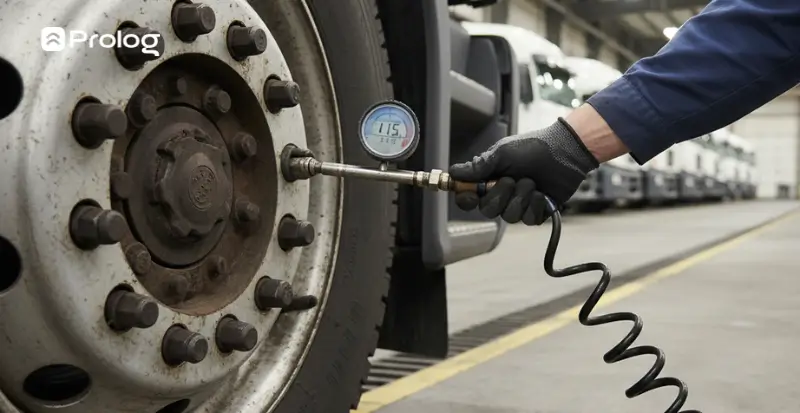
Another effective way is to maintain the tire calibration recommended by the factory. Tires with low pressure, besides influencing casing wear, consume more fuel and reduce grip on the road. With too little pressure, the tire wears faster; with inadequate pressure, handling is also affected.
You can also check the tires' inflation pressure weekly to find out whether the supplier's recommendation is really performing well. For more accurate readings, the check should be done with cold tires, following the pressure indicated by the vehicle manufacturer.
If you notice irregularities in the condition of the tire rubber, make small adjustments to the calibration (and check the results again) to extend the use of your tires. If cuts, punctures, bulges, cracks or abnormal wear appear, treat the finding as a signal for inspection and maintenance, because ignoring damage increases the risk of failure in the future.
The driver also has a responsibility when it comes to caring for the tires. Safe and attentive driving, avoiding potholes and obstacles and not exceeding the maximum speed and weight the tires can bear, is a simple way to reduce their wear.
Doing tire balancing and alignment every 10,000 kilometers driven prevents wear and reduces the chances of tread irregularity. Likewise, tire rotation is done within this interval. When the wheels are misaligned, a qualified specialist can correct the deviation with alignment; tire rotation at regular intervals, in turn, helps to keep a more uniform wear pattern.
Tire inspection seems like a difficult task, but with organization it is possible to carry it out and make use of all the economic and safety advantages it brings to the company, the vehicle and the driver. The secret is to combine routine, reliable records and quick decisions when the tire starts to show signs of wear or damage.
To help you with this mission, download our tire control spreadsheet (in Portuguese) and start more efficient management right now.
Frequently asked questions
What is tire casing fatigue?
Why does a damaged casing prevent retreading?
How many times can a tire be retreaded and how much does it save?
What tread depth preserves the casing?
What maintenance routine protects the casing?
// newsletter
Fleet management content, straight to your inbox
Articles on tires, maintenance and fleet operations. No spam.