Sustainable fleet management: 7 maintenance solutions
 Jade Zart 8 min read
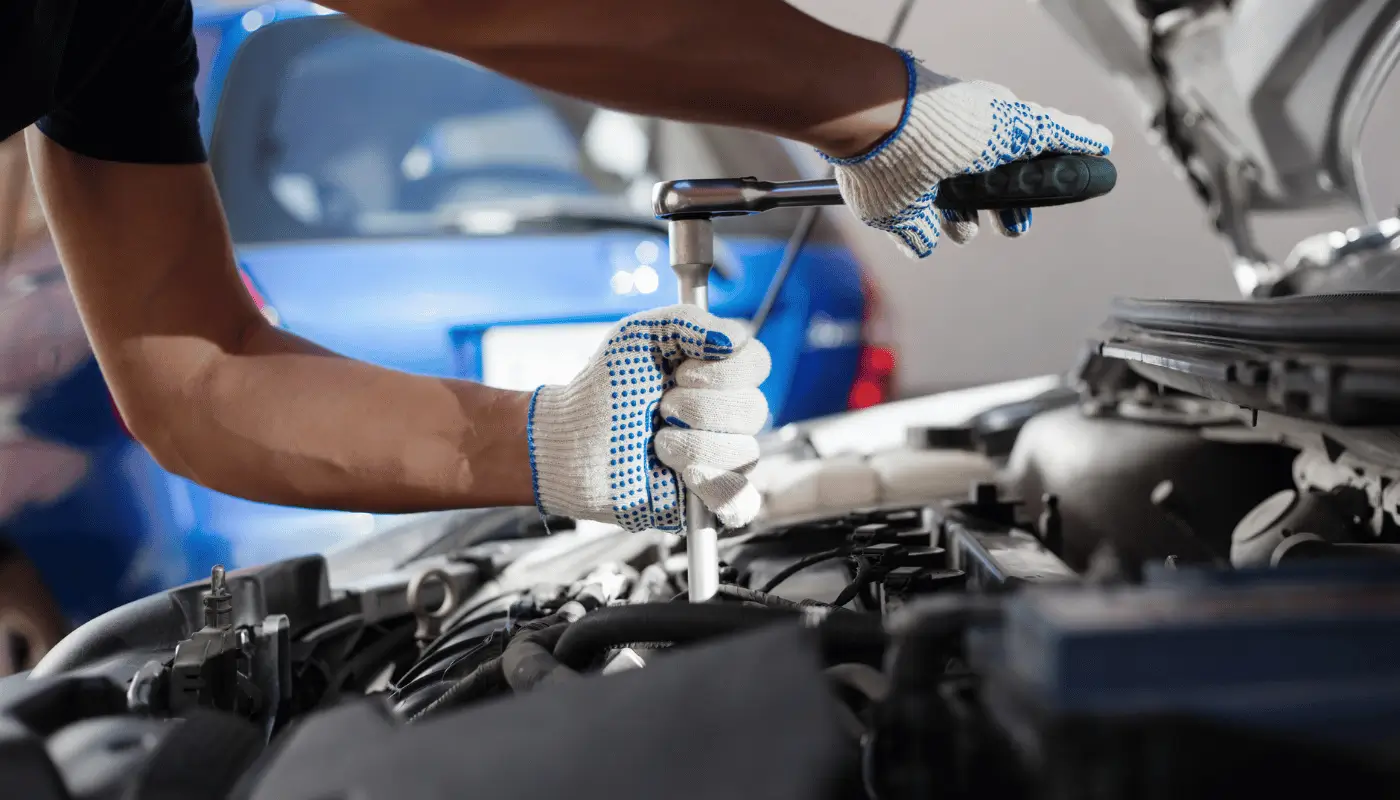
Fleet vehicle control covers various activities, from vehicle inspections to corrective services and using sustainable maintenance solutions.
Each of these processes can affect the environment and should align with ESG (environmental, social and governance) principles.
Therefore, understanding and adopting sustainable solutions is crucial for companies with fleets and transport companies to align with sustainable practices and contribute to global sustainability goals, such as the UN's 2030 Agenda — a commitment developed by the 193 United Nations Member States and expressed in General Assembly Resolution 70 of September 2015, bringing together 17 Sustainable Development Goals.
Part of what follows, however, does not depend on voluntary commitments: in Brazil, lubricating oil disposal and end-of-life tire disposal have specific federal resolutions, cited throughout the text alongside official sources.
Below, see the main sustainable maintenance solutions that can be applied in fleet management:
- Predictive and preventive maintenance;
- Oil and fluid disposal;
- Telematics monitoring;
- Eco-friendly washing;
- Purchasing economical and efficient vehicles;
- Tire management and recycling;
- Maintenance process management.
Predictive and preventive maintenance
Through predictive and preventive maintenance, it is possible to anticipate mechanical and electrical issues, performing the necessary interventions before more serious faults occur in vehicles.
Besides helping increase equipment useful life, this practice tends to reduce consumption of resources such as replacement parts and fuel, and minimize pollutant emissions, since well-maintained vehicles tend to be more efficient.
An additional benefit is lower fleet operating costs, since corrective maintenance, generally more expensive, can be minimized by identifying issues early.
It is worth noting that the two strategies are not interchangeable. Preventive maintenance relies on the calendar and mileage and works with what the fleet already records today; predictive maintenance depends on condition monitoring — oil analysis, wear measurement, consistent history per component — and cannot be implemented from one month to the next in an operation that does not yet have this history.
Proper disposal of oils and fluids (and their packaging)
It is essential for companies to practice sustainable maintenance solutions such as including a system for collecting and disposing of oils, fluids and their packaging.
This is because disposal of this waste must comply with environmental regulations. In Brazil, the rule for lubricating oil is federal and specific: Conama Resolution No. 362 of June 23, 2005 establishes that all used or contaminated lubricating oil must be recovered, collected and disposed of without negatively affecting the environment and allowing maximum recovery of its constituents.
Used oils can also return to the production cycle: the same Brazilian resolution requires all collected used or contaminated lubricating oil to be recycled through re-refining — an industrial process removing contaminants, degradation products and additives, restoring base oil characteristics. The rule states that combustion and incineration are not forms of recycling or proper disposal, and prohibits any disposal of used or contaminated oils into soil, subsoil, inland waters, territorial seas, exclusive economic zones and sewer systems.
It is worth understanding the requirements for this in your operation. Under the Brazilian resolution's terminology, a fleet that changes oil in its own workshop is a generator, and the full text of the rule lists its duties: safely recover used oils in suitable, leak-resistant containers in a place accessible for collection; prevent oil from mixing with chemicals, fuels, solvents, water and other substances, which makes recycling unviable; hand it over exclusively to a collection point or authorized collector, requiring authorizations and issuance of the respective Collection Certificate; and retain these documents for five years for inspections. Legal entities are also responsible for properly disposing of non-recyclable oils as authorized by the competent environmental agency.
In addition, packaging for these products can also be recycled or properly disposed of, reducing environmental impact. In Brazil, plastic lubricating oil packaging has its own reverse logistics system, established by a sector agreement and operated by a managing entity: used packaging is received from generators during mobile collection visits or at voluntary drop-off points (PEVs), where it is separated and sent for proper disposal.
By adopting responsible oil and fluid disposal practices, companies not only contribute to environmental preservation but also avoid possible legal penalties and demonstrate their commitment to sustainability.
Telematics monitoring
Telematics is a category of solution sold by specialist vehicle tracking and monitoring companies. Installed in vehicles, it transmits location and performance data and uses it to generate usage and driving behavior indicators.
Operations that subscribe to this type of system usually use it to review routes and address driving habits such as harsh acceleration, hard braking and prolonged idling. When the company actually acts on these indicators — through training, route replanning or delivery window adjustments — fuel consumption and associated emissions can fall. Data alone does not produce the effect: savings promised by a supplier are potential, not guaranteed results.
That is why telematics appears in this list as one of the tools available on the market to support environmental fleet decisions. It coexists with inspections and workshop records, which are the source of each component's history — tire, brake, filter — and the useful life that can be measured.
Eco-friendly washing
Eco-friendly washing is one of the sustainable maintenance solutions, focusing on reducing water waste and minimizing harmful chemical use.
This practice adopts more efficient cleaning methods that are less harmful to the environment, such as recycled water, reuse systems and biodegradable products.
Besides saving natural resources, washing with wastewater treatment and reuse helps prevent oily yard waste from reaching storm drains and water bodies, contributing to water source protection.
It is one of the sustainable development actions demonstrating companies' commitment to environmental responsibility in fleet operations. In practice, the most significant item is usually the washing site's infrastructure — an impermeable floor, drainage channels and an oil-water separator. In Brazil, it is worth confirming yard licensing requirements with your state's environmental agency before investing, because rules vary by location.
Purchasing economical and efficient vehicles
Choosing vehicles equipped with technologies that reduce fuel consumption and pollutant emissions contributes directly to reducing environmental impact.
These vehicles are also often described as less prone to issues and higher maintenance costs — which, in practice, depends on fleet age, usage patterns and the availability of parts and service in the region where the operation runs.
Besides their environmental advantage, these vehicles provide improved fuel efficiency, translating into savings over the asset's life cycle. This is usually how the figures work out, since more efficient models tend to cost more to buy: the useful comparison is total cost of ownership, rather than list price.
Thus, purchasing economical and efficient vehicles is one of the sustainable fleet actions that also strengthens its financial health.
Tire management and recycling
Proper tire management plays a crucial role in pursuing fleet sustainability, especially given the significant environmental impacts of these components.
This management covers several stages, including regular inspections to assess tire condition to increase useful life, maintaining correct pressure and implementing disposal and recycling procedures.
There is a Brazilian federal rule here too. Conama Resolution No. 416 of September 30, 2009 requires manufacturers and importers of new tires with an individual weight over 2 kg to collect and properly dispose of end-of-life tires in Brazil. It also prohibits final disposal of tires in the environment — abandonment or dumping into water bodies, vacant or waterlogged land, disposal in sanitary landfills and open-air burning — and prohibits open-air tire storage.
Two points in the Brazilian resolution's text affect fleet management routines. First: final disposal of used tires still suitable for refurbishment under current technical standards is prohibited — the resolution treats retreading, shoulder-to-shoulder retreading and remolding as stages preceding final casing disposal. Second: when replacing a used tire with a new or refurbished one, tire retailers must receive and temporarily store used tires handed over by the consumer, at no cost to them, with records identifying origin and destination.
Worn and unusable tires can be recycled in various ways, contributing to lower environmental impacts. The Brazilian resolution defines environmentally appropriate disposal as the technical procedure in which tires lose their original form and their constituent elements are reused, recycled or processed through another technique accepted by competent environmental agencies — and states that merely turning end-of-life tires into rubber chips is not considered final disposal.
Materials from tire recycling are often cited in uses such as rubberized asphalt and shoe soles, avoiding accumulation in sanitary landfills.
Establishing partnerships with specialist tire disposal and recycling companies, duly licensed by the competent environmental agency, is an important step toward a more sustainable fleet.
Maintenance process management
Efficient maintenance process management is a fundamental component of sustainable fleet management.
This process covers strategic planning and preventive maintenance scheduling, strict replacement parts inventory control and optimization of repair procedures.
Besides contributing to vehicle reliability, maintenance management reduces resource waste and minimizes vehicle downtime.
These factors, in turn, directly affect transport operation productivity.
There is also a compliance effect that often goes unnoticed: without maintenance records, a company cannot show where changed oil and removed tires went. The collection certificates and disposal receipts required by the Brazilian resolutions cited above need to be linked to a work order and a date — this turns good environmental intentions into auditable evidence.
Implementing sustainable maintenance in a fleet includes actions such as those mentioned above, as well as providing training focused on this aspect to drivers and the in-house maintenance team, developing the company's ESG culture and investing in technologies that help achieve these goals. Specialist suppliers offer telematics solutions for this purpose. On the workshop side, the fleet maintenance management system organizes work orders, costs and history per vehicle.
Want to learn more about fleet maintenance management? Improve your skills and knowledge in maintenance management with our “Maintenance Management – Your First Steps” course.
Discover best practices, strategies and tools to optimize your fleet's maintenance. Click here and register today (in Portuguese)!
Frequently asked questions
What is sustainable fleet management in maintenance?
How should used fleet lubricating oil be disposed of correctly?
What does the law require for disposal of end-of-life tires?
What is the difference between preventive and predictive fleet maintenance?
What is eco-friendly vehicle washing?
// newsletter
Fleet management content, straight to your inbox
Articles on tires, maintenance and fleet operations. No spam.